





Hugo Balta is currently reporting from Brazil, exploring how the country's efforts to strengthen democracy, expand civic participation, and address environmental challenges may hold valuable insights for the United States.
For decades, some of the world's most popular ecotourism destinations have faced a simple but persistent challenge: a relatively small local tax base must support infrastructure and environmental protection for millions of visitors. When tourism costs fall disproportionately on residents, roads, sanitation systems, and natural resources can become strained. Increasingly, governments are addressing that imbalance through "user-pays" conservation fees that shift a portion of those costs to travelers.
One notable example is the Brazilian archipelago of Ilhabela, which has developed an automated, dedicated funding model that could serve as a blueprint for environmentally sensitive destinations in the United States.
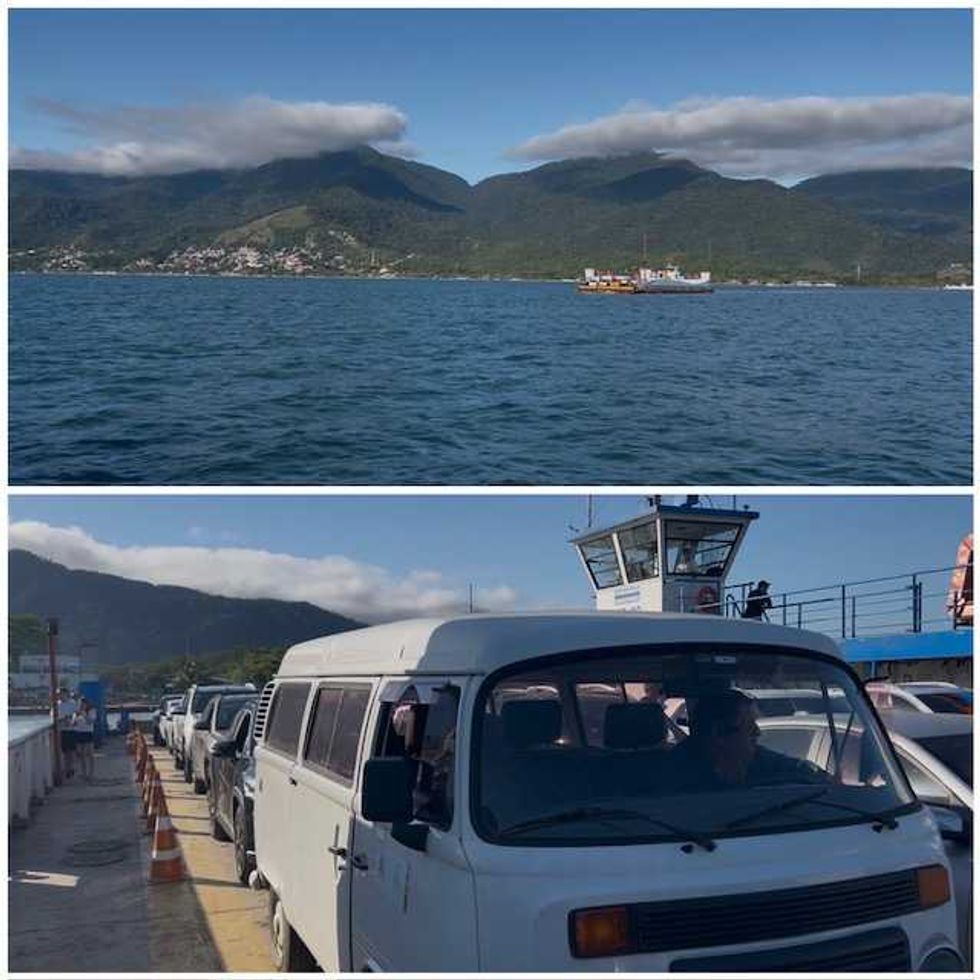 (R-L) Ilhabela in the distance, and a ferry leaves from the mainland terminal in the city of São Sebastião and brings passengers and vehicles across the channel directly to the island of Ilhabela.Hugo Balta
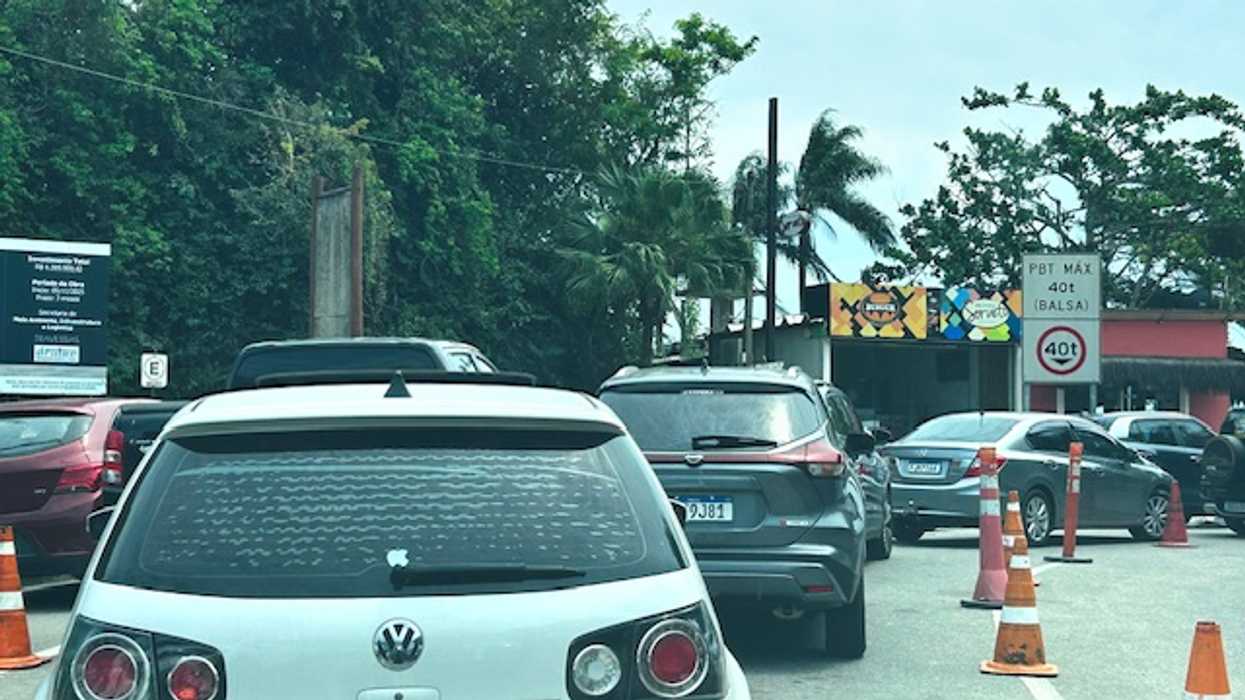
Unlike traditional tourist fees that rely on tollbooths or local surcharges, Ilhabela's system uses a frictionless electronic collection framework. At the mainland ferry crossing, municipal authorities use automated license plate recognition (ALPR) technology to track incoming vehicles without interrupting traffic flow.
Through its ECO Ilhabela program, the Prefeitura Municipal de Ilhabela assesses a flat entry fee on visiting vehicles. Rates vary by vehicle type, ranging from R$10 for motorcycles and R$48 for passenger cars to as much as R$140 for large commercial tour buses. To protect residents from additional costs, vehicles registered in Ilhabela and neighboring São Sebastião are automatically exempt. Visitors can pay through electronic transponders, Pix transfers, or the municipality's online portal. According to G1 Globo, pedestrians and cyclists cross for free, encouraging lower-carbon transportation.
The most distinctive feature of the Taxa de Preservação Ambiental (TPA), however, is its dedicated use of revenue. Municipal officials say the proceeds fund environmental protection, conservation initiatives, and tourism-related mitigation efforts, with quarterly reporting requirements intended to ensure public accountability.
Explaining the program's purpose, Mayor Toninho Colucci said the model "represents an important advance to conciliate tourism, sustainability, and quality of life for the population. Ilhabela reaffirms its commitment to be a reference in preservation of the Atlantic Forest, adopting measures that strengthen sustainability without failing to responsibly receive the thousands of visitors who choose our city every year."
According to projections cited by Viagem e Turismo, the fee could generate approximately R$45 million annually. Municipal officials say the revenue funds environmental preservation, urban cleanliness, environmental education, conservation efforts, and related infrastructure improvements, including projects within Ilhabela State Park.
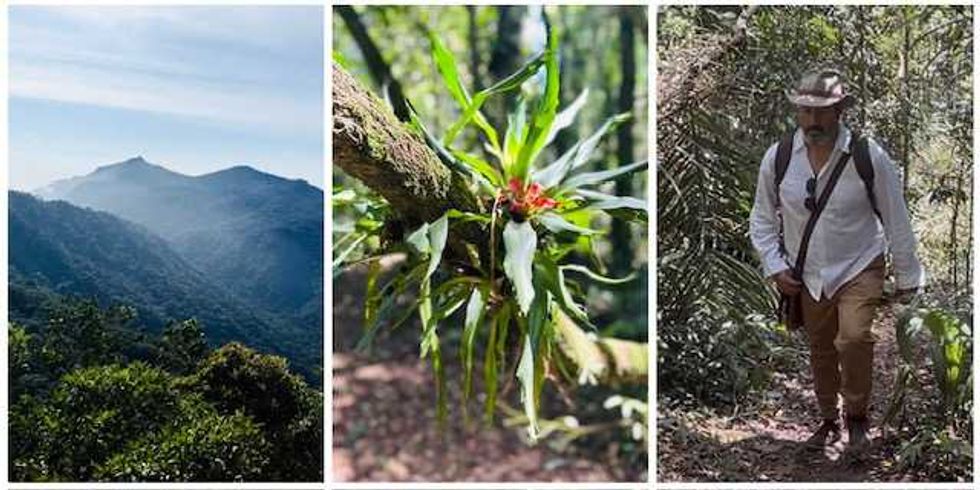 (R-L) The Atlantic Forest, a bromeliad grows on a tree branch, Hugo Balta treks through miles of uninterrupted, lush greenery.
During my visit to the archipelago off São Paulo state's northern coast, I explored its ecological centerpiece: Ilhabela State Park. Covering approximately 85 percent of the municipality and spanning more than 27,025 hectares, the protected area preserves critical Atlantic Forest (Mata Atlântica) habitat while helping shield traditional Caiçara communities from unchecked development.
As communities across the United States grapple with tourism's environmental impacts, Ilhabela's approach offers a practical example of how visitor-generated revenue can sustain natural resources without adding burdens on residents.
Hawaiʻi has embraced a similar philosophy through a statewide climate resilience initiative. In 2025, the Office of the Governor enacted Act 96 (Senate Bill 1396), creating the nation's first statewide climate-impact "Green Fee."
Rather than charging motorists, Hawaiʻi targets overnight visitors. The law adds a 0.75 percent climate surcharge to the state's Transient Accommodations Tax (TAT) and, as Hawaiʻi Public Radio reported, extends the surcharge to commercial cruise ships docking at state ports.
Emphasizing the measure's purpose, Governor Josh Green stated, "Today Hawaiʻi ushers in the first Green Fee in the nation. Once again, Hawaiʻi is at the forefront of protecting our natural resources and recognizing their fundamental role in sustaining Hawaiʻi's ecological, cultural, and economic health. As an island chain, Hawaiʻi cannot wait for the next disaster to hit before taking action. We must build resiliency now, and the Green Fee will provide the necessary financing to ensure resources are available for our future."
The Hawaiʻi Green Fee Advisory Council estimates the program will generate approximately $100 million annually. Like Ilhabela's TPA, those funds would support conservation priorities, including beach restoration, invasive-species control, coral reef protection, and wildfire prevention.
A comparable discussion is underway in California's Lake Tahoe Basin. The U.S. Forest Service Lake Tahoe Basin Management Unit has proposed restructuring recreation fees to help maintain heavily used public-access sites.
Under the proposal, visitors to historically free locations, including Kiva Beach, 64 Acres Riverside, and Echo Trailhead, would pay a mandatory $10 per-vehicle day-use fee. According to CBS News Sacramento, the revenue would "help the Lake Tahoe Basin Management Unit maintain developed recreation sites, improve overall maintenance and visitor services, and preserve the ecological integrity of the natural environment." Federal regulations require those fees to remain within the local recreation system, funding improvements such as trail maintenance and waste management.
Implementing conservation fees is not without challenges. In Ilhabela, the TPA underwent legal review and experienced collection delays before officials transitioned to a fully digital system. In the United States, legal questions have emerged over the portion of Hawaiʻi's Green Fee that applies to cruise ships. The Georgetown Environmental Law Review reported that cruise industry groups have challenged that provision, arguing it may conflict with constitutional protections governing maritime commerce and port taxation.
Even so, the broader trend is clear. As destinations face growing tourism pressures and rising climate-related costs, policymakers increasingly turn to dedicated visitor fees to protect natural resources while preserving public support for sustainable tourism. Ilhabela, Hawaiʻi, and Lake Tahoe suggest that when collection systems are transparent, revenues are tightly earmarked, and oversight is clear, travelers may be willing to help fund the landscapes they come to enjoy.
Hugo Balta is the executive editor of The Fulcrum and the publisher of the Latino News Network, and an accredited Solutions Journalism and Complicating the Narratives trainer with the Solutions Journalism Network.














The President Invited Iran to Bomb My Home