


Skip to content
Search

Latest Stories

Top Stories

California’s New Law Aims To Close a Housing Gap for Domestic Violence Survivors

Fleeing a violent home means finding a new place to live. Cities and counties in the state are now required to plan for that.

News

California’s New Law Aims To Close a Housing Gap for Domestic Violence Survivors
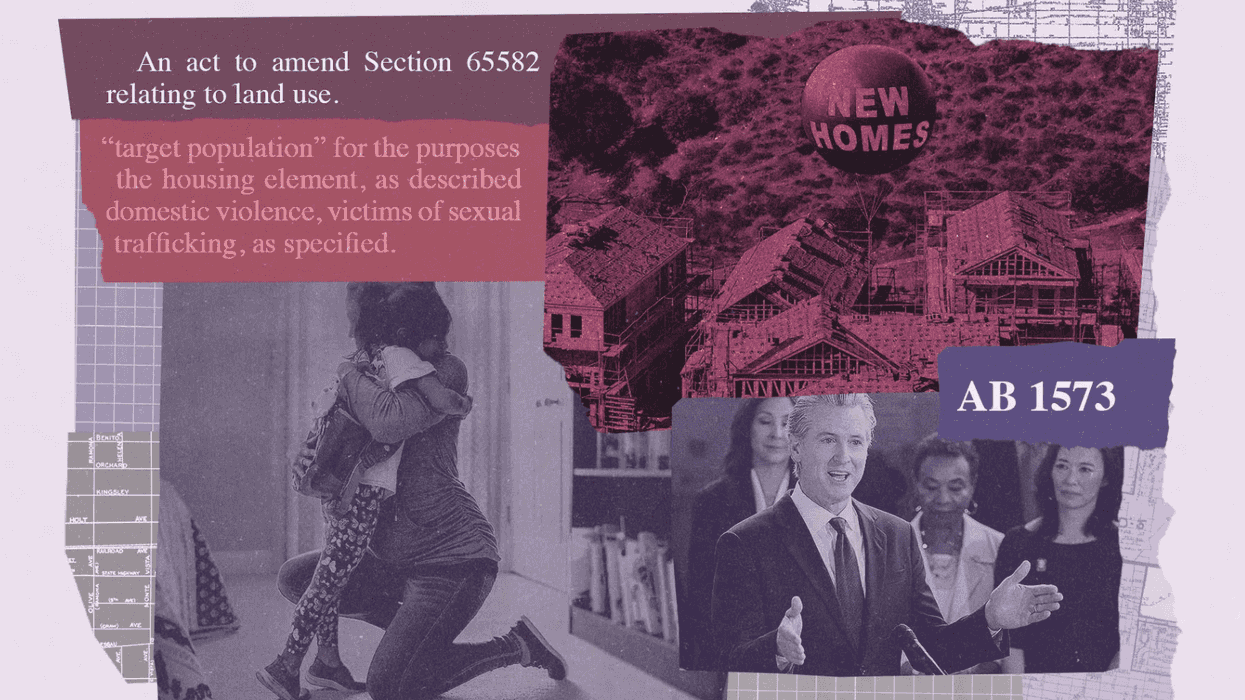
Emily Scherer for The 19th; Getty Images

Domestic violence survivors often struggle to find housing, and California’s “Unseen and Unheard Housing Act” will help make more housing available to meet their specific needs.

California Gov. Gavin Newsom signed the bill Sunday requiring cities and counties to factor in domestic violence survivors when planning for future housing.


The state’s 540 local governments are required to submit a plan for land use every five to eight years, depending on population size. The plan analyzes and proposes ways to meet community needs around climate change, health, economics and equitable opportunities. Within that is an assessment of housing supply and demand, which is required by law to include overviews of housing for seniors, people with disabilities, farmworkers, women-led households, households with five or more members and the unhoused.

Now cities and counties will have to account for the needs of domestic violence survivors, too.

“Our hope is that this bill will significantly increase the supply of permanent housing for survivors, and will bring funding, attention, and action to address the invisible crisis of domestic violence survivors falling into homelessness when they leave their domestic violence situations,” said Jennifer Willover, housing policy analyst at the California Partnership to End Domestic Violence, which coordinates domestic violence advocacy and response across the state.

Domestic violence and housing go hand in hand. Some victims choose to stay in a home with abuse in order to keep them — or their kids — housed, while others find there is no place to go when they need to escape violence.

Domestic violence is often a precursor to homelessness: 17 percent of unhoused cisgender women experienced intimate partner violence — most often physical — in the six months prior to homelessness, according to a 2024 report.

Among unhoused survivors of recent domestic violence, 40 percent said the abuse was a factor in leaving their prior housing. Twenty percent said it was the main reason.

According to DomesticShelters.org, at least 70 percent of California’s 165 domestic violence services organizations provide emergency housing. But those stays are typically only one to three months; longer-term support is much more difficult for survivors to find — and funding for it is drying up.

Stable housing in the months and years after fleeing abuse is hard to come by. Cost is an enormous barrier, and survivors don’t always have income or money of their own. According to the National Network to End Domestic Violence, many abusive partners exert financial control over victims, such as by forbidding them from working, refusing to put assets in their name or not allowing access to bank accounts.

The Bureau of Economic Analysis ranks California as one of the highest cost-of-living states, and rent in the most populous cities can be thousands of dollars a month. Credit checks can also make it harder to find a place to stay if an abusive partner coerced a victim into taking out loans or opened credit cards in their name.

This new law doesn’t provide any solutions, but it elevates the needs of domestic violence survivors who make up a large share of the population. Recent research from Tulane University showed 61 percent of women, 45 percent of men and 84 percent of gender-nonconforming people reported experiencing intimate partner violence across their lifetimes.


California’s New Law Aims To Close a Housing Gap for Domestic Violence Survivors was originally published by The 19th and is republished with permission.


Read More

Classsroom
empty classroom with desks and chalkboard
Photo by Ivan Aleksic on Unsplash

Who Gets a Seat?: Florida’s New Bans on Undocumented Students in Public Higher Education

Each year, roughly 8,000 undocumented students graduate from Florida high schools. In 2026, Florida became the newest state to pass a regulation prohibiting this population from enrolling in state public colleges and selective universities. In June 2026, Florida State Board of Education passed Rule 6A-10.0240, which requires all 28 Florida College System institutions to certify admitted students as citizens of the United States or have lawful presence. In September 2026, a separate state board extended a similar ban to Florida’s most selective public universities.

Throughout the United States, there are three states that have historically upheld similar barring policies: Alabama and South Carolina ban undocumented students from all public colleges and universities, while Georgia bars them only from its most selective public universities. Florida’s restrictions are administrative rules and regulations, not state laws passed by the Legislature. Similar bills died in committee during Florida’s 2026 legislative session.

Keep Reading Show less
White marble exterior of the United States Capitol, often called the Capitol Building, is the home of the United States Congress and the seat of the legislative branch of the U.S. federal government

The CLARITY Act crypto bill failed a procedural vote on Sept. 15, but it could return. Here's what it does, who would regulate crypto, and the Trump angle.

Richard Sharrocks / Getty Images

The CLARITY Act

The CLARITY Act

The CLARITY Act, which failed in a procedural vote on Sept. 15, and a new venture by the Trump family’s World Liberty Financial cryptocurrency company made us think it was time to write about the cryptocurrency legislation. Even though it’s not currently active, the bill could come back.

Keep Reading Show less
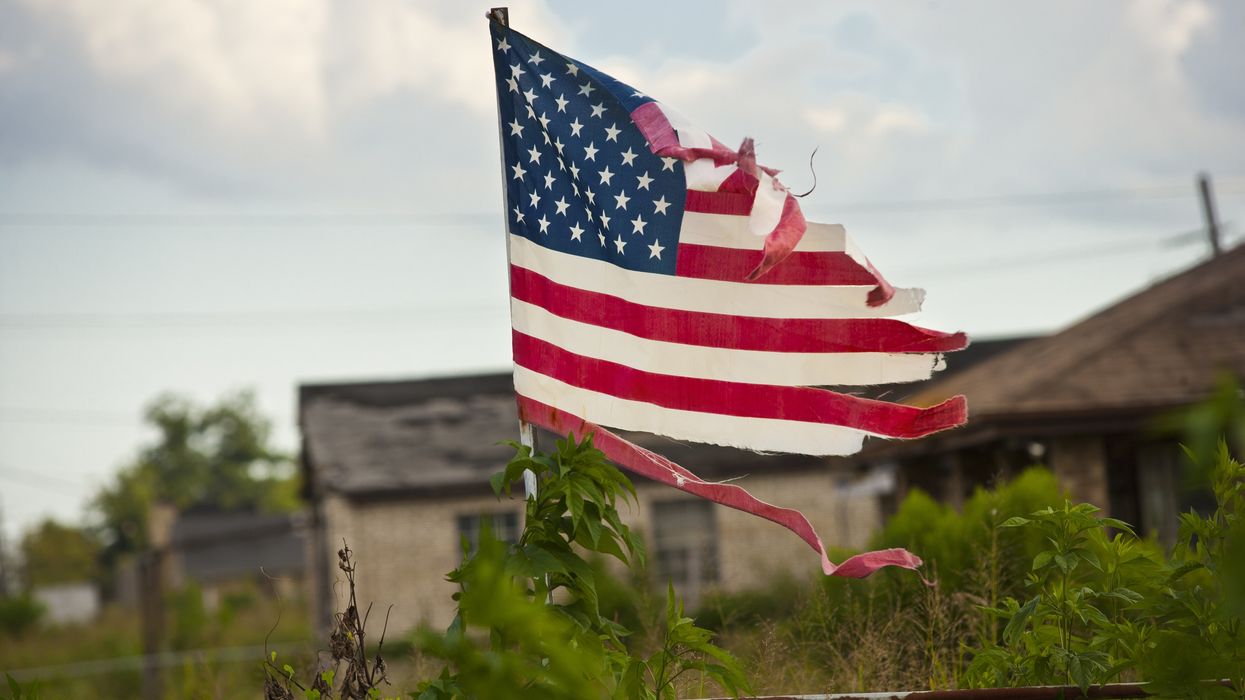
Tattered American flag

Trump's "Restoring Truth and Sanity" order targets how museums and parks present slavery and racism. Why one writer says Americans should push back.

Nisian Hughes/Getty Images

Trump's Mendacious, Deceitful Rewriting of American History

History is made of two parts. One is indisputable facts and the other is the interpretation of those facts. The history of history is filled with varying interpretations of the basic facts, usually tinted by the perspective of the historian or commentator. That perspective can be the writer's political leanings, his philosophy, or any number of personal biases.

All historians, however, whether conservative or liberal, regardless of philosophy generally agree on the basic facts. For example, while there are fringe groups and individuals who deny that the Holocaust happened—that 6 millions Jews were killed by the Nazis—no reputable historian disputes that fact.

Keep Reading Show less
​Paintings of Stalin

Paintings of Stalin on sale to tourists in Tbilisi's old quarter, Georgia

Getty Images

The Stalinization of America

In the mid-1930s in the Soviet Union, under Joseph Stalin's leadership, the NKVD (the predecessor of the KGB) drove around Moscow and other cities in trucks with the word ХЛЕБ on the side. This translates into English as “Bread,” leaving the appearance that these were bakery trucks distributing fresh bread throughout the city. The stories are well told by some of the great dissident Soviet writers of the time, like the poet Osip Mandelstam, his wife Nadezhda, and several others. Osip Mandelstam was first arrested in part for his satirical poem about Joseph Stalin entitled The Stalin Epigram.

Recently, one is drawn to recognize the parallels between the NKVD bread trucks and black SUVs filled with ICE officers, who mask their faces and offer no identification as they snatch children and adults off the street because they have melanin in their skin or speak with an accent. Like the NKVD, ICE officers shoot people without substantive explanation, detain more than 66,000 people, many without criminal records, including occasional citizens, and ship them off to undisclosed detention centers. They have also deported hundreds of thousands of people, often without notice or due process.

Keep Reading Show less