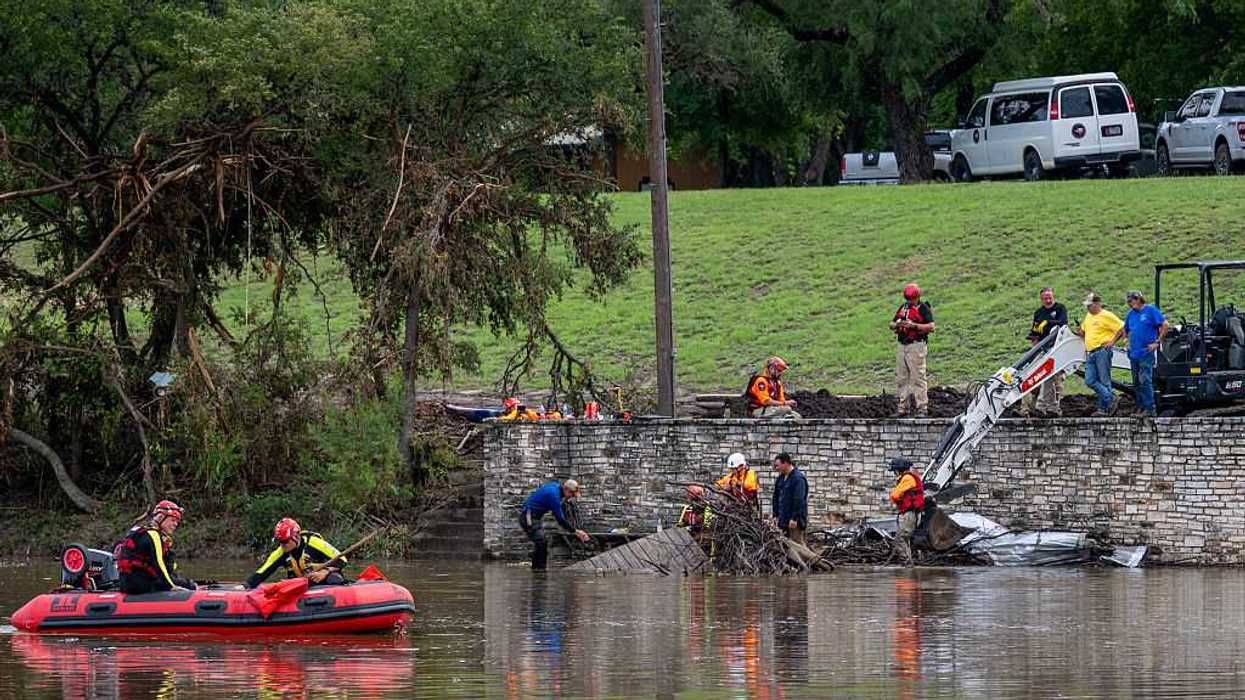

When the Guadalupe River broke its banks across Kerr County, the water carried off not only homes but many fragmented memories: a stuffed bear, a baby shoe, and family photos blurred beyond recognition. Within days, volunteers began piecing those fragments back together through a ‘Texas Flood Lost & Found’ network, reuniting survivors with what little could be recovered.
Within two weeks, more than 14,000 volunteers from different nonprofits showed up to help the survivors of the Hill Country floods. The same spirit defined Texas’s response to Harvey in 2017, when the state, along with its nonprofits, led one of the largest rescue operations in U.S. history.
From local food pantries to national relief networks, nonprofits have become the connective tissue of America’s disaster response. In those first hours, it feels like the whole country moves together. But when the cameras go dark, the rhythm breaks. The second act of the disaster- the long, uneven work of recovery, and the even harder task of preparing for the next storm- is the one we struggle to sustain.
The housing recovery after Harvey lasted 8 years. The same pattern appears in mental recovery. Nearly 3 in 10 disaster survivors face stress or anxiety across the U.S., yet only one receives counseling after a year, even when the need persists. And while communities rebuild, preparedness often slips back into the background. Many Americans still lack a household emergency plan, know little about evacuation routes, or have never participated in a community preparedness drill.
These gaps don't reflect a lack of will; they reveal the limits of a system that is built to respond, but not always to sustain. As emergency operations wind down and public attention shifts elsewhere, nonprofits continue showing up through recovery and preparedness. They "add value by acting fast, filling gaps, and advocating for vulnerable groups who are often forgotten when needs are overwhelming," in the words of Stephan Kline, who is CEO of NECHAMA - Jewish Response to Disaster.
After the Kerr County floods, one such nonprofit, Hill Country MHDD Centers, became a lifeline for survivors by opening a free emotional support hub. Counselors from the same town sat with families in grief, offering comfort that continues today for anyone still finding their way back to normalcy.
Another nonprofit, West Street Recovery, helped communities rebuild physically. After Winter Storm Uri, it began converting ordinary houses into ‘hub homes,’ equipped with solar panels and battery systems to keep power running.
Extending that spirit of preparedness, Sewa USA has taken readiness into the heart of communities. Through its unique AmeriCorps partnership, it has trained more than 12,000 people through community preparedness in disaster safety, mental health, and environmental awareness.
Yet across most communities, such efforts remain exceptions rather than infrastructure. The systems that scale nonprofits during response weaken once emergencies fade. To close that gap, nonprofits need structure and scale to keep the collaboration alive and strengthen two essentials between disasters: sustained rebuilding and community readiness.
A first step is building on what already works. ‘Voluntary Organizations Active in Disasters’ (VOAD) and Long-Term Recovery Groups (LTRGs) already unite hundreds of nonprofits for disaster response and recovery. But public attention, volunteers, and donations often decline rapidly after the response phase.
These LTRGs could evolve into a permanent ‘Resilience Division’, keeping the same coordination tables while also sustaining funding streams and volunteer engagement for continuity by maintaining a verified public portal where donors and volunteers can directly support trusted nonprofits.
These portals could keep recovery visible long after the response phase, sharing progress updates, photos, and stories that show how rebuilding actually unfolds on the ground.
Beyond recovery, these Divisions would also expand their mandate to preparedness. They would keep the network active through quarterly preparedness training hosted by member nonprofits in their own communities and annual reviews of lessons learned from past disasters.
Together, these systems would give nonprofits the structure to lead and sustain America’s disaster management. One where nonprofits preserve trust and relationships, and systems provide scale and authority.
Gitesh Desai is the former president of Sewa International USA’s Houston chapter and led large-scale volunteer rescue, relief, and recovery efforts during Hurricane Harvey.