Skip to content
Search

Latest Stories

Follow Us:
Top Stories

Showing Up and Staying: Disaster Relief in an Age of Distrust

Opinion

Showing Up and Staying: Disaster Relief in an Age of Distrust

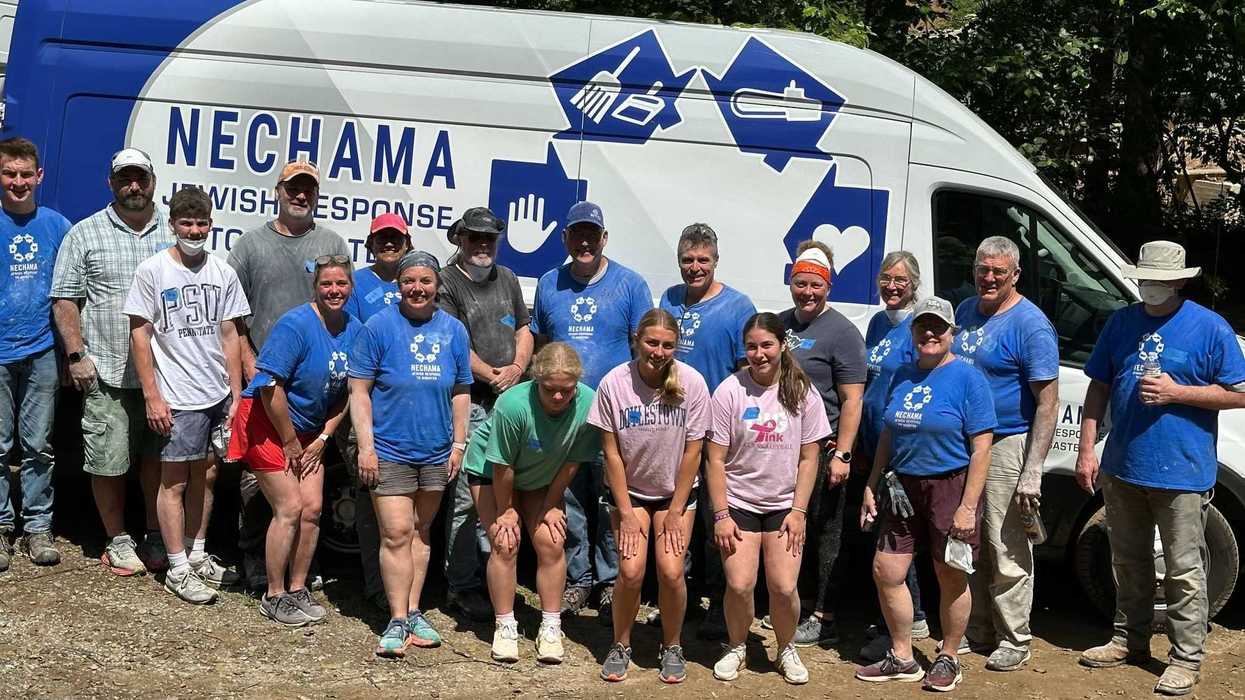
NECHAMA volunteers in Western North Carolina after Hurricane Helene.

As the Atlantic hurricane season officially began on June 1, disaster response organizations across the country are preparing for the next storm. That preparation includes coordinating logistics, purchasing supplies, training volunteers, and strengthening partnerships. It now also requires planning for an environment shaped by misinformation, distrust, and competing narratives.

A recent 60 Minutes segment examining extremist groups in disaster zones highlighted how quickly public perceptions can form after a disaster. Recovery efforts are now followed by outside groups and online networks attempting to influence how events are understood while communities are still in crisis.


The segment highlighted a reality many disaster response organizations have increasingly encountered: disaster zones are no longer only spaces for physical recovery. They are also environments where information moves quickly, emotions run high, and public perception can form before recovery is completed. In the 60 Minutes segment, Henderson County, North Carolina, Sheriff Lowell Griffin warned that this may become “the new normal” for disaster response.

Fear, uncertainty, and isolation create fertile ground for misinformation after disasters. In moments when communities are struggling to make sense of loss and disruption, narratives can spread quickly, often filling the vacuum before facts and recovery efforts have had time to take shape.

We saw this during NECHAMA’s deployment after Hurricane Helene in Western North Carolina. Volunteers from Jewish communities across the country worked alongside local churches, civic groups, and community organizations to clear debris, muck homes, and support families recovering from the storm. At the same time, online misinformation about both the disaster and recovery efforts circulated widely, often disconnected from conditions on the ground.

Disaster response now happens both on the ground and online, where recovery efforts and public narratives develop at the same time. In highly visible moments of crisis, volunteers become ambassadors of trust. Their presence shapes how communities understand who is showing up and whom they come to trust during uncertain times.
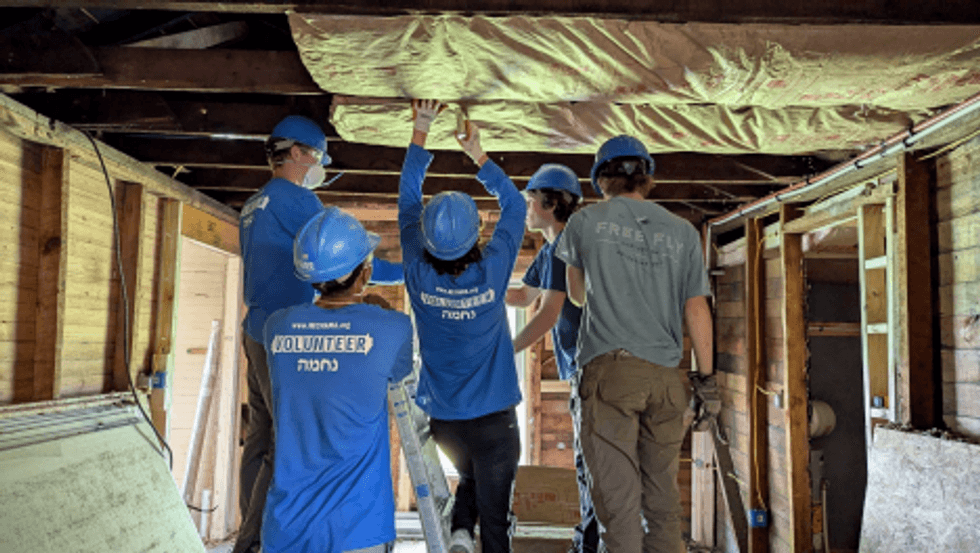
NECHAMA volunteers work alongside local residents during recovery efforts in Western North Carolina.

In many of the communities NECHAMA serves, our volunteers may be among the first Jewish people local residents have ever worked beside. In others, NECHAMA may be the only Jewish organization that people encounter during a time of crisis. Those interactions matter. Trust is often built not through statements or slogans but through direct experiences and shared work during difficult moments.

This does not mean disaster response should be reframed primarily through the lens of public relations. The core mission remains helping communities recover after disaster strikes. NECHAMA means “comfort” in Hebrew, and that commitment is reflected through direct service and long-term recovery work in partnership with local communities.

As storms grow more destructive and recovery becomes more complex for vulnerable communities, organizations are operating in environments where misinformation can spread rapidly and public trust can become fragile. That reality makes partnership, consistency, and long-term presence even more important.

For volunteers, showing up is only the beginning. Communities remember the people who work beside them, listen to their stories, and remain engaged after headlines fade. In an age of distrust, service itself becomes an act of relationship-building.

NECHAMA’s work has always been grounded in service: showing up, working alongside local communities, and remaining committed long after media attention fades. In moments of crisis, communities remember who showed up and who stayed.


Stephan Kline is Chief Executive Officer of NECHAMA – Jewish Response to Disaster.

Tzlil McDonald serves as Project Director, Combating Antisemitism, leading interfaith outreach efforts in Western North Carolina and beyond.

For more information, contact: stephan.kline@nechama.org or tzlil@nechama.org

Read More

The USMNT’s World Cup Win Is a Reminder of the America We Still Can Be

Folarin Balogun #20 of the United States celebrates scoring his team's third goal with Chris Richards #3 during the FIFA World Cup 2026 Group D match between USA and Paraguay at Los Angeles Stadium on June 12, 2026 in Los Angeles, California.

(Photo by John Dorton/USSF/Getty Images)

The USMNT’s World Cup Win Is a Reminder of the America We Still Can Be

LOS ANGELES, CA — The United States Men’s National Team opened its 2026 World Cup campaign with a commanding 4–1 victory over Paraguay, a performance that electrified fans across the country and reminded us — if only for a night — of the power of coming together. Folarin Balogun, and Gio Reyna delivered the goals, but the real story was the team itself: a roster whose roots stretch across Latin America, Africa, the Caribbean, and Europe. The USMNT is more than a soccer team. It is a living portrait of the multicultural nation we are, and the nation we still aspire to be.

That matters now more than ever. We are living through one of the most politically polarized moments in modern American history. The Trump administration has been widely criticized by civil rights groups and international organizations for policies that restrict entry into the United States for certain foreign nationals — policies that have even affected fans and FIFA referees attempting to enter the country for the World Cup. When a global celebration of unity is taking place on our soil, it is painful to see barriers erected that keep some of the world’s people out.

Keep ReadingShow less
8 Keys to Working Across Differences

Around 600 leaders from across the country gathered in Seattle for the Building Together 2026 conference.

8 Keys to Working Across Differences

Recently, close to 600 leaders from across the country — representing some of the nation’s largest grant makers, community foundations, and grassroots groups — gathered in Seattle. They joined forces to strategize on how to do the difficult work of bringing Americans together in an era of intense polarization that threatens to pull us apart.

The charitable sector has always played this role in American life, fueled by the belief that the country’s diversity of identities, priorities, and worldviews is a resource, not an obstacle. It mobilizes people from all walks of life when floods, wildfires, and other crises strike. It builds powerful coalitions for the common good, whether for a local park, job creation, or new affordable housing. And it connects people across seemingly insurmountable divides born of our differences in politics, class, race, faith, and more.

Keep ReadingShow less
Businessman on ladder arranging large, multicolored speech bubbles on blue background

Pluralism has a messaging problem. Explore how body metaphors shape politics, exclusion, diversity, and democratic governance across difference.


Malte Mueller / Getty Images

We Need a New Metaphor of Us

Pluralism has a messaging problem. Part of the reason why is that there is no common emotionally intuitive metaphor for the collaborative co-creation of governance across differences that is a pluralistic democracy.

This matters because humans do not think politically through abstract principles alone — we think through metaphor.

Keep ReadingShow less
Congressional Record: Capitol Hill’s Bipartisan Concert Starring Musical Congress Members

Congressman Maxwell Frost (FL) on the drums.

Congressional Record: Capitol Hill’s Bipartisan Concert Starring Musical Congress Members

WASHINGTON, D.C. – Representatives and senators remain fiercely divided over President Donald Trump… yet they remain united over John Denver.

On May 13, hundreds of attendees packed the U.S. Capitol Building’s auditorium for Congressional Record, a concert where musical Republican and Democratic members of Congress alike showcased their talents. Denver’s Take Me Home, Country Roads served as the grand finale, with all members joining onstage in a rousing performance across party lines.

Keep ReadingShow less