


This nonpartisan policy brief, written by an ACE fellow, is republished by The Fulcrum as part of our partnership with the Alliance for Civic Engagement and our NextGen initiative — elevating student voices, strengthening civic education, and helping readers better understand democracy and public policy.
Background
Natural resource extraction and processing comprise a significant portion of economic activity in the state of Utah. There are five oil refineries in the state, and as of 2023, it is ranked 9th in the U.S. for crude oil production. Utah’s energy sector contributes $12.1 billion to the state’s gross domestic product (GDP), which represents 6.3% of the state’s total economy and 74,200 jobs as of 2019. Meanwhile, the mining sector contributes $7.7 billion to the state GDP, 4% of Utah’s total economy and 56,700 jobs.
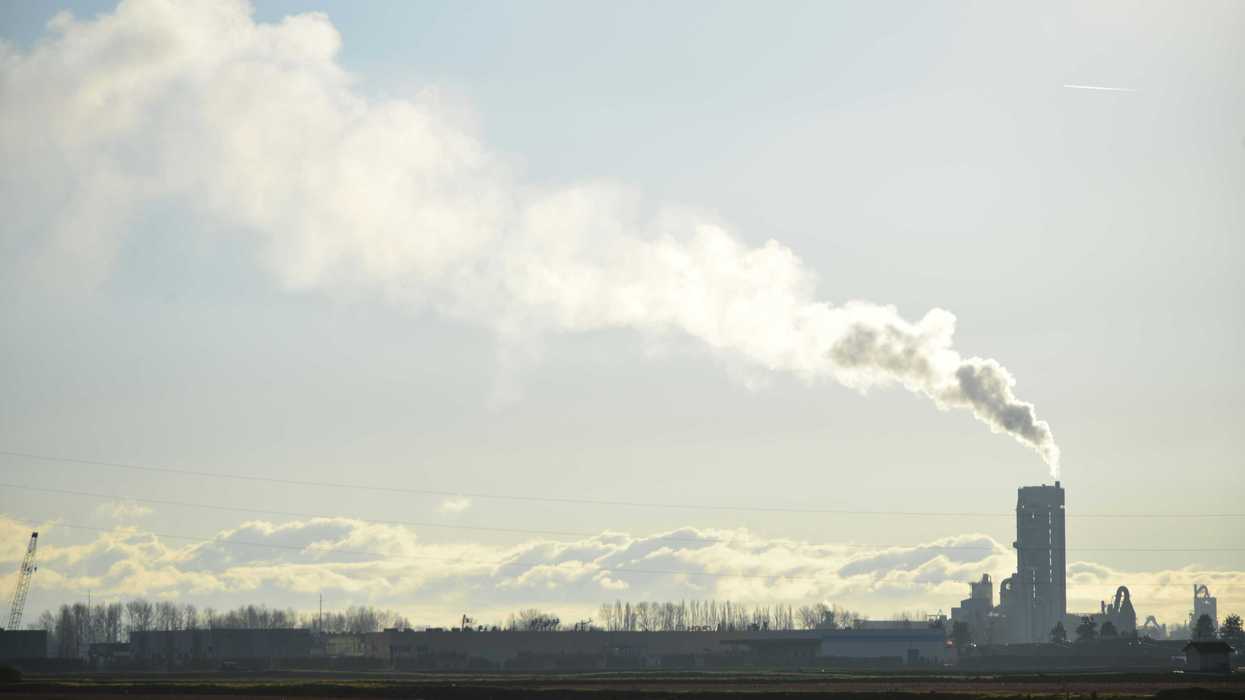
Energy production has raised concern in Utah due to its impact on the environment and contribution to climate change. 44 percent of Utah’s carbon emissions are produced by the electric power sector. These emissions are likely high because of the relatively high presence of coal and natural gas in the state. There have been recent court cases in Utah against the gas and oil industry, mostly stemming from youth climate groups concerned with emission levels. In December of 2025, Our Children’s Trust filed a suit against the Board of Oil, Gas, and Mining claiming that fossil fuel emissions were putting children’s futures at risk. It follows a previous lawsuit, Natalie R. v. State of Utah, which was brought to Utah’s Supreme Court by young activists as well, but was later dismissed in March of 2025.
Introduction to House Bill 222
Passed in 2026, Utah House Bill 222 establishes a climate liability shield that protects individuals and organizations from civil or criminal liability related to greenhouse gas emissions. Utah’s climate liability shield legislation protects entities from climate-related legal challenges, but does not apply to emission restrictions and permits, which are still valid under the bill. Thus, if an individual or organization violates the legal limit on the amount of greenhouse gas emissions or pollution permitted under Utah law, they are still at risk of legal pushback from governing bodies. The shield, however, provides a level of legal protection that has not existed before.
Why Do Advocates Support H.B. 222?
Liability cases limit power generation
Arguments for the protections provided by H.B. 222 stress the necessity of the energy sector and its ability to produce power for the state. Representative Carl Albrecht, the chief sponsor of the bill, argues that shields of this kind would “prevent plants from being shut down,” and would evade lawsuits which “limit power generation.” Historically, Utah has been an energy exporter, but heightened demand has led to the state consuming more energy than produced. However, it is still able to meet its baseline energy needs. Utah recorded an annual net generation of 35 million megawatt-hours of energy and a consumption of 34 million megawatt-hours in 2024, suggesting that the state is still meeting its baseline electricity needs despite the growing demand.
A climate liability shield may allow businesses in Utah to increase energy production. It has been shown that legal challenges to energy infrastructure reduce investment and create costs for consumers, another argument made by Representative Albrecht. Another argument shows that cumulative climate liability may not actually reduce emissions, but instead move production. In other words, climate liability cases against energy producers could lead them out of Utah, reducing energy production in the state.
Government regulation is too overbearing
Proponents also justify the legislation though claims that the state is encroaching too heavily on the actions of individuals and organizations. Emission regulations are set at the federal level, while climate cases attempt to regulate greenhouse gas at a state level. This has led oil industries in Utah to argue that the regulation of emissions via state-level climate liability cases is an example of state powers overstepping. The American Petroleum Institute, a trade association representing oil and natural gas companies in the United States, is adamant about limiting state overreach. They have even included it in their 2026 Agenda, arguing that it would increase the affordability and security of American energy.
Who Do Opponents Critique H.B. 222?
Lack of accountability for polluters
A major argument from opponents of H.B. 222 concerns accountability. Without the ability to try individuals or organizations for their emissions, there would be few ways to hold them accountable for their impacts on the environment. Environmental groups and scientists argue that Utah residents would not be able to adequately hold polluters responsible under the protections established by H.B. 222, and large oil and gas companies will not face consequences for the harm that their emissions cause. Without access to legal pushback, residents affected by emissions will have no ground to hold energy companies responsible.
Public health and environmental costs associated with greenhouse gas emissions
There are significant risks tied to greenhouse gas emissions. In Utah, high levels of volatile organic compounds (VOCs) are caused by oil and gas emissions. These toxic chemicals have serious negative health outcomes for those who are exposed to them, including general irritation, damage to internal organs, and increased cancer risk. Additionally, opponents of the bill argue that Utah is already facing the effects of climate change, and a lack of accountability would allow polluters to continue contributing to the climate crisis. Serious concerns about the future of the state’s natural areas and habitats have been raised in response to the passage of H.B. 222 and the negative environmental outcomes that would come from unchecked energy production. Opponents of the bill claim that the liability shield would not be needed if these industries were not actively causing harm for Utah residents. The costs tied to increased health and environmental protections are argued to outweigh those associated with limited power generation.
National Significance
While Utah was the first state to sign a climate liability shield, four other states have since moved to enact their own climate liability protections, and there have also been federal attempts to shield polluters from legal damages. Iowa, Oklahoma, Tennessee, and Louisiana’s state-level climate liability shields are similar to Utah’s in that they would limit the extent to which energy industries would be held responsible for their greenhouse gas emissions. On the federal level, Texas U.S. Senator Ted Cruz introduced a bill in April that would shield any individual involved in the energy market, from extraction to marketing, from civil damages related to their impact on the planet. This bill would not explicitly impact federal emissions caps, but would protect the energy sector from civil actions.
How Utah’s H.B. 222 Set the Stage for State-level Climate Liability Shields was first published by ACE and republished with permission.
Sophia Wind is an undergraduate student at Oregon State University, where she is pursuing a major in Public Policy with minors in Statistics and Economics.









The President Invited Iran to Bomb My Home