

Four years ago, a group of senior retired military leaders delivered an unusual message to the American people: trusted elections are not a partisan aspiration—they are a national security imperative. Today, as the country approaches the 2026 elections, these leaders have returned with a fresh warning and a revived hope. Their message is simple, urgent, and profoundly American: free and fair elections constitute the backbone of our constitutional republic, and every citizen has a role in protecting them.
Their new video featuring Gen. Michael V. Hayden, Gen. Stanley A. McChrystal, Lt. Gen. Douglas Lute, Lt. Gen. Mark Hertling, Lt. Gen. James Clapper, Maj. Gen. Marilyn Quagliotti, and Maj. Gen. Charles Bolden do not traffic in political rhetoric. Instead, they draw on decades of service, sacrifice, and direct experience in places where trust in institutions has collapsed. These leaders have seen what happens when citizens lose faith in the shared rules that hold a nation together—from the aftermath of elections in Iraq, where uncertainty led to widespread unrest, to the recent instability in Venezuela, where doubts about electoral legitimacy fueled chaos and division. Their message is not about party. It is about country.
To fully grasp the urgency of their message, the generals urge Americans to watch their new video. You can view it here:
- YouTube youtu.be
The Five Principles for Trusted Elections
The principles center on five core principles advanced by Team Democracy, the Ford Presidential Foundation, and the Carter Center. The principles are pillars that define what makes elections trustworthy and what keeps a democratic republic strong:
- Honest Process — Elections must be conducted with impartiality, transparency, and adherence to the rule of law.
- Nonviolent Campaign — Voters and candidates must be free from threats, intimidation, and violence.
- Secure Voting — Every eligible vote should be counted, and every effort to secure the process must preserve access.
- Responsible Oversight — Poll workers, observers, and administrators must understand and respect their roles.
- Trusted Outcomes — Once results are certified and lawful challenges resolved, their legitimacy must be upheld.
These principles are not abstractions. They are the practical standards that allow 330 million people to govern themselves peacefully. They are the guardrails that prevent chaos, manipulation, and mistrust. And they are the expectations that all Americans, regardless of ideology, should demand.
Why Their Voices Are Significant Now
In their message, the generals remind us that protecting elections is not politicians' job alone. It is the responsibility of citizens who value evidence over rumor, law over impulse, and country over faction. This means, for example, taking time to verify information through trustworthy sources before sharing it with others, and fact-checking claims that circulate online or in your community. By actively seeking out the truth rather than passing along unverified reports, every citizen helps guard the integrity of our democratic process.
Their warning is grounded in years of experience. Around the world, they have watched nations fracture when leaders undermine electoral legitimacy or when citizens abandon patience, verification, and peaceful acceptance of lawful results. They have seen how quickly misinformation corrodes trust, how rapidly intimidation erodes participation, and how easily force can replace democratic norms.
Their call is not alarmist. It is preventative.
Citizenship Requires Action
Supporting trusted elections is more than signing a pledge. It requires engagement:
- Learn how elections actually work.
- Share trustworthy information with your community.
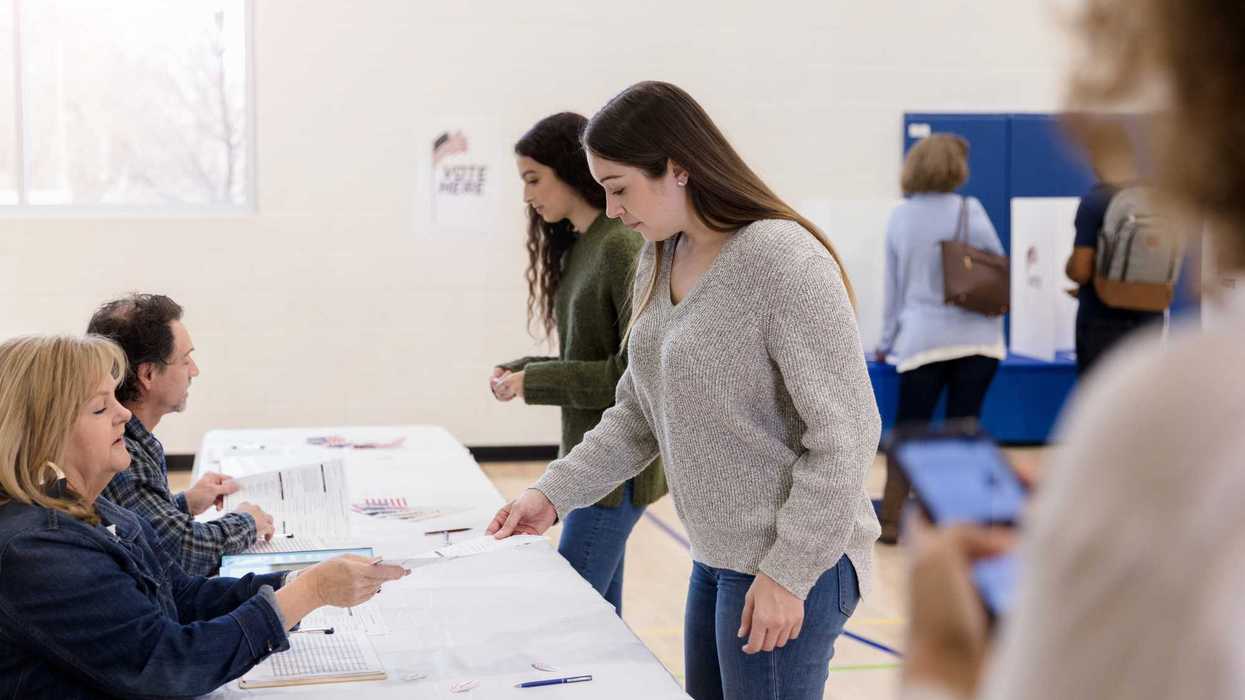
- Serve as a poll worker. This involves ensuring the voting process runs smoothly and fairly, from setting up polling stations to checking in voters and assisting people as they cast their ballots. Poll workers play a critical role in safeguarding election integrity and making the experience accessible to all.
- Visit an election center. By touring an election center, you can observe firsthand how ballots are processed, meet the officials who oversee the process, and ask questions about safeguards in place. This helps dispel myths and fosters greater transparency.
- Encourage friends and family to rely on evidence, not speculation.
These minor acts have big consequences. They strengthen the civic muscles that keep democracy resilient.
A Moment to Rise Above Partisanship
The retired generals’ message reminds us that trust in elections is not a Democratic value or a Republican value; it is an American value. Some readers may wonder if any group of leaders, even senior military officials, can truly rise above the political divisions of our time. Yet these generals have served administrations of both parties and have long been respected by Americans across the political spectrum. Their voices carry weight not because of their rank, but because of their experience defending the Constitution in moments when its survival wasn't guaranteed. Their commitment to nonpartisan service and to upholding the rule of law has earned them trust beyond partisan lines.
At a time when political messaging moves faster than verification, and outrage often outruns evidence, their call for restraint, patience, and integrity is not just welcome—it is essential.
The Path Forward
As the 2026 elections approach, Americans face a choice:
Will we allow distrust to deepen, or will we recommit to the shared principles that make self-government possible?
The retired generals have made their position clear. They are asking us to join them at www.PrinciplesForTrustedElections.org, not in partisanship, but in patriotism.
Trusted elections are how a free people keep their republic. And keeping the republic is up to all of us.
David Nevins is the publisher of The Fulcrum and co-founder and board chairman of the Bridge Alliance Education Fund.