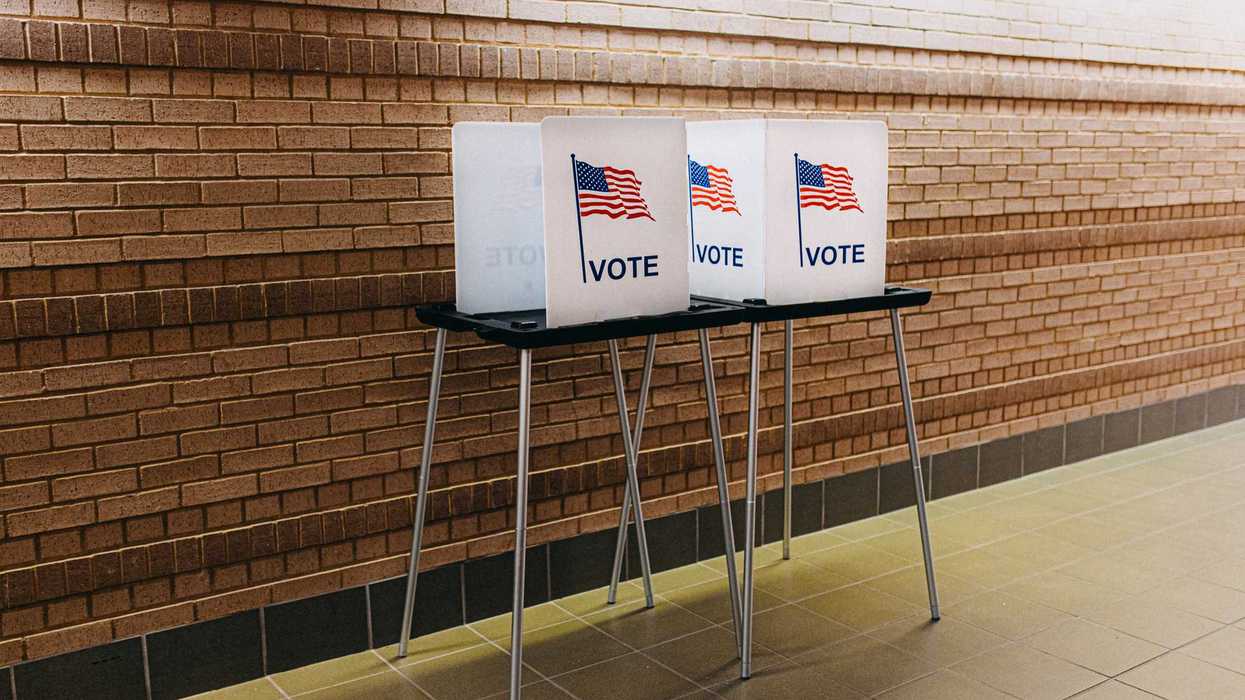
With Election Day approaching, concerns continue to mount over the possibility that the Trump administration could deploy armed federal agents to election sites. Democratic leaders, the NAACP, and the American Civil Liberties Union have already raised alarms, filing lawsuits after senior administration officials repeatedly refused to rule out sending armed federal agents or immigration officers to polling places during the 2026 midterm elections.
A Warning from National Security Leaders
On September 14th, National Security Leaders for America (NSL4A)—a nonpartisan network of more than 1,600 senior national security professionals, including retired admirals, generals, senior enlisted leaders, intelligence officers, diplomats, and civilian service officials—issued an unusually direct call to action. They urged state attorneys general to prepare now to seek emergency injunctive relief if the federal government takes identifiable steps toward deploying uniformed military forces or massed armed federal law enforcement personnel into major American cities in connection with the November elections.
NSL4A’s message was blunt: states cannot wait until “troops and federal agents are moving down their streets” before asking courts to protect voters from unlawful interference. Their warning reflects a broad, bipartisan consensus within the national security community that coercive federal deployments at election sites would violate constitutional norms and destabilize election administration.
NSL4A’s Mission and the Legal Guardrails Already in Place
NSL4A describes itself as a nonpartisan network united in defense of American democracy. Their September statement emphasizes that federal law already provides strong protections against military or coercive interference in domestic elections, including:
- 18 U.S.C. § 592 — “Troops at polls,” restricting the presence of armed personnel at election sites.
- 18 U.S.C. § 593 — prohibiting military interference with voters or election administration.
- 18 U.S.C. § 594 — criminalizing voter intimidation, threats, and coercion.
- 18 U.S.C. § 1385 — the Posse Comitatus Act, barring use of the Armed Forces for civilian law enforcement unless expressly authorized.
These statutes form a clear legal framework: federal military or massed law‑enforcement deployments at polling places are presumptively unlawful.
Congressional Concerns and the Limits of Current Assurances
On July 28, Senator Edward Markey, Senate Democratic Leader Chuck Schumer, and ten other senators wrote to the Departments of Justice, Homeland Security, and Defense demanding clarity on whether the administration intends to deploy troops or armed federal law enforcement personnel to polling places. Their inquiry followed repeated evasions by senior officials and the discovery of thousands of pages of federal records potentially related to election‑site deployments.
General Dan Caine’s August 31 statement—that the military has no current plans to deploy forces to polling places—offered partial reassurance. But NSL4A notes that his assurance is limited: it does not rule out future deployments ordered by the President, nor does it address actions by the Departments of Homeland Security or Justice. States, they argue, should take the statement seriously but not treat it as a guarantee.
Why States Must Prepare Now
NSL4A stresses that attorneys general cannot act on speculation. But informed anticipation is not speculation, and waiting until a deployment is already underway would leave states with little recourse. They are not urging premature or unsubstantiated lawsuits—they are urging preparation.
States should be ready to act the moment concrete evidence emerges of deployment orders, personnel notifications, staging activity, transportation arrangements, or facility reservations indicating an imminent federal deployment.
As NSL4A’s press release states, attorneys general should be prepared to seek narrowly tailored injunctive relief preventing military or massed federal law‑enforcement forces from intimidating voters, interfering with election officials, or disrupting election administration.
The Stakes, in NSL4A’s Own Words
They write:
“This is not about obstructing legitimate law enforcement or emergency assistance. It is about enforcing the Constitution’s prescribed structure for conducting elections and preventing the coercive power of the federal government’s executive branch from being brought to bear on an American election. The danger of waiting is clear. State officials must prepare now to seek immediate relief from the courts when the threat becomes imminent—not after the trucks have rolled, armed federal personnel are in the streets, and voters are already questioning whether it is safe to cast their ballots. The courts exist in part to prevent unlawful government action before irreparable damage is done. State attorneys general should be prepared to use them.”
The message is unmistakable: vigilance now is essential to prevent crisis later.
David Nevins is the publisher of The Fulcrum and co-founder and board chairman of the Bridge Alliance Education Fund.