




Once a month, on the evening of the first Wednesday, I sit on an elevated platform behind a horseshoe-shaped desk in my role as a member of my community’s historic preservation commission in Urbana, Illinois.
On the lower level and at floor level, is a conference table and behind that a room filled with chairs that may all be full – but are more frequently close to empty.
This is the setting of public meetings, where the commission interacts with members of the community and fulfills its duties as supporters of community history and preservation.
The charge is to uplift local history and storytelling and to help preserve an indelible sense of place by creating historic landmarks and historic districts in collaboration with all the diverse people in the community. To do a good job, it is essential to know what places people care about and be open to learning new things.
But it is an awkward setting with artificial constructs around communication that limit who can speak when and for how long.
Those rules are created by local policy and Open Meetings Act guidelines and they put enormous distance – both physical and emotional – between the public and the commission appointed to represent them.
In this setting fulfilling these obligations is problematic. The difficulty is that this is how democratic public participation is designed to work.
The challenge of authentic public participation is not new and it is not confined to historic preservation. Since the 1960s, the Civil Rights era, scholars have studied democratic culture in the U.S. and identified best and worst practices.
Across the country, recent news coverage of public outrage over data center construction is one example of the way that citizens attempt to influence policy by attending official public meetings and making their views known.
But often, by the time an issue has reached an open meeting, a decision has already been made behind closed doors.
The Henry Luce Foundation has identified the “frayed fabric of democracy” as one of the essential issues of the present moment. Historic preservation advocates are left with an open question – how to support a public increasingly distanced from participation in official government policy and activity.
The federal Advisory Council on Historic Preservation recently advanced an agenda to all but eliminate public participation in what is called Section 106 Review. That’s a jargon term for a simple idea – the public should have a say in decision-making when federal dollars are involved in projects that affect historic places.
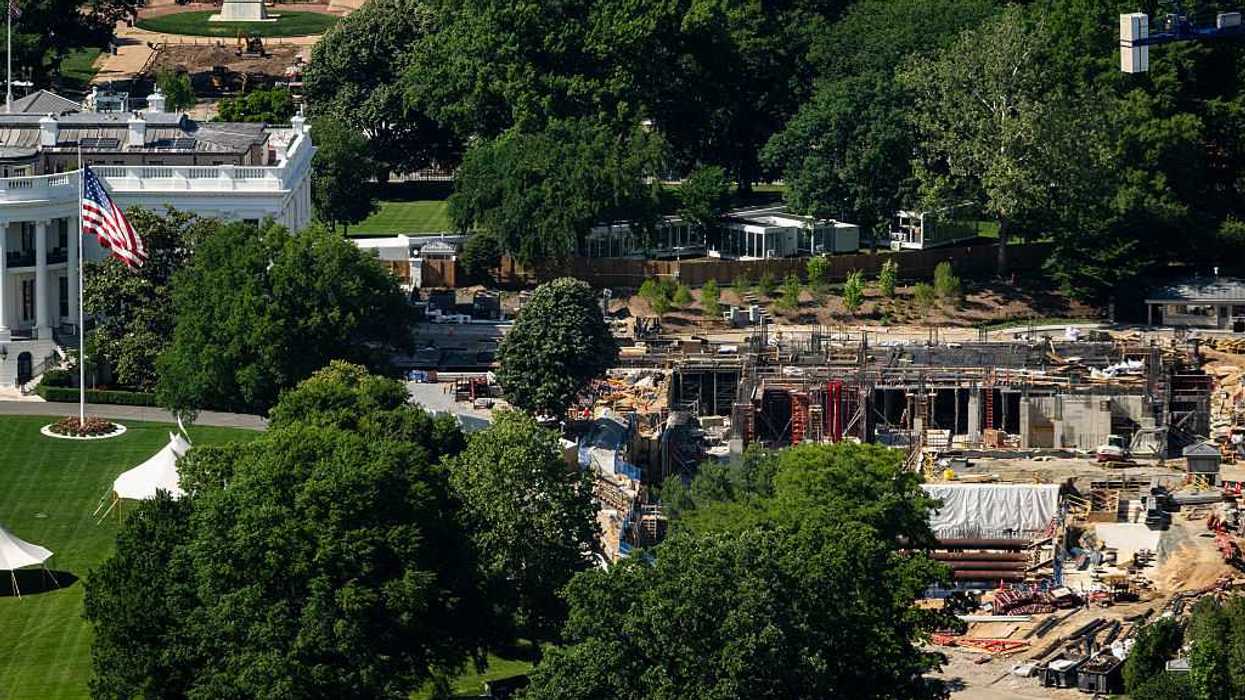
In October 2025, for example, the east wing of the White House fell to the wrecking ball without project review, infuriating preservation advocates. And again without project review, concrete is being poured for a 250-foot triumphal arch that would block the line of sight between Arlington National Cemetery and the Lincoln Memorial, a crucial memorial landscape reflecting both the enormous loss of life in the Civil War and the country’s reunification at its end.
From the beginnings of the preservation movement in the U.S., grassroots public participation has been foundational, not just in Washington, DC but in local communities across the country. Who knows a community better than the people who live in it? In a moment when public participation is being devalued and bypassed, it is critical to find ways to reconnect.
That can mean low-stakes community-building events, including organizing a neighborhood tour or open house; hosting a panel on community history and inviting city staff and officials to join. It can also mean rebuilding community investment in place and storytelling by creating platforms for communities to tell their own stories. Preservation is the most environmentally and culturally sustainable way to reinvest in cities and communities – but we need advocates at the table to help shape policy.
The Annenberg Institute for Civics invests in innovative ways of providing expanded civic education. Historic preservation advocates should take a cue from their successes. While a love for historic architecture and places is at the foundation of preservation, it cannot succeed without a deep sense of civic obligation.
It is not possible to build that civic culture by looking from the horseshoe down. We cannot protect historic preservation with Section 106 alone.
Preservation requires local communities who care about their neighborhoods and civic institutions and who are empowered to shape civic decision-making. Now is the time for preservation advocates to focus on breaking down barriers, reducing jargon, cutting through red tape, and supporting grassroots organizing from the ground up.
Kathryn Holliday is the inaugural Randall Biallas Professor of Historic Preservation and American Architectural History at the University of Illinois Urbana-Champaign. She is the author and editor of four award-winning books and is a Public Voices Fellow of The OpEd Project and the University of Illinois system.






The President Invited Iran to Bomb My Home