


“Right now, we have more workers than at any time in the history of our country…And people want to come in, and in some cases, they want to take advantage of that, and that’s okay,” President Donald Trump said in a 2018 statement. “And we want them to come in, but they have to come in through merit.”
These narratives paint a vivid picture of America’s struggle with immigration: a "city on a hill" slowly becoming overrun by foreign nationals, purportedly due to open-border policies. The rhetoric suggests the United States suffers from its own success, attracting immigrants who arrive in search of "government handouts" or to evade criminal charges.
According to the Commonwealth Institute, 3 million people in the United States had refugee or political asylum status as of 2016. Many more arrive fleeing natural disasters and violence that do not qualify for "political asylum." Some immigration opponents argue that those fleeing difficult situations should remain in their home countries to effect change. While this is a hopeful perspective, it fails to account for the historical factors that drive migration to the U.S.
The argument assumes that populations in disadvantaged countries possess the infrastructure and capacity to catalyze significant change at a low personal cost. However, in many nations, gang violence, government corruption, and perilous living conditions preclude the possibility of citizens "pulling themselves up by their bootstraps."
Acknowledging the humanitarian drivers of migration is only the first step. Research consistently demonstrates a clear link between U.S. foreign policy trends and immigration rates.
Migration increases from El Salvador, Guatemala, and Honduras as recently as the 2000s are deeply connected to U.S.-backed peace agreements in the 1990s. These exoduses stem from the pursuit of neoliberal privatization and "market-friendly" economic policies that undermined progress toward sustainable social peace. Furthermore, foreign investment in extractive sectors displaced rural and Indigenous populations.
The policies of major international institutions—the U.S. government, in particular—exacerbated these trends, leaving people without livelihoods and in danger. Criminal gangs and drug-related violence are manifestations of these underlying processes, which drive waves of "survival migration."
El Salvador serves as a helpful case study when examining U.S. intervention during the Cold War. Scholars have analyzed how U.S. support for the Salvadoran government during its civil war, followed by enforcement-centric immigration policies, created an environment that compelled Salvadorans to flee—a trend that continues today.
El Salvador also serves as a critical example, illustrative of broader U.S. policies toward North Central America (Guatemala, Honduras, and El Salvador) and Latin America as a whole.
As Amanda Dixon writes in her research on the intersecting causes of immigration: “The failure of both the Ronald Reagan and Bill Clinton administrations to consider the interconnectedness of their foreign and domestic agendas exacerbated the issue of irregular immigration from Central America.”
Research has also illustrated a clear causal relationship between the U.S.-backed Contra War in Nicaragua and an influx of Nicaraguan immigrants into the U.S.
Further, U.S. influence contributed to the Latin American debt crisis, which caused several economies to plunge. Domestic causes of the crisis can be traced to fiscal deficits incurred between 1978 and 1982 and the expansionary monetary policies used to finance them. U.S. commercial banks pushed loans on Latin American countries, creating heavy debt obligations. Subsequently, wealthy countries, including the U.S., raised interest rates to fight inflation, which skyrocketed borrowing costs for Latin America and exacerbated economic conditions that led many to seek a brighter future in the U.S. today.
These historical examples are often viewed as niche or contrarian interests. While significant, they have virtually no impact on how we evaluate current immigration policy beyond a reactive hope that "that doesn’t happen again."
Yet, the U.S. government shows no indication of altering its foreign intervention strategies to mitigate harm or reduce migration, particularly in Latin America.
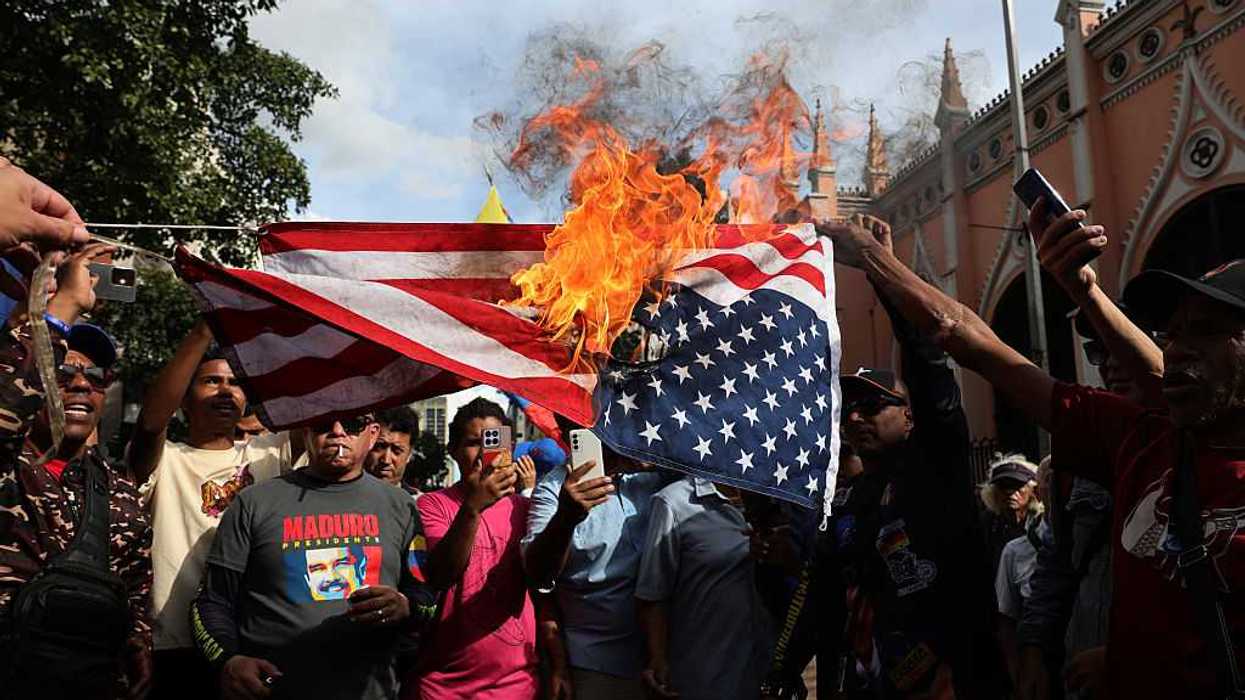
Operation Absolute Resolve ousted Venezuelan dictator Nicolás Maduro, leading to the release of political prisoners and sparking a brief era of optimism. However, Maduro’s vice president, Delcy Rodriguez, assumed power, and no significant regime change appears imminent. Venezuelan funds were subsequently routed through Qatar, which gifted a new Air Force One plane to President Trump, and the New York Times has revealed that Secretary of State Marco Rubio has effectively been managing the country.
U.S. Secretary of State Marco Rubio has also made clear his intention to pursue regime change in Cuba, which has been under U.S. embargo since the 1960s.
Similarly, President Trump has directed significant capital into Argentina to support political allies. The Trump administration intervened financially in the October 2025 Argentine midterm elections by tying a massive economic bailout to the electoral success of Argentine President Javier Milei, emphasizing that Milei’s far-right party must remain in power for U.S. aid to continue amid the country’s persistent inflation and economic instability.
Where does this leave the immigration conversation? Is there value in adding nuance to an already polarized issue? There are no perfect answers, and arguing for either absolute open borders or indiscriminate deportation is unfeasible.
However, few immigrants choose to circumvent the law lightly. The "illegal" route to the United States is difficult, expensive, and dangerous—but it is often the fastest way to escape immediate harm, a role the United States has played a significant role in facilitating.
We cannot remove immigrants from U.S. history, nor can we remove the United States from the history of immigrants. If we continue to pursue foreign policies that ignore the past, we are bound to recreate the problems of the present. Moving forward requires discarding a rose-tinted view of U.S. policy in favor of developing sustainable, evidence-based solutions.
Isabel Papp is a summer fellow with The Fulcrum and a student at Northwestern University, double‑majoring in Journalism and Political Science. A bilingual journalist, she is a proactive, equity‑centered storyteller committed to elevating underrepresented voices.
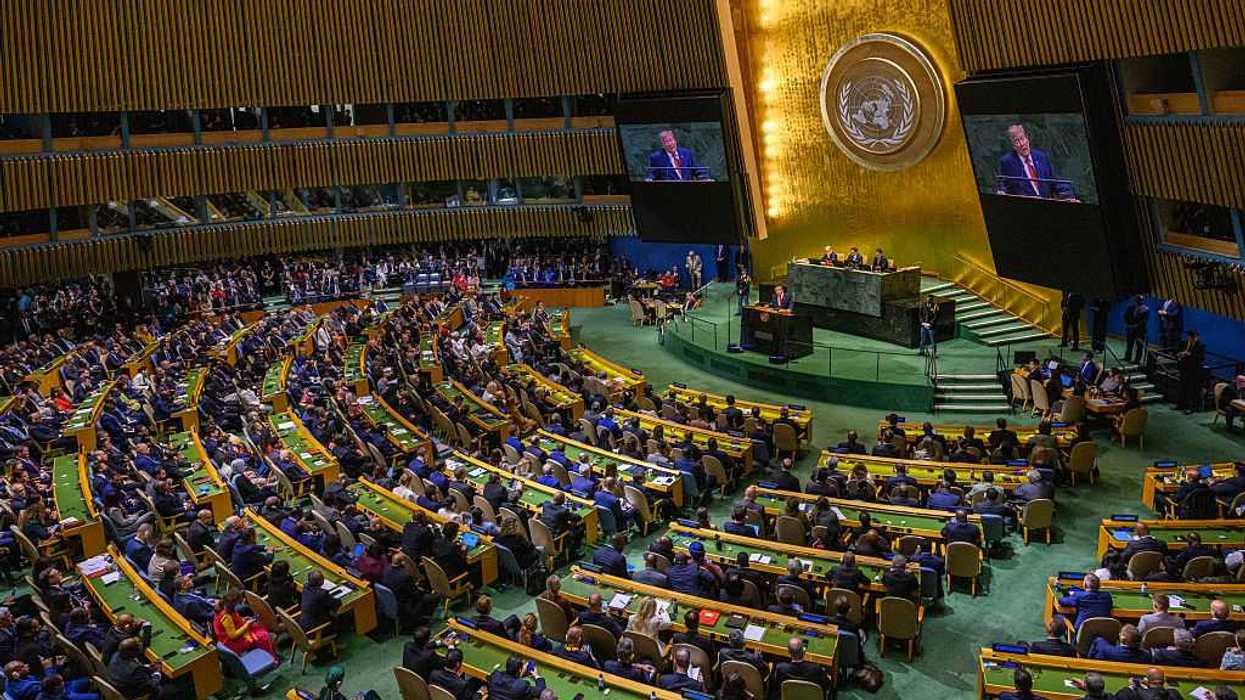
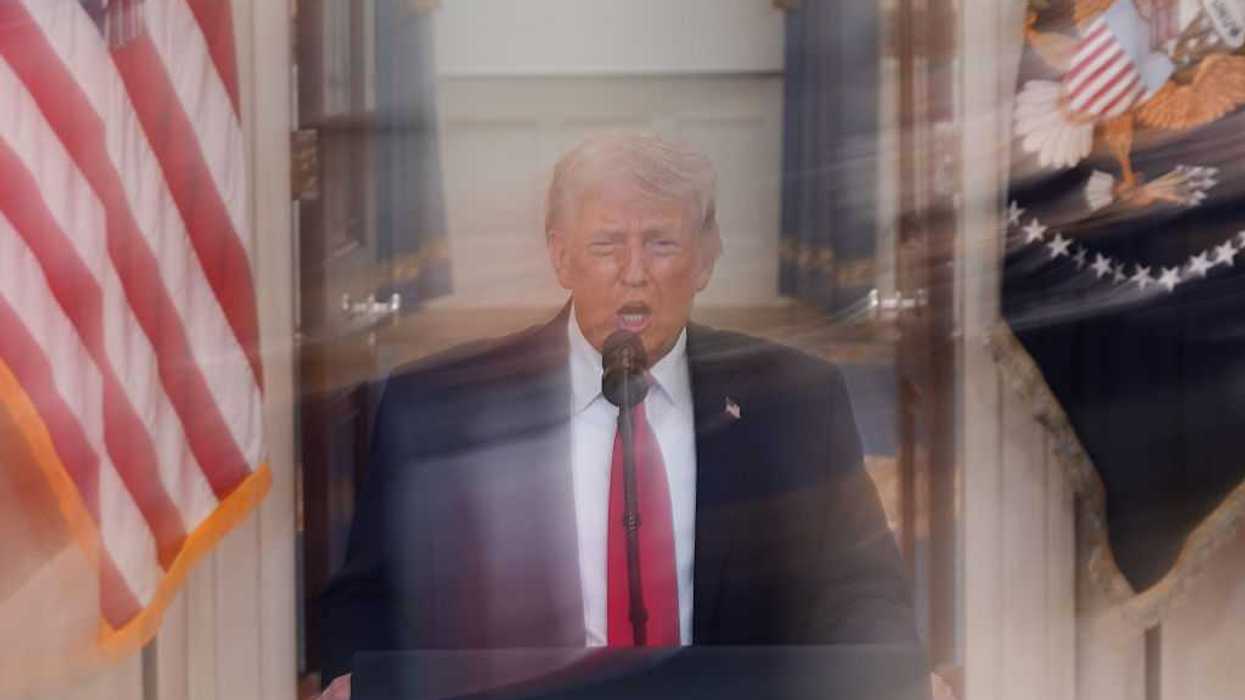









U.S. President Donald Trump speaks during a“ Steel Across America” event ahead of the 25th anniversary of the Sept. 11th attacks on the Ellipse near the White House on Sept. 8, 2026 in Washington, D.C. President Trump welcomed 9/ 11 first responders to the Tunnel to Towers Foundation’ s“ Steel Across America” event featuring a 16,900- pound, 21- foot steel beam recovered.
For Trump, even 9/11 is an opportunity
There was a reason organizers of the 9/11 ceremony in Manhattan told President Trump he could not speak at this year’s memorial service.
A good one, it turns out.
Because in a speech he gave on Tuesday in Washington, he did exactly what they were presumably worried about — he made it about himself.
According to The New York Times, Trump had wanted a speaking role at the service, but the National Sept. 11 Memorial and Museum, which oversees the site, said no, as they’ve maintained for the past decade-plus that the venue and event should be nonpartisan.
Trump has long used awful tragedies to either puff himself up, trash political opponents, or sell lies to the American people.
He blamed a deadly plane crash at Washington National Airport last year on diversity, equity and inclusion policies. He blamed Puerto Ricans for the devastation they endured after Hurricane Maria in 2017. He reportedly considered withholding disaster relief after the California wildfires based on the way affected regions voted. In an interview on Fox News meant to commemorate the 75th anniversary of D-Day in Normandy, he used the occasion to slam former House Speaker Nancy Pelosi…with graves of the dead behind him.
And now, as we approach the 25th anniversary of what many New Yorkers consider the darkest day in modern history, Trump has done it again.
He told a rambling, nonsensical story — one he’s told before — about going to Ground Zero just after terrorists flew two commercial jets into the twin towers. In the story, which no one has been able to verify, despite multiple attempts, he says firefighters had to carry him out of One Liberty Plaza, also known as the U.S. Steel Building, because they thought it was about to collapse.
As CNN fact checker Daniel Dale notes, there’s no evidence Trump went into this building, especially at a time when NYPD and NYFD had locked down the area. There’s no evidence that building was collapsing — in fact, it was deemed structurally sound and reopened within two months of the attacks. There’s no evidence he was carried out of it by firefighters.
But the lie isn’t even the worst part. Pretend it was all true — why would the leader of our country, and a New Yorker, decide to make that tragic day about himself?
Because that’s who Donald Trump is. He’s a malignant narcissist.
He’s also, incidentally, a terrible and ineffectual president, who’s made ill-fated decisions that he has to keep defending, and there’s nothing he won’t do to make himself look and feel better.
Within the first two minutes of his speech, he was cravenly using 9/11 to justify and promote his dumb war in Iran — two events separated by 25 years and 6,000 miles.
“And I will tell you, we’re right now fighting because we have a certain nation that wanted a nuclear weapon, they were very close to getting it, and now they have no chance at getting it. They will never have a nuclear weapon. Iran will not have a nuclear weapon. And they’ve been punished greatly. As you know, we’ve really taken it to them.”
As a New Yorker who lived through 9/11, still one of the worst days of my life, I’m utterly sickened by Trump’s crass, political, and self-promotional framing of that awful day.
And I’m relieved he won’t be given a platform to do it again on Friday’s anniversary in lower Manhattan.
Because for Trump, everything is his for the taking, and absolutely nothing is sacred.
S.E. Cupp is the host of "S.E. Cupp Unfiltered" on CNN.