


Political parties are supposed to do two things at once: win elections and govern. Those are not the same skill.
Winning elections requires assembling coalitions large enough to secure power. Governing requires maintaining enough internal agreement to make decisions, negotiate trade-offs, allocate resources, and sustain policy direction once power is achieved.
American politics reveals the tension between those two functions.
The first essay in this series described how political coalitions can weaken long before political institutions visibly destabilize. Parties may remain electorally competitive even as the alliances inside them become more internally strained and socially divided, and less capable of producing coherent governance.
One reason is that opposition itself has become one of the strongest forces sustaining political coalitions.
For much of American history, political coalitions were organized primarily around governing agendas: industrial growth, labor rights, anti-communism, tax policy, civil rights, or the role of federal power. Internal disagreements existed, sometimes intensely, but coalitions remained viable because their factions still shared enough governing priorities to stay together.
Coalitions can be reshaped underneath stable-looking institutions. The forces driving that change vary across eras. Today, opposition politics has become one of the strongest. In 1971, two months before being nominated to the Supreme Court, Lewis Powell wrote a confidential memorandum for the U.S. Chamber of Commerce arguing that American business needed to organize itself politically with the same discipline and long horizon that its critics had brought to academia, courts, and media. The memo helped catalyze a wave of institution-building in think tanks, legal advocacy, and political operations whose effects became visible across the following decades, from the Reagan realignment through the Gingrich revolution and the Tea Party movement. That a sitting Supreme Court nominee would write such a document remains a striking moment in American political history, regardless of one's view of its merits.
I watched part of what followed. The Republican administration that established the Environmental Protection Agency and signed the National Environmental Policy Act in 1970 had treated environmental regulation as a bipartisan concern. By the early 1980s, running water-pollution enforcement contracts for that same agency, I was watching the posture reverse. Economic-impact tests gained weight against health and environmental findings, and political appointees arrived with industry ties earlier administrations would have treated as conflicts.
That kind of reshaping took time, and the Powell memo did not cause it on its own. A parallel institutional buildup, organized around different priorities, eventually reshaped the other party as well. The two buildups are not perfectly symmetric — the Powell-era institutional architecture has a more continuous documented history than its counterparts on the left, and the contemporary record of governing failures is correspondingly skewed. The result, on both sides, was political coalitions whose internal coherence increasingly depended on shared opposition to the other side rather than shared governing priorities.
That shift changes how political coalitions maintain cohesion. Opposition politics lowers the amount of internal agreement required to sustain a coalition electorally. Parties can remain unified so long as resisting the opposing side remains the dominant shared priority. Governing requires something different. Coalitions must establish priorities, sustain compromises, and make trade-offs among factions whose interests diverge once governing decisions carry real consequences.
The result is a growing gap between electoral cohesion and governing coherence.
Both parties have demonstrated this pattern in recent years, in mirror image. In 2017, Republicans held the House, the Senate, and the presidency after campaigning for seven years on repealing the Affordable Care Act. They could not pass a replacement. The factions that had united against the law could not agree on what should replace it once governing required them to choose.
Four years later, Democrats held unified control and campaigned on a Build Back Better agenda whose broader social-spending elements collapsed inside their own coalition. A narrower piece survived as the Inflation Reduction Act. The factions held together to win the election. They could not hold together to legislate the full agenda.
Those failures do not necessarily prevent parties from winning the next election. Opposition politics can sustain electoral cohesion even as governing continuity weakens.
That dynamic shapes how government functions. Congress struggles to sustain durable bipartisan governing agreements on long-term issues. Executive authority expands as legislative compromise weakens. Elections reward coalition breadth. Governing requires coalition discipline. Administrations rely on executive action because stable legislative coalitions capable of sustaining long-term policy settlements become harder to assemble and maintain.
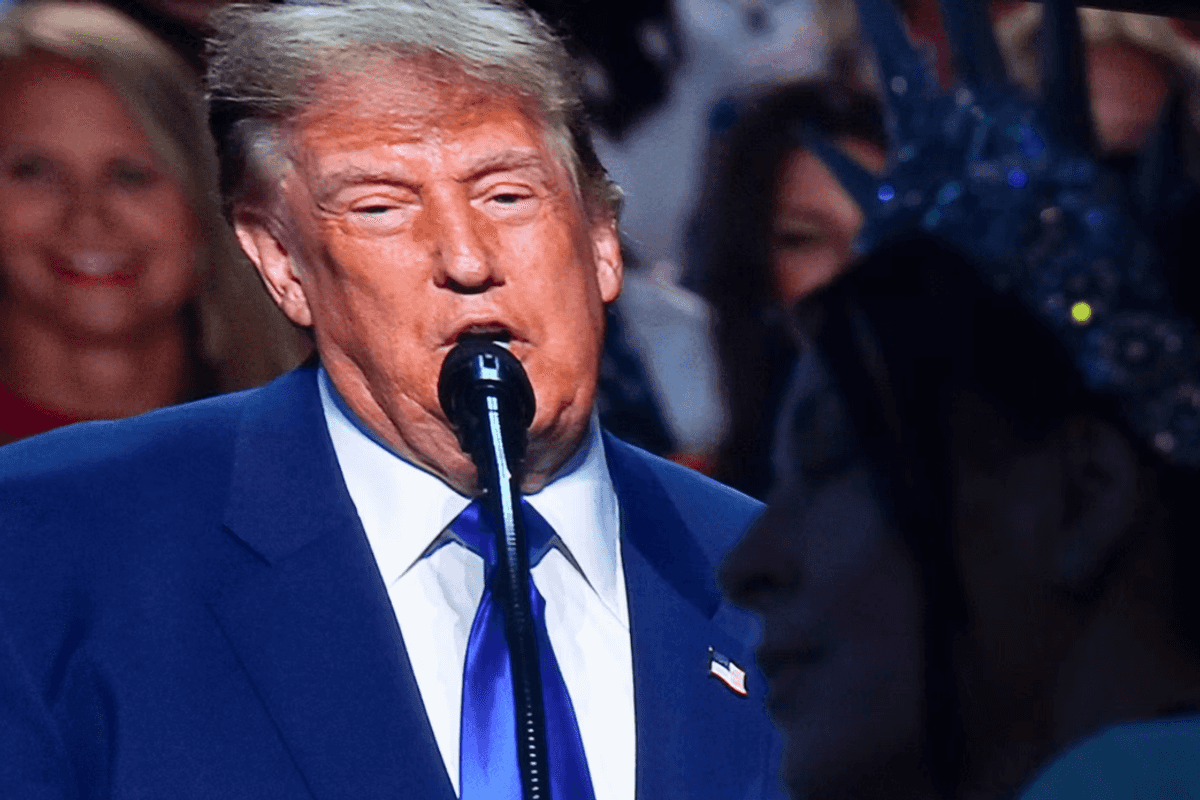
Donald Trump did not create these pressures, but his rise accelerated many of them. His political success demonstrated how powerfully opposition politics and anti-establishment sentiment could reorganize coalition behavior inside one of America's two major parties. Opposition to Trump simultaneously became a major unifying force inside the Democratic coalition, helping hold together groups whose internal disagreements became more visible once governing responsibilities returned.
The problem emerges when political coalitions can still win elections but no longer sustain durable governing agreement across administrations.
A political system can produce winning coalitions and failing governments at the same time. That is increasingly what American politics looks like.
The next essay turns to what coalition fragility costs when grids, infrastructure, and defense planning all require horizons longer than any single administration.
Edward Saltzberg is the Executive Director of the Security and Sustainability Forum and writes The Stability Brief.