

At the start of Donald Trump’s second term, the Senate had a very important job: provide advice and consent on the newly elected president’s cabinet picks, as enumerated in Article II, Section 2, Clause 2 of the U.S. Constitution.
These hearings don’t always come with fireworks, controversy, and drama — in 2017, for example, all but one of Trump’s nominations were confirmed. In 2021, all but one of Joe Biden’s picks were confirmed.
But in all fairness, neither 2017 nor 2021 was the wild and wacky clown show of 2025.
Trump’s second-term Cabinet reads like a list of Who’s Who of questionable and unsavory characters from the quackiest corners of the MAGA mediasphere.
There was Defense Secretary Pete Hegseth, whose “Fox & Friends” weekend co-host gig may have gotten him the job, but whose personal life — accusations of infidelity, sexual assault and alcohol abuse — became a humiliating and alarming sidestory that nearly derailed his confirmation. Emphasis on “nearly.”
There was Justice Department head Pam Bondi, who had actively worked to undermine the 2020 election results, had faced accusations of corruption while Florida attorney general, and was presumed to be a willing accomplice in Trump’s efforts to weaponize the DOJ against his political enemies.
There was Robert F. Kennedy Jr., a known science-denier and conspiracy theorist whose weird interactions with a dead bear, a dead dog, a dead brain worm— and a living New York magazine reporter— very much should have ended his confirmation bid.
And let’s not forget Tulsi Gabbard, Kash Patel, Kristi Noem and Howard Lutnick — a “Star Wars” bar of unqualified, attention-seeking sycophants who definitely weren’t “the best people.”
But every one was confirmed, in many cases with every Republican voting yes — only five of the 53 Republicans voted against at least one of the president’s nominees, despite their clear and concerning controversies. It was an embarrassing look for the upper chamber.
But what a difference a year — and a midterm election — makes.
The Senate seems to have finally found its voice in standing up to Trump as he — and maybe because he — actively imperils their majority with every primary challenge, impolitic distraction, and election denial he offers.
Majority Leader John Thune has resisted pressure from Trump to eliminate the 60-vote legislative filibuster, and is now openly stating his frustration at Trump’s demands that Republicans pass his election-denialism SAVE America Act, telling Trump to “get on the phone and get the votes.”
Despite Trump’s insistence, Thune is pushing for senators to go home so they can campaign for their reelections, something Trump seems wholly disinterested in.
Meanwhile, retiring Sens. Thom Tillis and John Cornyn — both victims of Trump’s capricious and needless primarying — have held up his nomination of Todd Blanche to be attorney general, insisting Blanche provide a written guarantee the administration will not pursue a $1.8 billion weaponization slush fund.
Trump, who can only afford to lose one Republican vote, said Thursday that he may withdraw Blanche’s name until Tillis and Cornyn are out of office next year.
Three other Republicans — Bill Cassidy, Susan Collins and Lisa Murkowski — banded together to oppose Bill Pulte’s appointment to be director of national intelligence, effectively forcing Trump to give up.
And a group of Republicans, including Cassidy and Rand Paul, joined Democrats to limit Trump’s unilateral war powers, hoping to force an ending to his unpopular, ill-advised and spiraling Iran war adventure.
It’s perhaps a taste of the continued pressure Trump may face from his own party in his lame-duck years, or maybe it’s a foreshadowing of his life under a Democratic majority if Republicans get voted out in November.
But either way, it’s a welcome sight — senators, finally doing the job they were elected to do.
S.E. Cupp is the host of "S.E. Cupp Unfiltered" on CNN.







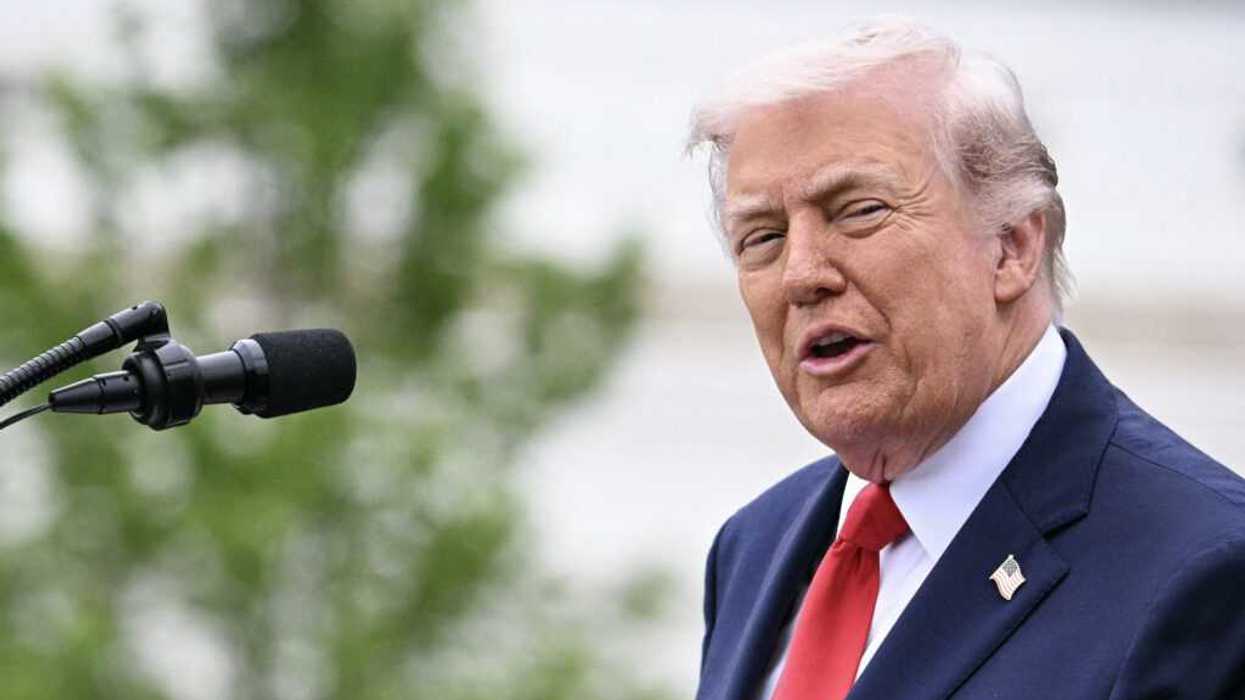



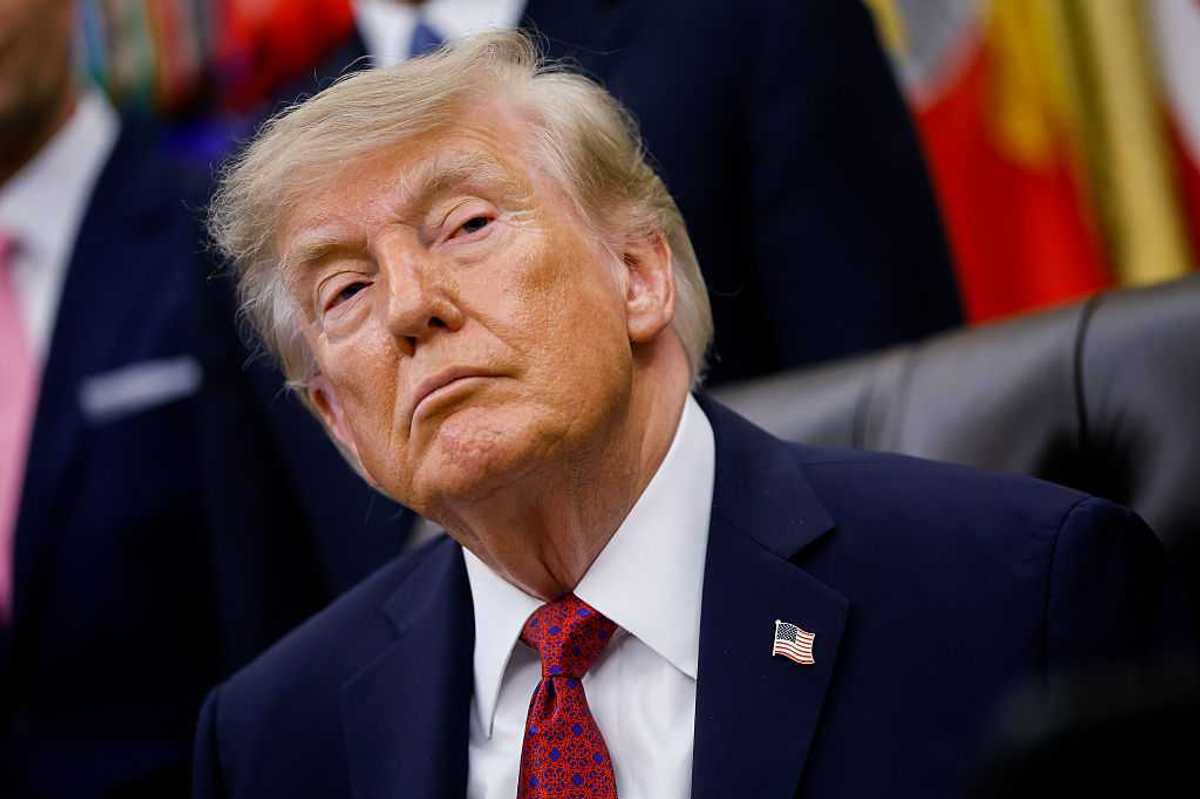
U.S. President Donald Trump speaks during a“ Steel Across America” event ahead of the 25th anniversary of the Sept. 11th attacks on the Ellipse near the White House on Sept. 8, 2026 in Washington, D.C. President Trump welcomed 9/ 11 first responders to the Tunnel to Towers Foundation’ s“ Steel Across America” event featuring a 16,900- pound, 21- foot steel beam recovered.
For Trump, even 9/11 is an opportunity
There was a reason organizers of the 9/11 ceremony in Manhattan told President Trump he could not speak at this year’s memorial service.
A good one, it turns out.
Because in a speech he gave on Tuesday in Washington, he did exactly what they were presumably worried about — he made it about himself.
According to The New York Times, Trump had wanted a speaking role at the service, but the National Sept. 11 Memorial and Museum, which oversees the site, said no, as they’ve maintained for the past decade-plus that the venue and event should be nonpartisan.
Trump has long used awful tragedies to either puff himself up, trash political opponents, or sell lies to the American people.
He blamed a deadly plane crash at Washington National Airport last year on diversity, equity and inclusion policies. He blamed Puerto Ricans for the devastation they endured after Hurricane Maria in 2017. He reportedly considered withholding disaster relief after the California wildfires based on the way affected regions voted. In an interview on Fox News meant to commemorate the 75th anniversary of D-Day in Normandy, he used the occasion to slam former House Speaker Nancy Pelosi…with graves of the dead behind him.
And now, as we approach the 25th anniversary of what many New Yorkers consider the darkest day in modern history, Trump has done it again.
He told a rambling, nonsensical story — one he’s told before — about going to Ground Zero just after terrorists flew two commercial jets into the twin towers. In the story, which no one has been able to verify, despite multiple attempts, he says firefighters had to carry him out of One Liberty Plaza, also known as the U.S. Steel Building, because they thought it was about to collapse.
As CNN fact checker Daniel Dale notes, there’s no evidence Trump went into this building, especially at a time when NYPD and NYFD had locked down the area. There’s no evidence that building was collapsing — in fact, it was deemed structurally sound and reopened within two months of the attacks. There’s no evidence he was carried out of it by firefighters.
But the lie isn’t even the worst part. Pretend it was all true — why would the leader of our country, and a New Yorker, decide to make that tragic day about himself?
Because that’s who Donald Trump is. He’s a malignant narcissist.
He’s also, incidentally, a terrible and ineffectual president, who’s made ill-fated decisions that he has to keep defending, and there’s nothing he won’t do to make himself look and feel better.
Within the first two minutes of his speech, he was cravenly using 9/11 to justify and promote his dumb war in Iran — two events separated by 25 years and 6,000 miles.
“And I will tell you, we’re right now fighting because we have a certain nation that wanted a nuclear weapon, they were very close to getting it, and now they have no chance at getting it. They will never have a nuclear weapon. Iran will not have a nuclear weapon. And they’ve been punished greatly. As you know, we’ve really taken it to them.”
As a New Yorker who lived through 9/11, still one of the worst days of my life, I’m utterly sickened by Trump’s crass, political, and self-promotional framing of that awful day.
And I’m relieved he won’t be given a platform to do it again on Friday’s anniversary in lower Manhattan.
Because for Trump, everything is his for the taking, and absolutely nothing is sacred.
S.E. Cupp is the host of "S.E. Cupp Unfiltered" on CNN.