


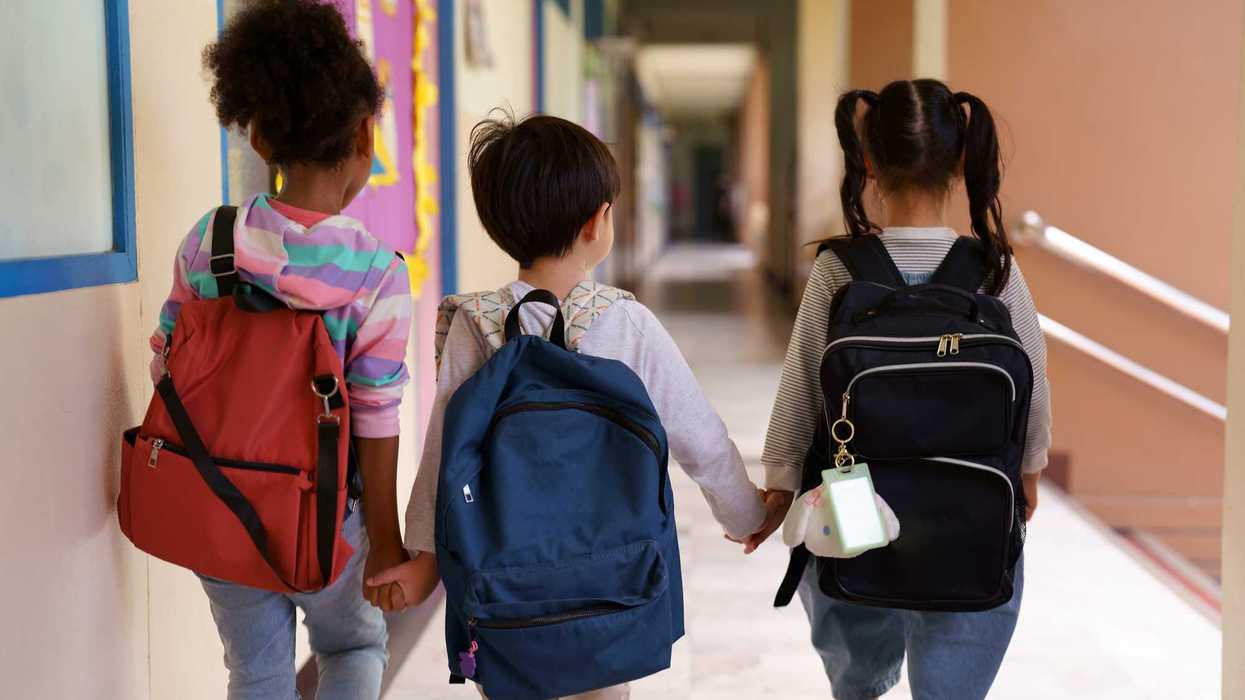

Every afternoon in Texas, the end of the school day creates a daily scramble for families. Five out of six parents say they want after-school care, but cannot access it.
The demand for after-school programs is not theoretical.
In about 70% of Texas families with children ages 6 to 17, all available parents are working. This forces painful trade-offs between employment, supervision, and student safety at the very hours when children are most vulnerable to learning loss and disengagement.
At the same time, parents who secure a spot overwhelmingly say the programs work. Three in four parents rate their child’s after-school program as “excellent” or “very good," reflecting the support these programs provide in improving attendance, supporting academic growth, and offering stability during after-school hours. Lack of this support system is reflected in juvenile crime risk, which rises to 18% between 3 p.m. and 7 p.m. on school days.
If families need and value after-school programs and evidence supports their impact, the question facing Texas is why access remains so limited.
The answer is capacity, driven primarily by unstable funding and workforce shortages.
For years, after-school programs in Texas have relied heavily on federal 21st Century Community Learning Centers funding, administered through the Texas Afterschool Centers on Education (ACE). In parallel, Texas also used $125 million in COVID recovery funds over roughly three years, averaging over $40 million annually, to expand after-school access.
That funding structure has tightened significantly.
COVID recovery funds expired in September 2024. At the same time, Texas ACE dollars have fallen from $97 million in 2020-21 to $57 million in 2023-24, resulting in a 40% reduction in the size of the funding pot.
What now remains is $5 million for the biennium by the state for community-based or nonprofit-run after-school programs and $57 million for districts through ACE.
As district-run programs scale back or shut down, nonprofit providers and districts are expected to absorb growing demand with just $59 million annually, a pale substitute for the roughly $140 million annually, once provided through ACE and COVID recovery funds. The result: programs close and families are turned away.
But money does not cut itself. Programs are run by people, and when funding tightens, staffing is the first thing to break.
Across the after-school sector, 87% of program leaders report serious concern about staffing shortages, driven by staff burnout, competition with higher wages in other industries, and the inability to offer more hours. When programs cannot retain staff, they cap enrollment, shorten schedules, or suspend services entirely.
Texas has reached a point where after-school can no longer be treated as an optional add-on. The state has shown it can invest at scale when priorities are clear, including recent multibillion-dollar investments in public education.
Extending that commitment beyond the final bell is not a conceptual leap. It is the next logical step if Texas wants learning, attendance, and family stability to hold through the full day.
The first requirement is funding stability beyond a single grant window, through multi-year grant cycles with predictable renewals that allow districts and community partners to plan, hire, and retain staff.
But funding alone will not solve the capacity gap. So the second requirement is an intentional staffing strategy that reflects how after-school programs actually operate.
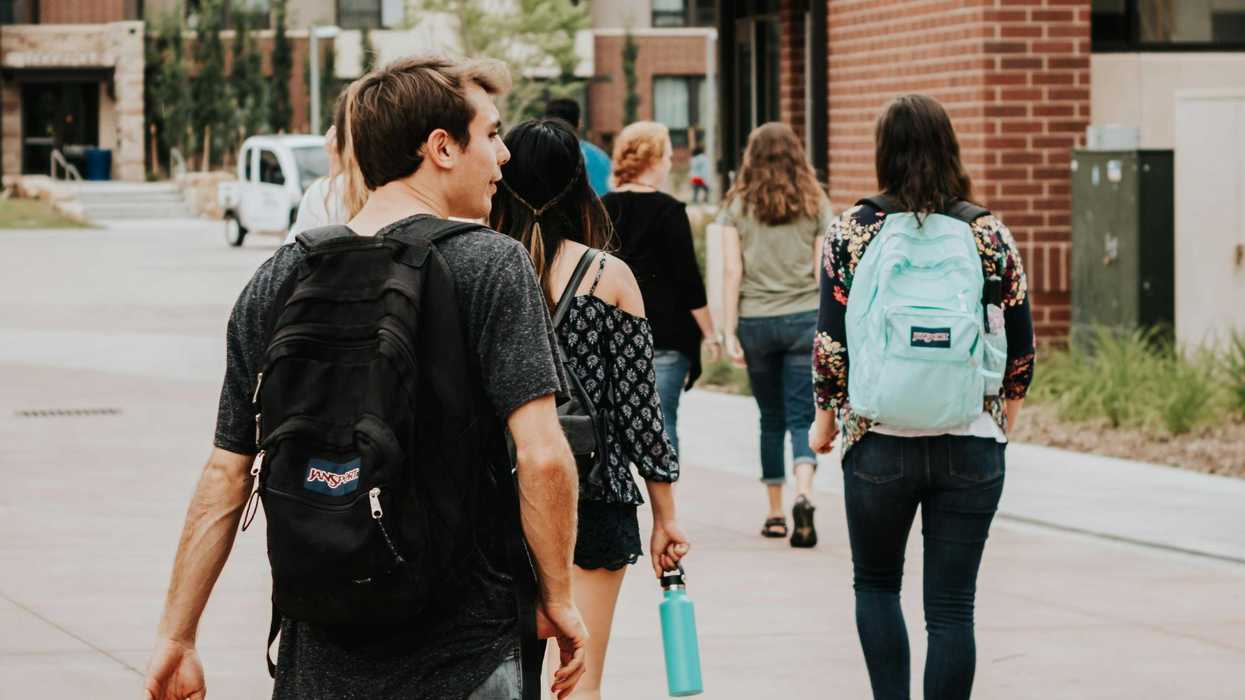
One part of that strategy is organizing the pre-existing civic capacity of Texas. College students, retirees, and community members are willing to contribute, and a statewide volunteer corps designed specifically for K–12 and after-school settings could channel this capacity into tutoring, mentoring, and enrichment roles under professional supervision.
Nonprofits already operate this way at a smaller scale, and programs such as ASPIRE show that when volunteers are intentionally placed and supported by educators, programs can expand without sacrificing quality.
A second part of the staffing strategy is better aligning after-school programs with the pipeline of future educators.
Each year, thousands of teacher candidates complete clinical placements or paid internships in K-12 as part of certification requirements. Allowing these candidates to contribute to supervised after-school education would strengthen staffing during the hours of greatest need, while giving future teachers structured practice in after-school settings.
The choice before Texas is straightforward. After-school programs can remain secondary supports, or they can be treated as essential educational infrastructure, backed by the funding and workforce required to sustain them. For hundreds of thousands of students, that choice will shape what happens after the final bell.
Kusuma Buddhiraju is an economic policy and analytics leader with over a decade of experience in public education finance and institutional reform. She has advised policymakers and authored widely read research on civic literacy and education finance.








U.S. President Donald Trump boards Air Force One on August 14, 2026 at Joint Base Andrews, Maryland. Trump is traveling to Long Island to tour law enforcement facilities in Nassau County and rally support for local Republican candidates ahead of the upcoming midterm elections
Travel Far Enough, You Meet Yourself
Is it possible that our President has simply not traveled enough?
Born and raised in Queens and attending Fordham University in the Bronx, Donald Trump has no record of traveling outside New York until he was over 20, when he transferred to a college in the neighboring state of Pennsylvania. Were his formative years amiss, then, in his learning about other places and other people?
Is his view akin to the famous New Yorker cover by Saul Steinberg, an illustration of the United States with New York City as the epicenter of the country and the Hudson River the border of the known world? We can now at least add Washington, D.C., and Mar-a-Lago to the map of “the realm.”
Our President has now traveled some, but what we recommend is another kind of travel. Not a state-sponsored trip or a venture to scout locations for future Trump Towers. This would be a genuine travel experience, enriching and eye-opening, showcasing other cultures and ways of living.
It will extend far beyond viewing military parades, hobnobbing with such “understanding” world leaders as Kim Jong Un, or taking tea with the King.
WHERE, then, should the President go? As Elon Musk’s Starship spacecraft is not yet ready to take passengers to Mars, perhaps he could explore our own vast country?
Maybe he could travel to “flyover country,” the farming states, where his ying-yanging tariffs and trade restrictions have played havoc with rural economies. Or possibly to California, number one in homeless U. S. citizens, and while there, regale homeless veterans (approximately 32,500 nationwide) with tales of his brave exploits invading and bombing foreign countries.
Or he might tour the Great Lakes, and rename the other four?
WHEN should he go? This will be tough, as he is very busy building his ballroom and renaming bodies of water.
How about a trip in early November, around the midterm elections? Despite the long-discredited accusation of widespread voter fraud, it would be reassuring to know he might be so caught up divvying out ladles of soup in a soup kitchen somewhere that he wouldn’t remember to deploy the military for “election security.”
HOW will he travel? He should definitely not take his Qatari-donated, newly renovated 747, especially after last time, when he had to be smuggled off clandestinely in a catering truck. It’s unlikely any traveling companions, like the Secretary of State or of the Treasury, are going to fall for the ruse a second time. Besides, we may need those people. No more decoys!
Perhaps the President could fly commercially, although this likely would expose him to undue suffering. Without gold bathroom fixtures and maple wood floors, the trip will be no “Luxury Experience.” If only he still had his “Trump Shuttle,” bought with a massive loan he later defaulted on, saying then, “I’m smart. I got out at a good time.”
Considering the potential pitfalls, maybe it’s best the President travel incognito, disguised perhaps as an elderly woman wearing a lot of bronzer.
Wherever, whenever, however: our President needs a vacation.
Moreover, we need a vacation from him.
If the President refuses our travel suggestions, here’s another idea:
Let’s get him a pet! He has never owned a pet. As we know with our children, pets teach essential life lessons: compassion and empathy; they instill a sense of responsibility. There is a well-established connection between those who can care for a pet and those who can care for people.
So, which pet should we choose? A puppy? A kitten? A boa constrictor?
Imagine, the President may even decide he likes having a pet. After all, what is more obedient than a well-trained dog, besides possibly the Cabinet? And what is more docile than a sweet kitten, other than plausibly the Supreme Court?
The President may even become more mellow with a pet afoot and less likely to slap tariffs on our allies, or attempt to annex our neighbors, or bully our Congress. (Realizing, of course, a bully requires active participation from the bullied to maintain his status.)
Maybe we should do both: get the President a pet and devise a travel plan for him. (Do you think we could possibly convince him to leave his phone at home?)
Let’s go for it! After all:
Travel far enough, you meet yourself. (David Mitchell)
And for our President, that would likely be the most profound discovery of all.
Amy Lockard is an Iowa resident who regularly contributes to regional newspapers and periodicals. She is working on the second of a four-book fictional series based on Jane Austen’s “Pride and Prejudice."