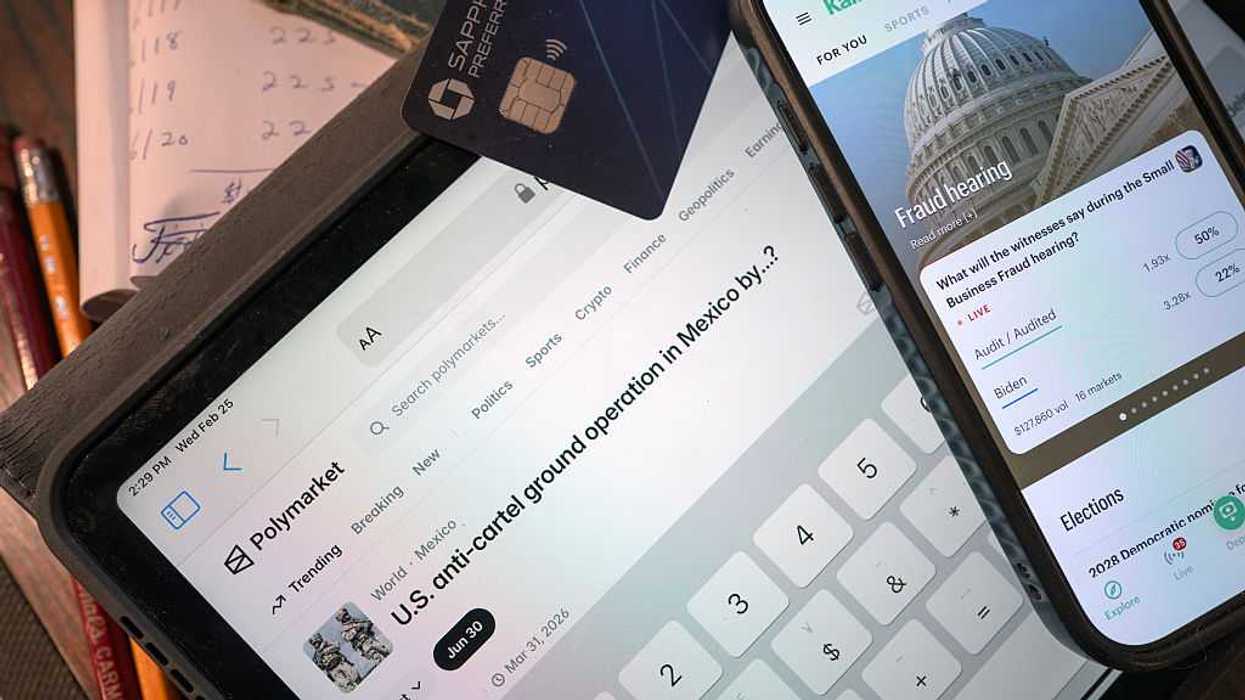
Imagine opening an app on your phone and placing a bet on whether peace talks between two countries will fail, a conflict will escalate, or a terrorist attack will occur before the end of the year.
For a growing number of people, that is no longer a hypothetical scenario.
Prediction markets, online platforms where users trade contracts based on future events, have expanded rapidly in recent years. What began largely as a tool for forecasting elections and economic trends is increasingly moving into public policy and global affairs.
Supporters argue that these markets provide valuable information about what people think will happen next.
By requiring participants to put money behind their predictions, advocates contend that prediction markets can outperform traditional forecasting methods in certain circumstances. Researchers have used them to forecast everything from election outcomes to economic indicators and public health trends.
Those benefits do deserve consideration. Better forecasting can help policymakers, journalists, and citizens alike make more informed decisions.
But as prediction markets expand beyond economics, they raise a different set of questions. The debate is no longer just about accuracy. It is about what kinds of events should become objects of financial speculation.
Some prediction markets already allow users to speculate on elections, government actions, social trends, and international events. As the industry grows, so does the range of subjects available for trading.
That shift has important implications for democratic life.
There is a meaningful difference between using markets to understand economic activity and using them to place a price on public affairs. A democracy is not simply a collection of probabilities to be traded. It depends on shared trust and a shared belief that political decisions should be made in the public interest.
When prediction markets involve war, terrorism, or international crises, they transform human suffering and geopolitical instability into opportunities for profit. Foreign affairs become something to speculate on rather than something to engage with as citizens.
The concern is not simply that people may profit from tragedy. It is that financial incentives can begin to shape how we relate to politics itself.
Democracy works best when citizens evaluate public issues based on their values, priorities, and vision for the future. Prediction markets encourage a different mindset. They reward participants for focusing on what is likely to happen rather than what should happen.
Over time, that shift can affect the culture surrounding politics. Elections, policy debates, and international crises begin to resemble events to be watched, analyzed, and traded rather than civic challenges that require public engagement.
Markets also shape incentives.
Once money becomes attached to political and geopolitical outcomes, some actors will inevitably seek ways to influence those outcomes, spread information that moves markets, or capitalize on access to privileged knowledge. Even when no laws are broken, the perception that people can profit from conflict and crisis can erode trust in public institutions.
That concern is already being taken seriously in Washington.
Earlier this year, the U.S. Senate unanimously voted to prohibit senators and staff from participating in prediction markets.
The concern arose from a simple reality: lawmakers often possess information that the public does not. Allowing them to trade on political events raises serious questions about conflicts of interest and insider advantage.
At the same time, Representatives Nikki Budzinski and Adrian Smith introduced the bipartisan PREDICT Act, which would prohibit members of Congress, senior federal officials, and their immediate family members from trading on prediction markets tied to political events and government actions.
Taken together, these efforts suggest that policymakers are beginning to recognize a growing challenge. Prediction markets are no longer a niche corner of the internet. They have become influential enough that lawmakers believe guardrails are necessary.
Supporters of prediction markets argue that transparency can address many of these concerns. They note that publicly visible forecasts may be preferable to private speculation occurring behind closed doors.
That argument has merit. Forecasting itself is not the problem.
The real question is where society should draw the line. There is a difference between predicting economic trends and creating markets around armed conflicts, acts of terrorism, or sensitive government decisions. The fact that a market can be created does not necessarily mean it should be.
Young people have a particular stake in this conversation.
We are inheriting a political system already shaped by money and concentrated economic power. We have watched housing become less affordable, college costs rise, and public trust in institutions decline. Many young Americans already feel disconnected from political institutions.
Prediction markets risk deepening that disconnect. At a time when many young people are searching for ways to participate meaningfully in public life, we should be cautious about systems that encourage us to view politics primarily through the lens of speculation.
The rules governing these markets are still being written. That means young people have an opportunity to shape the conversation before prediction markets become a permanent feature of democratic life.
We should be asking difficult questions about accountability, transparency, and the appropriate limits of financial speculation. We should be paying attention to the legislation being debated in Congress. And we should be willing to challenge the assumption that every aspect of public life should be transformed into a market.
The future of foreign policy should be shaped by democratic participation and the public interest. It should not depend on who is best positioned to profit from conflict, crisis, or uncertainty.
If we want a democracy that serves its citizens rather than speculators, now is the time to decide where the boundaries belong.
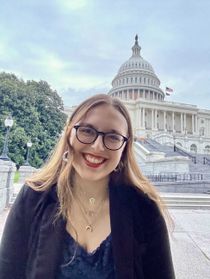
Rachel Ledoux is a student at Simmons University studying political science and economics with a focus on public policy. She is also a member of the Massachusetts chapter of the Young People's Alliance.