



One of the challenges with writing about the war in — and on — Ukraine is that so little changes.
I don’t mean the fighting on the ground, though even there, when viewed from a distance, it doesn’t look as though much has shifted in a long while. Russia has gained very little territory in the last year (even as it has suffered an estimated half-million Russian casualties over the last 12 months). All of that to gain 0.3% of Ukrainian territory (and net zero gains in the last six months). Though distance can be deceiving, the fighting on the ground has actually been far more dynamic, with evolving tactics, strategies, technologies and geopolitics.
What I mean about so little changing are the moral considerations. Ukraine is the victim of a lawless, brutal, unprovoked invasion by a politically backward and dysfunctional would-be empire ruled by a murderous autocrat. That assessment was obvious on Feb. 24, 2022 when the full-scale invasion was launched, and it was obvious in 2014 when Russia annexed Crimea.
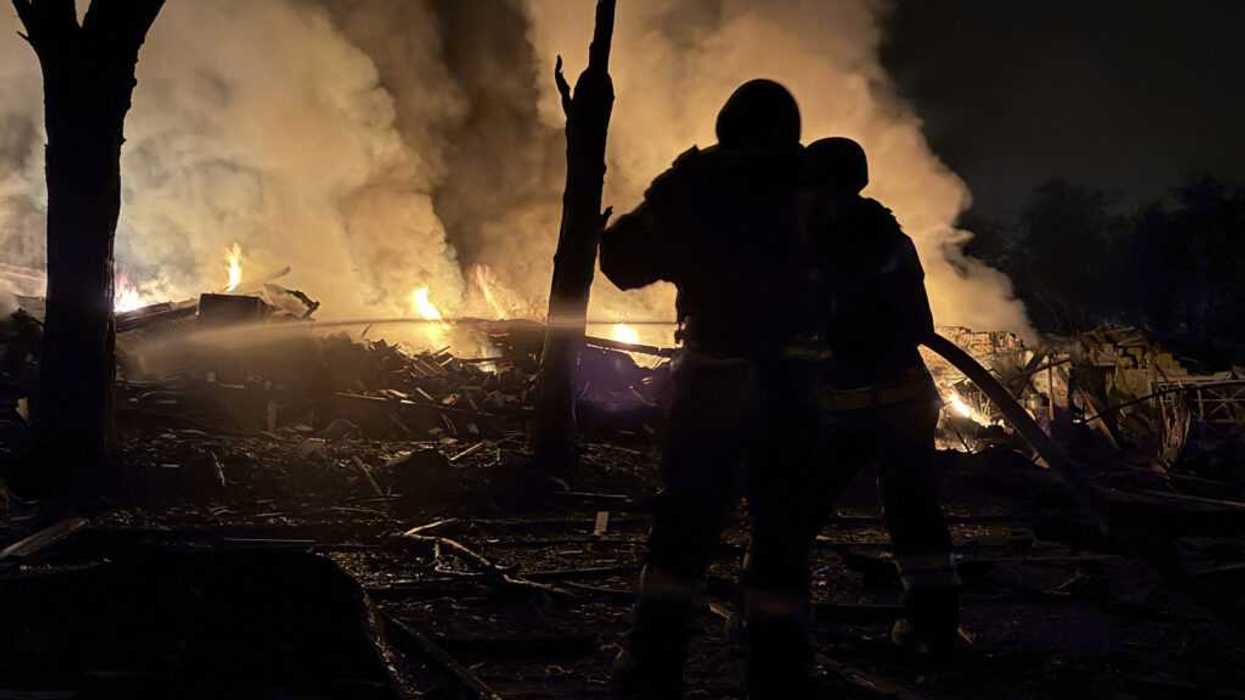
The challenge of writing about the war is that once you’ve said that, saying it again just feels repetitive. This is a bigger problem than one columnist’s selfish desire to say something new. The longer the war has dragged on, the more the war just seems like part of the status quo, the background noise of our politics. This is cruelly unfair to the Ukrainians, because what seems like the “normal” state of things is anything but. Russia targets civilians as a matter of policy. It murders old women in their beds, children in playgrounds, young couples in cafes. And it does this almost daily and it tries to do it almost hourly.
Which is why recent comments by Jared Kushner, the president’s son-in-law and his unofficial personal envoy, are so infuriating. “President Putin laid out his line of what he wants to achieve,” Kushner said at the Yalta European Strategy conference on Sept. 5. “If Ukraine wanted to withdraw to that line, then obviously, you know, we have the rest of the deal set up and put together. Ukraine right now does not want to do that.”
Kushner further said he was, as a U.S.-backed mediator, looking for “creative solutions” to the war. He wants to downplay the importance of territory in exchange for potential economic deals that benefit everybody — including presumably the United States and, I assume, Kushner and others in the Trump orbit.
Put aside the grotesque suggestion that Ukrainians are the stumbling block for not wanting to give up yet more territory Russians have failed to win on the battlefield, land that countless Ukrainians have given their lives to defend. Strategically, such a concession would be close to an invitation to suicide. It would require pulling back some 45 miles and forfeiting a Ukrainian “fortress belt” of fortified cities that form the spine of their forward defenses. It would put the rest of Ukraine that much closer to Russian artillery and drones, and force the Ukrainians to defend less defensible ground.
Proponents of such a “deal” argue that it would be worth it for peace. But if you think Russia honors such deals, you haven’t been paying attention. And if you think the Ukrainians have reason to trust Putin, well, I don’t know what to say to you.
The idea that Ukraine is the stumbling block to peace suffuses this administration. Vice President JD Vance, who has never meaningfully changed his view that he “doesn’t really care” what happens to Ukraine, “one way or the other” is evidence of that. But so is President Trump.
Just this week, Trump excoriated Ukraine for targeting Russia’s oil infrastructure because it’s creating problems for him. “Mr. Zelensky has to do one thing,” Trump said. “He has to stop knocking out diesel fuel in Russia. Let him go after targets, but not diesel fuel, because he’s causing a shortage of diesel.”
Trump — who endlessly insisted on the campaign trail that he could “end the war in Ukraine in one day” — doesn’t demand Putin stop murdering Ukrainians. He instead demands that Ukrainians not fight back in a way that inconveniences Trump amid a surge in oil prices overwhelmingly caused by the war Trump started with Iran.
It is victim-blaming on a geopolitical scale and utterly dishonorable.
Honor matters in foreign policy, regardless of what supposed foreign policy “realists” claim. Iranian honor, twisted and fanatical though it may be, is why Iran hasn’t bowed to Trump. And Ukrainian national honor is why the Ukrainians don’t want to be erased by a bullying neighbor that says they shouldn’t exist. And it should matter for America, even if it doesn’t matter to the coterie of “dealmakers” who care more for profit.
And that is worth repeating.
Jonah Goldberg is editor-in-chief of The Dispatch and the host of The Remnant podcast. His Twitter handle is @JonahDispatch.







The President Invited Iran to Bomb My Home