

The Fulcrum is committed to nurturing the next generation of journalists.
We asked Idris Mohammed, a Fall Fulcrum Fellow, to share what democracy means to him and his view of its current health.
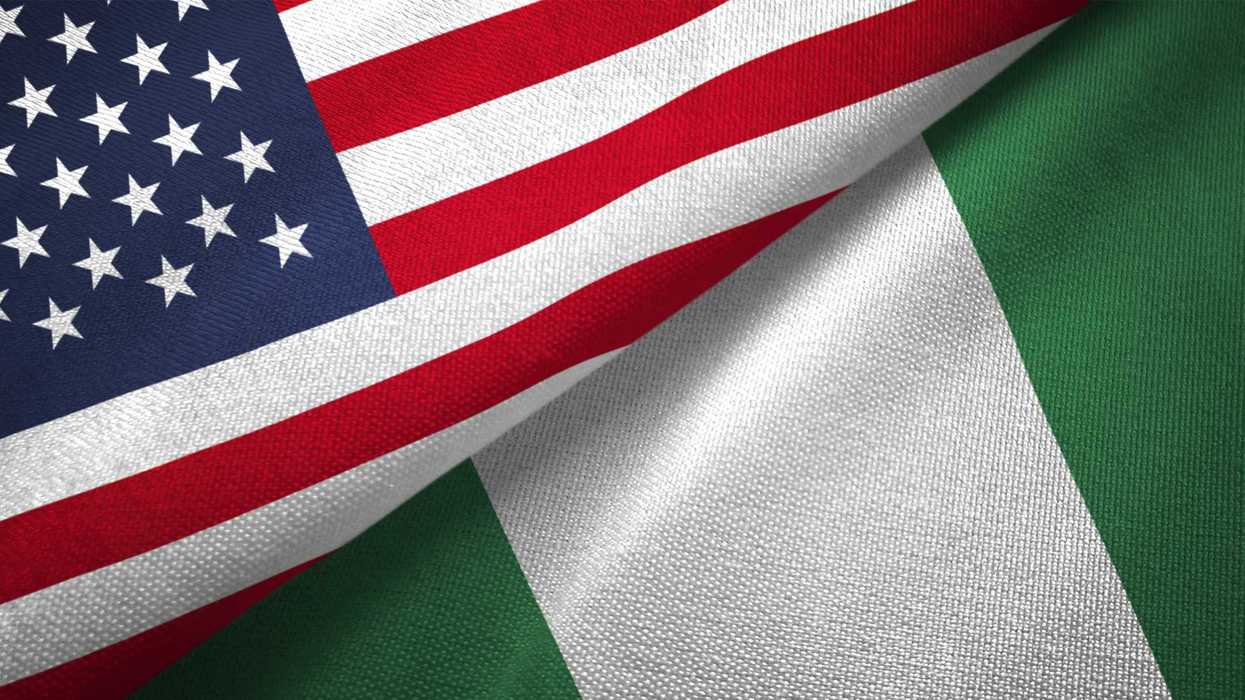
Growing up in northern Nigeria has taught me that Democracy is more than elections. It is also about how a country is governed every day. In my view, the essence of democracy lies in people's right to challenge those who hold power, and in the state's responsibility to protect its citizens, be transparent about the budget, guarantee media freedom, and serve even distant communities. The conduct of elections does not necessarily mean good health of democracy if the citizens are scared to speak their minds, the media workers are intimidated in their investigations, and there are communities being neglected.
In light of Nigeria’s revival of its democracy from 1999 onwards without any subsequent military coups, the country has demonstrated significant competition within elections, opposition parties, and political debate. Nonetheless, Nigerian democracy has simultaneously been associated with security issues such as safety during travel, cultivation, education, and worship because of the fear of terrorism, kidnappings, and communal violence.
According to Freedom House’s report in 2026, Nigeria is considered “Partly Free” and faces problems such as insecurity, electoral irregularities, corruption, and intimidation of journalists which impede political freedom and civil liberties. Such a scenario is crucial for understanding democracy as the importance of the ballot box loses relevance if one cannot exercise basic freedoms.
Journalism has made this problem increasingly personal to me. Journalistic work involves terrorism, political violence, corruption, and insecurity. The experiences gained through the process have shown that democracy is contingent upon how questions get answered.
Is it safe for a journalist to question an official without getting arrested?
Can a person criticize a policy without any form of intimidation?
Can victims of political violence appeal to the government to be heard?
If the answers to the above-mentioned questions are uncertain, then democracy is still in jeopardy. My stay in the United States of America provides another platform through which one can analyze the questions above. Democracy in the United States is not perfect. There are clear signs of polarization in politics, disputes about institutions, and inequality in terms of political power. The 2026 report by Freedom House still categorizes the United States as “Free,” although the score decreased from 84 to 81 out of 100. This reduction is due to problems of institutional oversight, polarization, and civil liberties.
The most interesting thing to note is not that one country has achieved democracy while another has not, but the fact that democracy needs maintenance.
There is evidence in the United States that local institutions, the courts, citizens' organizations, universities, the media, and the general populace are engaged in politics outside the scope of presidential campaigns. In Nigeria, political interest is skewed towards gaining office and not enough toward how institutions function in the benefit of regular people after elections.
In accordance with my own definition, the current state of democracy in both countries is patchy. Nigeria retains its civilian leadership and competition between different parties; nevertheless, insecurity, lack of accountability, low level of trust, and pressure on the media make it difficult to turn democracy into tangible results for the country's citizens. The United States is characterized by strong protection of institutions, but polarization and erosion of trust reveal that democratic systems cannot be taken for granted.
Therefore, democracy is not a final stage in the development process that is achieved via an election process. It is the ability to question the reasons behind the insecurity of one's community, to question the distribution of the budget money, to be able to probe those in power, and to feel that one's voice matters and can change something.
Idris Mohammed is a Ph.D. student at the University of Alabama concentrating in Journalism & Creative Media. Idris’s work covering terrorism, displacement, and humanitarian crises across northern Nigeria has shaped his commitment to evidence‑based, solutions‑driven reporting that highlights both community resilience and the responses that make a difference.







The President Invited Iran to Bomb My Home