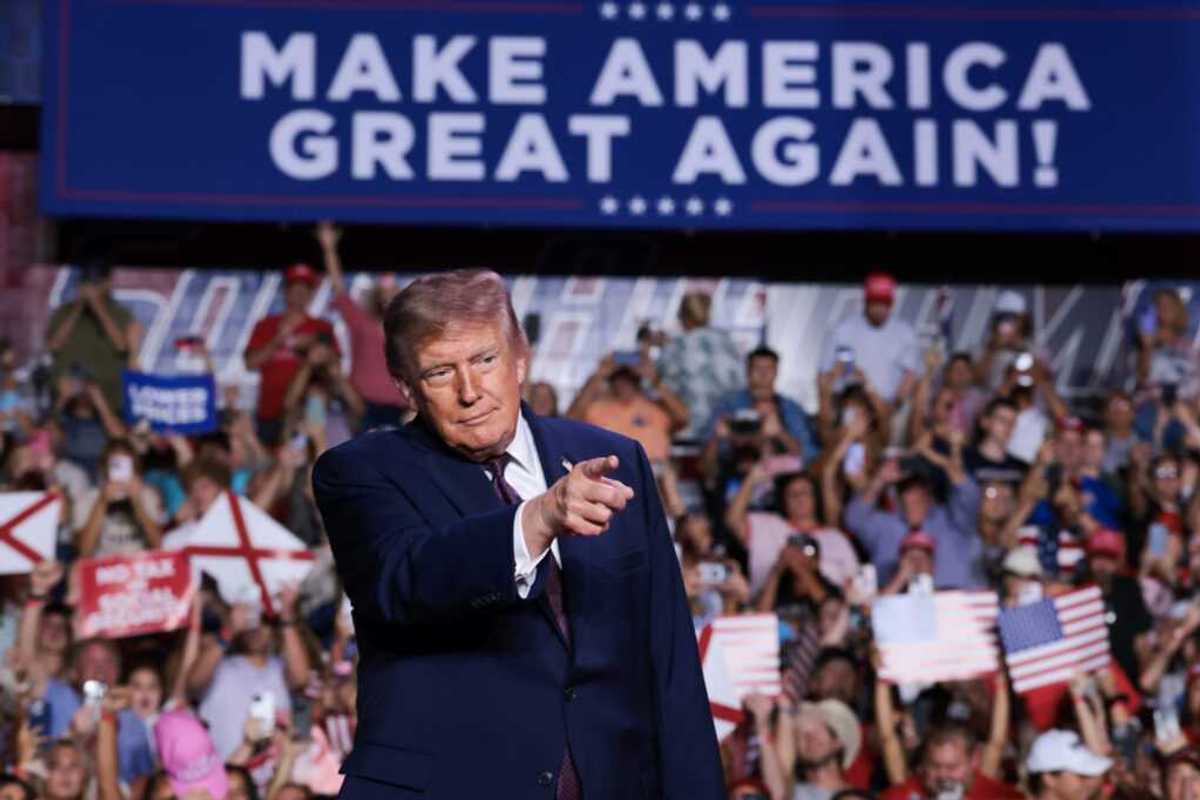



How many times have I been asked that question? Trump has failed to deliver on almost all the promises he made to his white working-class and rural base during the 2016 and 2024 election campaigns. Prices are not lower, they are higher. He has not brought jobs back to the U.S. His tariffs have been a disaster for farmers. He has taken many actions that have helped the rich, but precious few that have benefited the average person. And because of that, many people—both Republicans and others who swung their vote to him in 2024—have left him. His approval rating has dropped to a record low of 37%.
But that core base of 37% appears to be unmoved by all the ways in which Trump has disappointed many of his supporters; they are not "voting their pocket book." Why are they still with him? (As a point of reference, in the first half of 2026, 28% of Americans identified as Republican, with another 15% leaning toward the Republican Party.)
The one thing that Trump has delivered as promised is an administration that targets illegal immigrants and has eliminated DEI programs—both within the government and all organizations that receive government funding—programs that provide the poor, people of color, and women a more equal opportunity to pursue their right to life, liberty, and happiness. His Defense (War) Secretary has gone against "wokeness" with a vengeance, firing or not promoting many top military commanders who are people of color or women.
In short, he has delivered on his promises to make the country more White-friendly and more male-oriented. He has also delivered on culture war matters such as trans rights and abortion rights. But these latter issues, while important to his base, are I feel really tangential to the issues of race, nativism, White supremacy, and misogyny.
A survey of Trump voters (both Republican and swing) found that 37% self-identify as racist. 37% of Republican Trump voters also support "deporting as many illegal immigrants as possible by whatever means;" the rest support deportations but with restrictions. 59% of Republican Trump voters think that DEI programs are illegal and are racial discrimination. There are no reliable numbers of the percentage of Americans or Trump voters who are nativists, White supremacists, or misogynists.
So it is not unreasonable to argue that the core 37% of Americans that continue to support Trump does so because he has delivered on his anti-immigration, anti-equal opportunity for all, White supremacist, and nativist promises. I have in the past argued that his base continues to support him, as Germans did Hitler, because he has become "der Führer" to them and can do no wrong; he has answered their call for help; he is like a God. It is hard to imagine what event or line of reasoning would disturb this messianic allegiance.
While I still think that is a big part of the story, I feel the foundation for their fervent support is more likely that they are scared of being overrun by an immigrant "invasion" and empowered people of color—becoming the minority. Trump clearly has used his demagoguery to heighten this fear and has taken many actions in an attempt to prevent that from happening.
These actions of Trump are in violation of our founding principles of equality—of equal opportunity for all—and the government's role in securing that right. And they are contrary to the Pledge of Allegiance's commitment to "liberty and justice for all."
Seen in this light, Trump's and his supporters' apparent devotion to the concept of America and the flag is a combination of deceitfulness and delusion. (See my article, "What It Means To Be an American and Fly the Flag.") In fact, what they are fighting for would bring about the destruction of what has made America "America." Trump is not doing anything that will make America great again; what he is doing has only weakened America, both internally and in the eyes of the world.
But that is the way things are. And despite the disillusion of many of Trump's former supporters, they are not necessarily ready to vote Democratic because they don't feel that Democrats are speaking to them, to their problems.
As I have said before, the Democratic Party cannot rely on an anti-Trump message to win the upcoming midterm elections, certainly not resoundingly. To do that, I have written that the Party must create a counter-presence to Trump that gives the people a positive reason to vote Democratic. And part of that presence is the creation of a new Mission Statement for the Party that is based on the Declaration of Independence. (See my article, "URGENT: What the Democratic Party Must Do to Win the Midterm Election.")
Democrats must appeal to what is best in the American people to gain their support and loyalty.
They must speak to the people not as political wonks but as everyday people who understand both what the average person is confronting in his/her life and what will make America greater and the people more prosperous and equal than ever before.
Ronald L. Hirsch is a teacher, legal aid lawyer, survey researcher, nonprofit executive, consultant, composer, author, and volunteer. He is a graduate of Brown University and the University of Chicago Law School and the author of We Still Hold These Truths. Read more of his writing at www.PreservingAmericanValues.com