
Skip to content
Search

Latest Stories

Follow Us:
Top Stories

Americans Say the People Can Lead Congress to Common Ground; It Appears They Are Right

Opinion

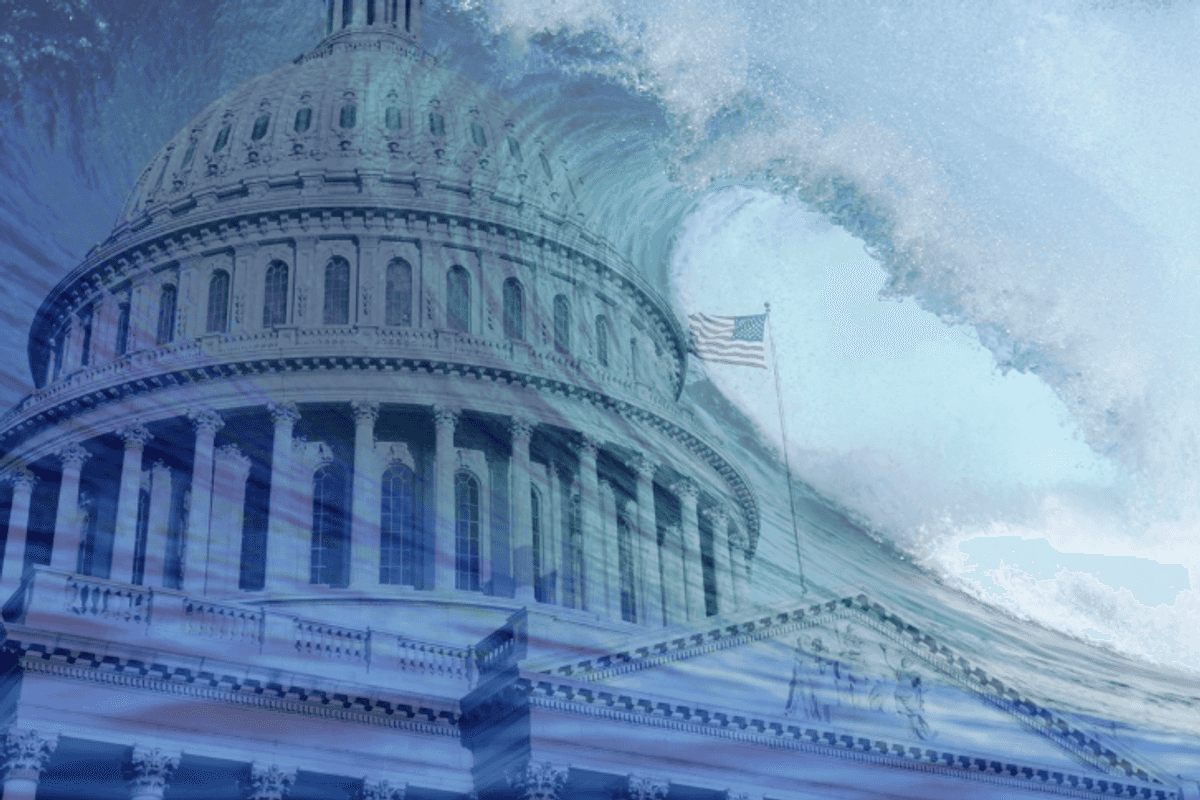
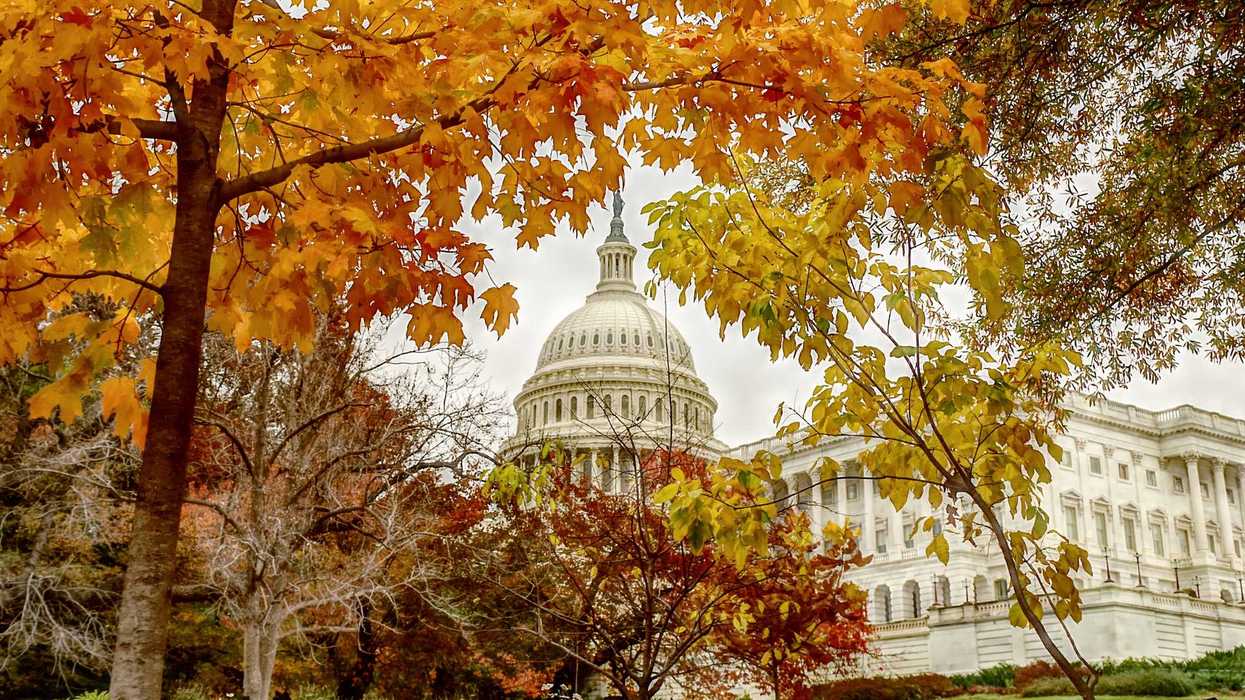
The U.S. Capitol in autumn.

New surveys of nearly 20,000 battleground voters find bipartisan majorities say Congress ignores the public, and that more public influence would help.

Philip Yabut/Getty Images

New surveys in battleground states and districts across the country, as well as nationwide, find that Americans—both Republicans and Democrats—believe Congress does what most Americans would do less than half the time.

They also found that majorities agree that if Congress were to be more influenced by the people, it would be more likely to find common ground. In fact, surveys show that majorities of Republicans and Democrats agree on what to do about many issues that Congress is stuck on.


These findings come from surveys conducted by the Program for Public Consultation (PPC) to nearly 20,000 adults in 11 competitive states and 28 competitive congressional districts, from May 27th to June 25th, as part of its Common Ground in the Battlegrounds? survey series. A national survey was also conducted from March 11-19 with 1,200 respondents.

Americans were asked to estimate what percentage of the time elected federal officials make the same decisions as the majority of Americans. Bipartisan majorities in every battleground surveyed and nationally say less than 50%. On average across the battlegrounds, the estimate is just 35%, with little difference between Democrats and Republicans (35% and 38%, respectively).

As research has shown, Americans are correct: Congress is out of step with public opinion on many policy issues. In particular, Congress is not passing laws that are supported by large majorities of Americans.

While Americans do not think that Congress should follow public opinion robotically, they think the people should have substantial influence. Presented with a scenario in which the majority of a Congressperson’s constituents agree on what should be done about a policy issue, and asked how much influence that opinion should have on a 0-10 scale, the mean response was not 10. But it was a robust 7.6.

Perhaps most significantly, over eight in ten say that if the people had more influence, Congress would be more likely to find common ground. In other words, they believe polarization in Congress is not a mirror of the people; polarization comes from the top, not the bottom.

But is the public right?

Surveys by PPC and others have consistently found that the public is correct. Across dozens of issues on which Congress has been unable to reach agreement, bipartisan majorities in the public actually converge. This is true nationally, and in PPC’s current study in the battlegrounds, which has found dozens of policies in numerous areas supported by clear majorities of Republicans and Democrats.

And Americans want their voice to be heard. Asked how often news pieces about a policy issue should include relevant public opinion data (when there is reliable data), over two-thirds of both Democrats and Republicans in every battleground say always or most of the time. Over six in ten say that if Congress is about to vote on a law, it is very or extremely important for news outlets to report on whether a majority of Americans favor or oppose that law.

The public’s desire to be heard is not new. The findings have remained the same, no matter which party is in power. And there are good reasons to believe that if the public’s views were more prominent in the public discourse – in Congress and the new media – this would have a stabilizing and unifying effect on our politics.


Dr. Steven Kull is Director and Evan Charles Lewitus is Associate Director of the Program for Public Consultation at the University of Maryland.
Read More

​U.S. Sen.-elect James Talarico (D-TX) and Texas gov.-elect, State Rep. Gina Hinojosa toast with a fountain beverage at a Whataburger restaurant with a crowd of people around them taking photos.

U.S. Sen.-elect James Talarico (D-TX) and Texas gov.-elect, State Rep. Gina Hinojosa toast with a fountain beverage at a Whataburger restaurant at the conclusion of a midterm election night watch party at the Long Center on November 3, 2026 in Austin, Texas.

Brandon Bell/Getty Images

Fear Politics Lost. Voters Chose a Different Future

Fear is the easiest message in American politics. It is cheap to produce, quick to spread, and usually reliable on Election Day.

For years, this fearfulness has told Americans that the person next door is the enemy. On Tuesday, a great many of them stopped listening. In places almost nobody expected, voters turned away from candidates who vowed to tear things down and rewarded those who treated the country as something worth rebuilding and their opponents as people to persuade.

Keep ReadingShow less
Israel's Path to Peace and Security

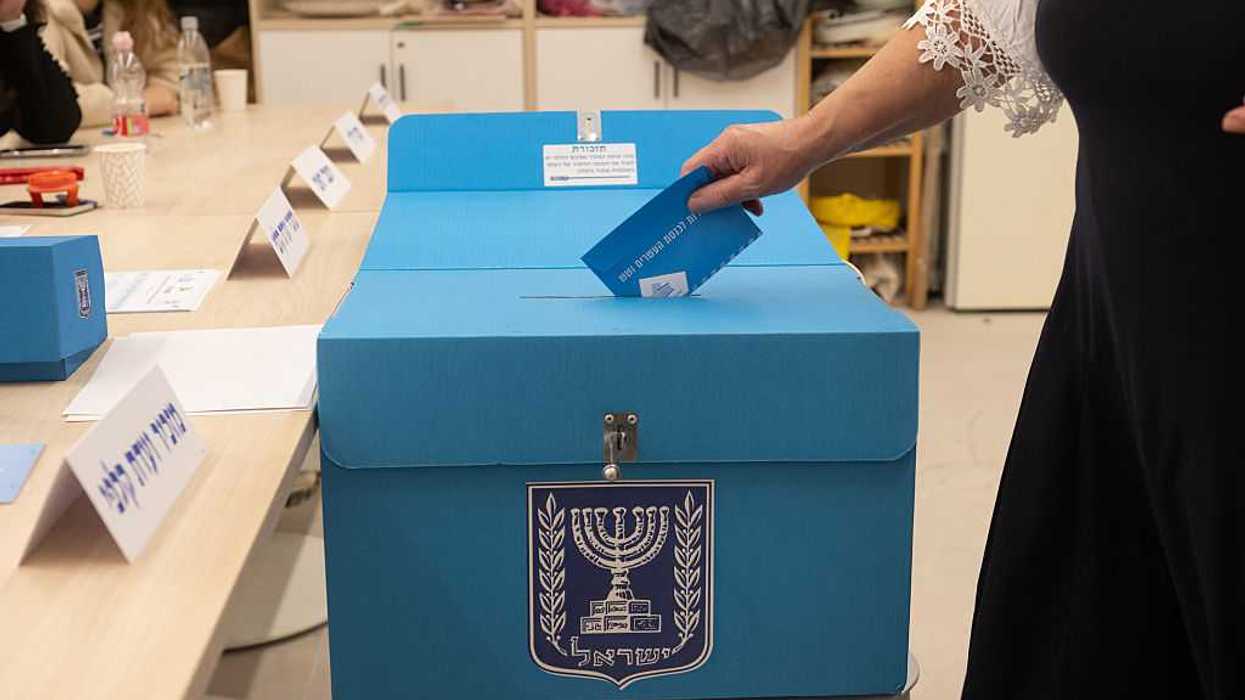
A voter casts her ballot at a polling station on October 27, 2026 in Jerusalem, Israel.

Noam Galai/Getty Images

Israel's Path to Peace and Security

Most people do not think that such a thing—peace and security for Israel—is possible. Yet it is possible—but it requires the wisdom and courage to chart a new path.

The old path has been to think of the Arabs—including Palestinians, even including Palestinian Israeli citizens—as being the enemy. And peace and security could only be achieved through military superiority and dominance over an implacable enemy. Whether the government was Labor (liberal) or Likud (right-wing), that has been the underlying assumption of this country founded in the aftermath of the Holocaust and driven by its memory.

Keep ReadingShow less
Mahatma Gandhi addressing some of his thousands of followers on a lawn.

Mahatma Gandhi addressing some of his thousands of followers on the lawn of the home of Dr. Ansari where Gandhi stopped during his peace meetings with Viceroy Lord Irwin.

Bettmann/Getty Images

Everyone Wants Peace. That’s the Problem.

In 2007, the United Nations gathered to declare an International Day of Non-Violence. It fittingly chose Gandhi’s birthday, October 2nd, for the occasion: a day to affirm “the universal relevance of the principle of non-violence” and strive toward a common culture of tolerance and understanding.

The resolution passed by consensus, co-sponsored by 140 member nations. Each attested to what nearly everyone believes: that they—their culture, their country, their party, their movement—want peace.

Keep ReadingShow less
Man holding American flag

Is America still great? An immigrant entrepreneur argues that free speech, opportunity, and the rule of law, not military or economic power, are the real test.

Getty Images

This Is What Makes America Great

After World War II, America stood victorious over Germany and Japan. Instead of permanent retribution, it helped them rebuild and welcomed former enemies as partners and allies. For me, that moment signaled America’s greatness: power guided by humanity. America earned something that power alone could never command — the respect and admiration of people around the world.

Today, a question once almost unthinkable is being asked: Is America still great — and will it remain so?

Keep ReadingShow less