
En español
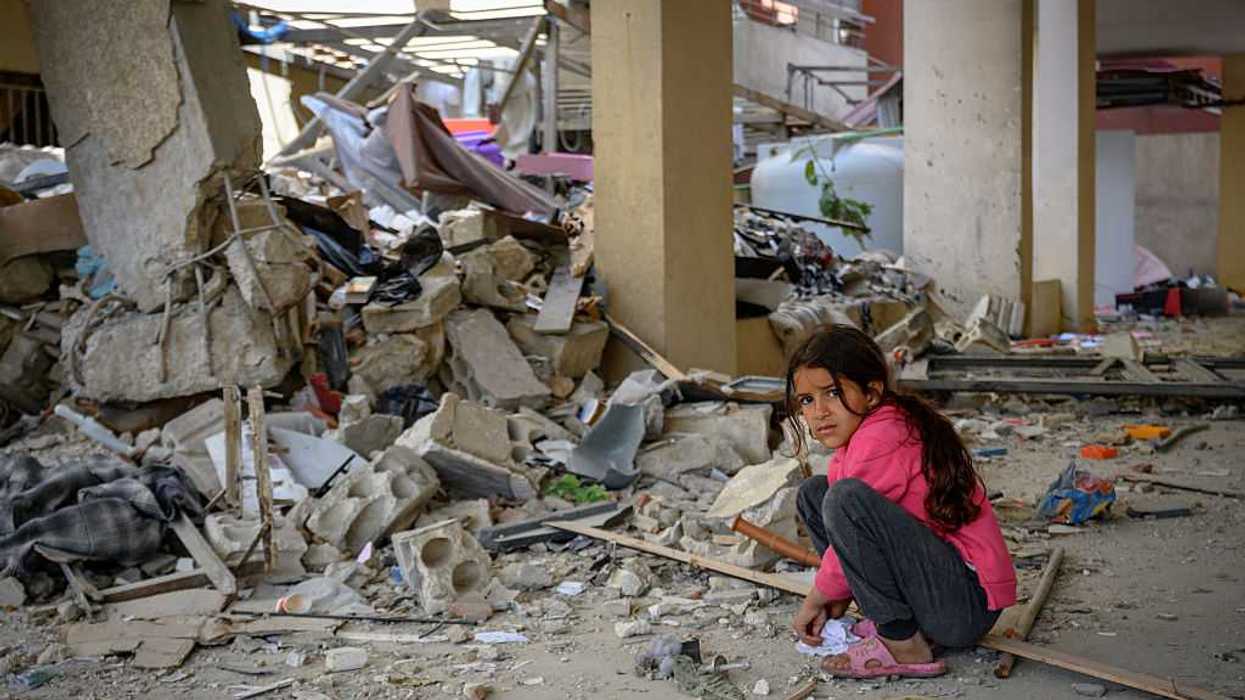
Operation Midway Blitz outraged much of the Chicagoland community last September when U.S. Immigration and Customs Enforcement agents raided neighborhoods, arrested thousands of individuals, and fatally shot Mexican immigrant Silverio Villegas González.
Witnessing these injustices across the country and in Chicago, two local coalitions came together last year to form Allies United, a Chicago-based coalition initially focused on responding to immigration raids, and now prioritizing protecting civil rights and building long-term cross‑community solidarity.
Allies United co-founder Marty Castro said that the concept for the coalition began last summer, when he and other leaders across the city noticed the need for a diverse, standing network that could respond quickly and consistently to civil‑rights concerns. Two-Thirds United and the Illinois Latino Agenda then came together to create the coalition, which is comprised of members from different non-profits across Chicagoland.
The group held its first closed-door meeting in November 2025, where approximately 100 people attended to discuss the ICE raids. It has since held two more closed meetings with approximately 150 attendees at the second meeting, and 175 at the third.
The emotional and mental stress that Operation Midway Blitz caused, according to the Illinois Accountability Commission Issues final report, still manifests in residents across the city. With ICE activity decreasing, Castro said the coalition has shifted from crisis response to strengthening long‑term bonds across communities and developing shared strategies to protect civil rights.
“[This work] is essential for our individual communities,” said Castro. “And it’s essential for our communal city that we collaborate and coordinate and educate one another.”
From Migration to Mobilization: How Latino Communities Built Political Power
The Latino population in Chicago began growing in the early 20th century. Mexican immigrants settled in neighborhoods such as Pilsen and Little Village; Puerto Ricans and Ecuadorians moved to the north side; and today, the community has expanded to suburbs such as Cicero and as far north as Harvard, about 75 miles from Chicago. The demographic shift has also contributed to the growth of cross-community coalitions such as Allies United.
In 1965, Congress established the Voting Rights Act to prohibit states from denying U.S. citizens the right to vote on the basis of race. While the act was originally intended to protect African Americans, it extended and applied to other marginalized communities.
Nine years later, William C. Velasquez founded the Southwest Voter Registration Education Project after realizing that there were still barriers for Latino voters – particularly language barriers. Following multiple court battles on behalf of Latino Americans and their civil rights, former President Gerald Ford amended the Voting Rights Act in 1975.
Ford added the new section to end discrimination against “language minorities,” meaning that voting materials needed to be available in other languages, which included those who speak Asian, American Indian, Alaska Native, and Spanish languages.
Subsequent administrations and courts have added and taken away different protections offered by both pieces of legislature since they were passed.
Civil‑Rights Protections Face Renewed Challenges
Civil rights are still under debate today, most recently through challenges to the Fourteenth Amendment of the U.S. Constitution, which guarantees birthright citizenship.
The amendment ensures anyone born or naturalized in the country is a U.S. citizen. This gives them the same rights as every other American – including those allotted by the Voting Rights Act – regardless of whether their parents are American citizens.
President Trump attempted to end this birthright citizenship through an executive order he issued on his first day in office in January 2025. The move swiftly incurred lawsuits from various organizations and politicians. According to Castro, attendees and panelists at the April 30 Allied United meeting shared how this amendment has impacted their lives and why it’s crucial to protect it going forward.
In addition to policy discussions, Allies United focuses heavily on strengthening cross‑community relationships — the core mechanism members from these coalitions say makes for rapid, unified responses. The coalition continues to invite members from diverse backgrounds and cultures to their meetings and to their coordinating committee, which meets weekly to build a solid foundation for the group and plan future meetings.
“There’s something really powerful in terms of being in a room that’s multi-faith, multi-racial, multi-ethnic,” said Amina Bahumi, a member of the coordinating committee and executive director for the Muslim Civic Coalition. “We get to come together and recognize that we’re all in it together and showcasing to power structures that want to pit us against each other and divide us, that we’re actually going to break bread and we’re going to be with each other.”
While Allies United has not yet achieved a measurable civil‑rights win or produced evidence that its cross‑community dialogue has directly shifted policy, there is strong precedent for this strategy.
Research and past organizing efforts show that this method of outreach efforts can be a powerful driver of civil rights protection. In Chicago, for example, the Chicago Immigration Rapid Response Network, spearheaded by the Illinois Coalition for Immigrant and Refugee Rights (ICIRR), have helped build rapid-response networks aimed at monitoring ICE activity.; a 2020 evaluation by the National Immigrant Justice Center found that neighborhoods with trained, cross‑community rapid‑response teams saw significantly fewer completed arrests by ICE officers.
Similarly, the Chicago Coalition for the Homeless has worked with housing advocates, community organizations and legal groups on homelessness policy. The coalition successfully advocated for the passage of the Illinois Bill of Rights for the Homelessness in 2013 and has continued pushing for increased state funding for housing and homelessness prevention programs.
These examples suggest that when diverse communities build shared understanding and trust, they are better positioned to mobilize quickly, present unified demands, and influence policy outcomes — an approach Allies United is beginning to adopt within its own organizing efforts.
A recent Supreme Court ruling on congressional redistricting highlights the growing urgency for coalitions like Allies United to defend civil‑rights protections that remain both vital and vulnerable for Latino communities.
In April, the U.S. Supreme Court allowed Louisiana to move forward with a congressional map that civil‑rights groups argue weakens Black voting power, a decision advocates say reflects a broader pattern of erosion in federal voting protections.
The Mexican American Legal Defense and Educational Fund (MALDEF), which has a long history of litigating Illinois redistricting cases, called the ruling a “blessing” of racially discriminatory gerrymandering.
“The Supreme Court’s decision blesses racially discriminatory gerrymandering and dismantles the legal protections for minority voters as we become a more important voice in the country’s politics,” said Nina Perales, MALDEF’s Vice President of Litigation, in a statement.
When One Community Is Targeted, All Are at Risk .
Communities joining to support each other when one is under threat has historically strengthened initiatives and led to policy change. For example, the Black Panther Party and United Farm Workers supported disability rights movement activists by bringing them supplies such as food and water during a sit-in protest in San Francisco. This support allowed protestors to remain in the building for 28 days.
The 1977 504 Sit-In, which demanded that the government give disabled citizens the rights to necessary accommodations and access to public services, eventually led to legislators signing those amendments into law. The protest later became one of the best examples in American history of the benefits of cross-community support.
Allies United co-founder José Marco-Paredes said that one of the coalition’s priorities this year is to build this trust and solidarity across communities to challenge, what he says, are negative narratives the current Trump administration pushes about marginalized groups.
“I think that it is important to counter these narratives that only base things on violence and challenges and not on opportunities and power,” said Marco-Paredes. “So I think that building a unified narrative that demonstrates cross-community solidarity and ensures that when there’s an attack on our communities, we’re able to respond quickly.”
Marco-Paredes also described why he is motivated to work with Allies United and strengthen bonds across Chicago communities. He believes that when one community is targeted, others are also at risk.
“Attacks on our democracy – attacks on our civil rights – are something that concerns anyone, regardless of their background,” said Marco-Paredes. “And it is something that’s in all of our own interests.”
As it stands, Allies United meetings are closed‑door and invite‑only — a structure leaders say helps build trust but also raises questions about how inclusive the coalition can be long‑term. Marco-Paredes said that the coalition does not directly provide public services and serves more as a symbol of solidarity.
“We want to make sure that the people that we include and invite are folks that are actually actively wanting to engage in a positive way in addressing the challenges we see,” said Castro. “So we don’t put a website out. We don’t put a blast email out. We’re very thoughtful about who we invite.”
Another challenge is long‑term sustainability. Castro said the coalition is working to shift from crisis‑driven meetings to a more durable model focused on broader issues affecting multiple communities.
“I view Allies United as being there for the long run,” said Castro. “Whether we have a federal, state, or local government that’s coming after us, or whether we just need to figure out how to make life even better than it is today.”
Members, however, carry the discussions held during the private meetings back to their respective organizations, benefiting the communities they work with. Marco‑Paredes believes that as Allies United continues to grow and strengthen ties between communities, the Chicagoland area will be better prepared to not only respond to future crises but to build a more equitable civic landscape.
“Advancing the Latino community advances society at large, and it advances our sheer future,” said Marco-Paredes. “The only way of having a thriving state right is by ensuring that all of our communities can thrive.”
Allies United Holds Cross‑Community Meetings to Protect Civil Rights Across Chicagoland was first published by Illinois Latino News (ILLN) and was republished with permission.McKenna Sweet is a freelance reporter based in Illinois.
ILLN is one of several newsrooms selected to participate in the Healing Illinois Reporting Project: Democracy Lives Here, a statewide initiative led by the Medill Solutions Journalism Hub and supported by the Field Foundation of Illinois to strengthen civic understanding and highlight community‑driven responses to social inequities.
As part of this project, ILLN is leading bilingual, statewide reporting examining how Latino communities across Illinois are shaping democracy during the nation’s 250th anniversary and ahead of the 2026 midterm elections.
This story looks at one such effort: a growing coalition working to unite Chicagoland communities amid civil‑rights threats.
This article was edited by Latino News Network Publisher, and Executive Editor of The Fulcrum, Hugo Balta, and Latino News Network Midwest Managing Editor, Angeles Ponpa.