


When grading a government, there should be no metric more telling than how the kids are doing. It may come as no surprise that they are not doing well–but if the kids are failing, it is because Trump has failed them. The United States has the highest child poverty rate of any wealthy nation, yet the president continues to systematically abandon children: stripping away vital affordability protections, dismantling public education infrastructure, and cutting Supplemental Nutrition Assistance Program (SNAP) benefits. Plus, there’s the ongoing threat of gun violence in schools, the cruel realities facing migrant kids in detention centers, and now new threats to digital safety and youth mental health–an intersectional crisis that desperately requires federal attention while Trump is actively trying to prevent states from stepping up in the meantime. Each of these issues deserves its own op-ed, but today let’s talk about the silver bullet for addressing inequality and building a resilient, inclusive society: public education. Its days may be numbered, but you can help.
In a move characteristically devoid of compassion, President Trump signed an executive order to dismantle the U.S. Department of Education (DOE), mandated that federal funding would be conditional on cutting all diversity, equity, or inclusion programs, and urged Congress to abolish the DOE outright. Following suit, Congress proposed and enacted budget cuts to reduce essential funding for programs supporting low-income students, students with disabilities, and otherwise vulnerable populations. The Supreme Court decision to allow mass layoffs at the Department of Education only worsens this crisis, reducing the department’s ability to assist schools during these challenging times. These combined federal actions will have far-reaching consequences for children and communities across the country. School’s out for summer? School might be out forever.
The impact is evident. Nationwide, schools are facing funding shortages, program cancellations, and staffing crises, and things keep getting worse. While federal funding accounts for only about 14% of school budgets, it plays a crucial role in leveling the playing field—ensuring fairness, opportunity, and support for our most vulnerable students. Trump’s proposed budget for Fiscal Year 2027 calls for major cuts to education and safety-net programming, less than a year after his deep eligibility and benefit cuts under the One Big Beautiful Bill Act, including new restrictions on SNAP and Medicaid, as well as major cuts to student financial aid that left millions scrambling. Clearly, at a national level, education is on the chopping block. Even if some Congress members manage to delay the damage, it is a precarious time to be a student or educator while so much is in flux.
Local school boards may be a line of defense. These elected leaders work to ensure that our children receive an equitable, high-quality education and that schools are safe places where students can thrive. School boards make critical decisions about budgets, resources, and policies, and work to ensure teachers have the tools, resources, and support they need to create effective, nurturing learning environments. Local school boards can provide in-touch leadership, and attempt to clean up the mess left by national policies that threaten our public schools. Unfortunately, many school districts suffer from low engagement and limited competition in school board races. Between 24% and 40% of these races go uncontested each year, with incumbents winning around 80% of the time. This lack of diversity and competition leaves community voices muted and allows special interests to influence education policies that may not truly reflect the community’s needs. On that note, this is prime time for you to consider running.
While there are dozens of deep, systemic failures plaguing America’s youth today, education is one of the few arenas where accessible, institutional mechanisms still exist for us to infiltrate and reclaim immediately. If you want to force federal attention back onto these critical priorities, you can step into the arena yourself by running for Congress to champion child safety and family safety nets. But you don’t have to go to Washington to make an impact. Running for your local school board is an accessible, impactful way to defend public education, support teachers, and help shape policies that prioritize students’ well-being and learning. There are over 80,000 school board seats nationwide, with about a quarter up for election each year. By stepping into these roles, everyday citizens can ensure that their communities’ schools remain safe, inclusive, and well-resourced.
You don’t need to be a parent or teacher to run. If you care about the well-being of young people or the integrity of local schools or even just the future economic vitality of your neighborhood, then you should think about it. We all have the power to help make our schools safe, equitable, and capable of preparing students for the challenges ahead. That being said, if you are a parent or a teacher, what are you waiting for? Run for a seat, or if you aren't ready to take that step, change how you engage with local elections: pay attention to the candidates on your ballot, and actively recruit or encourage a trusted, compassionate neighbor to run. Congress must do what it can to defend against the daunting onslaught our president is deploying against our youth, but we can all help ensure that children at least have access to the education they deserve.
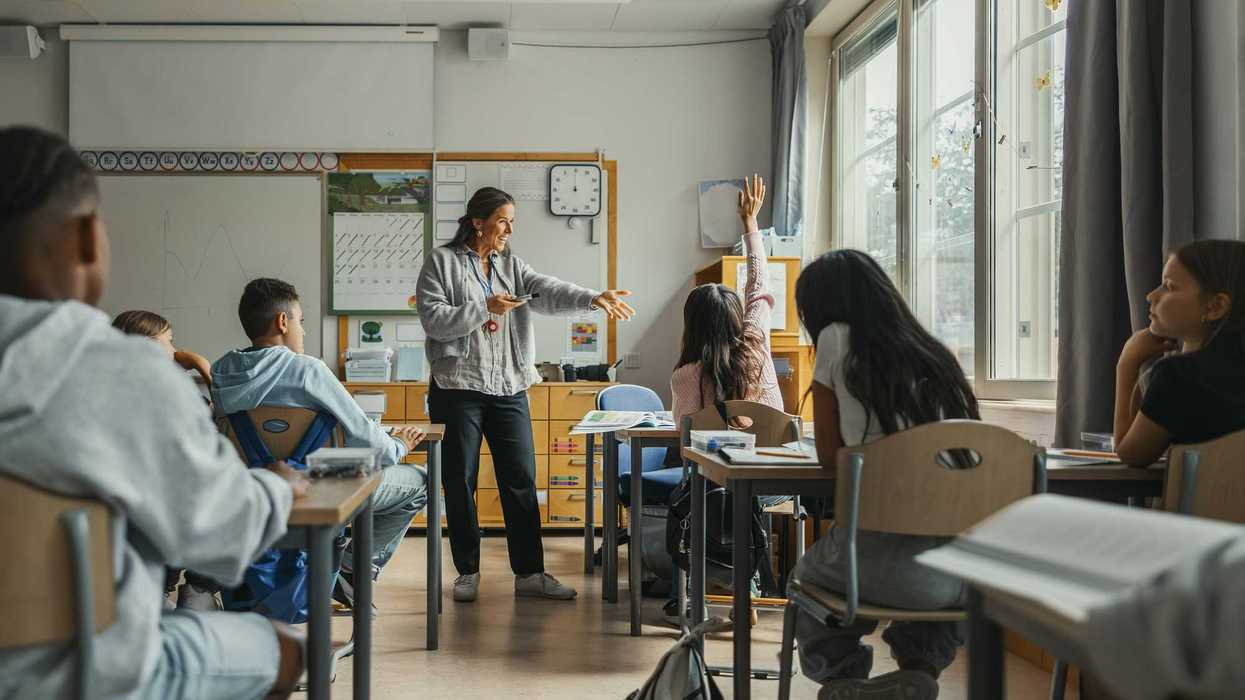
This call to action isn't just for adults. If you are a young person with notes on your schooling, you should run. Most school board seats only require candidates to be 18 years old, and a growing number of states have even enacted laws permitting or sometimes requiring local school boards to feature designated student positions, with some of these younger representatives carrying full voting rights. Trump ended programs that surveyed the experiences of high schoolers, but voices from the classroom are vital. No one is too young to invest in how the next generation learns and grows. Raise your hand.
Julie Roland was a Naval Officer for ten years, deploying to both the South China Sea and the Persian Gulf as a helicopter pilot before separating in June 2025 as a Lieutenant Commander. She has a law degree from the University of San Diego, a Master of Laws from Columbia University, and is a member of the Truman National Security Project.