




The Trump regime is poisoning the water. From gutting drinking water protections to guzzling resources for unregulated tech infrastructure, the current regime is treating our most vital resource with reckless abandon. Trump treats water like a luxury commodity for an elevated lifestyle and not the lifeblood that connects us all. That which sustains everything is an afterthought.
Under the Trump regime, domestic environmental policy serves to protect polluters. In a staggering betrayal of the environment the agency claims in name to protect, Trump’s Environmental Protection Agency (EPA) proposed unprecedented cuts to limits on the toxic, carcinogenic “forever chemicals” known as per- and polyfluoroalkyl substances (or PFAS) in public drinking water systems. The agency is even attempting to eliminate the “hazard index,” a tool designed to protect from chemicals in drinking water. At the same time, just this week, the Associated Press reported twenty-five Metro Detroit communities exceeded Michigan’s lead action level. Trump is making room for forever chemicals while vulnerable communities like Flint, Michigan, are still trapped in a nightmare of state-sponsored neglect. Our water needs more protection, not less.
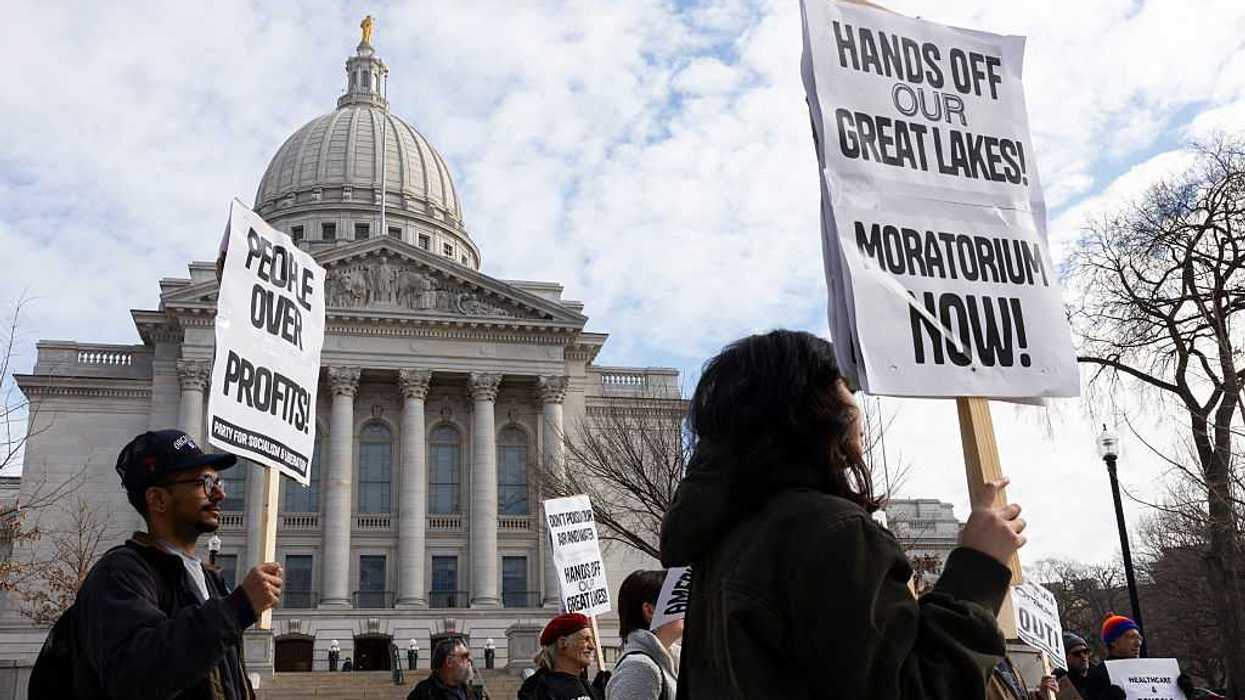
The onslaught doesn’t stop at the tap. In April, the U.S. Army Corps of Engineers formally announced that Enbridge’s Line 5 oil tunnel would receive fast-track approval. This project would run an oil tunnel straight through the heart of the Great Lakes, which supplies 84% of North America’s surface freshwater. In addition to destroying wetlands, disrupting numerous animal species, and threatening local businesses’ income from tourism and fishing, an oil spill could contaminate the source of drinking water for more than 40 million people.
The consequences of carelessness ripple to our oceans and beyond. The Navy stationed me in San Diego for eight years, where, in the long-suffering Tijuana River Valley along our southern border, millions of gallons of raw sewage and toxic waste flow unchecked into California's coastal waters. This is an international public health emergency that has lacked federal attention despite the ongoing efforts of local lawmakers to sound the alarm. With a Commander in Chief who treats environmental safety with such disdain, our coastlines will always be compromised.
The military itself continues to be a culprit. More than 600 military family members and civilians were sickened after over 20,000 gallons of jet fuel leaked at a base in Hawaii, contaminating an aquifer. Now, under Trump’s Department of “War,” a second massive jet fuel leak went undisclosed for months. The leak, which occurred at Joint Base Andrews, the home of Air Force One, has raised suspicions that Secretary Hegseth intentionally covered up the incident, which has inculpatory implications about the DOD’s concern for transparency, integrity, and environmental accountability.
This failure to govern for the future is painfully evident in Trump’s unflinching embrace of the AI industry. Massive digital data centers are popping up across the country, actively consuming millions of gallons of fresh groundwater daily to keep their cooling systems from overheating. Rural America is paying the price. One data center in Fayetteville, Georgia drained 30 million gallons of water from a local town without paying, and no one even noticed until the water pressure started getting low for the residents. What is Trump doing to curb the development of data centers? When he has tried to preempt states from regulating AI while offering no alternative at the national level, ‘absolutely nothing’ gives him too much credit.
Trump’s aqua anathema glares even in his personal life. Perhaps unsurprisingly, Trump likes to quench his thirst not with the purest beverage on earth, but rather Diet Coke. He even famously has a button he can push in the Oval Office for glasses on-demand. Trump’s taste may just always opt for the synthetic and branded over the organic and vital. Either way, water is out of sight, out of mind. His favorite hobby betrays him too. Audubon International estimates that the standard 18-hole golf course uses 312,000 gallons every single day; at the time of writing this, Trump had spent 116 of his 523 days since returning to office golfing on these fairways. That’s 22.2% of the presidency. Meanwhile, his own properties, like Trump National Bedminster, have historically faced intense scrutiny for blowing past annual water use limits by millions of gallons while paying heavily discounted public rates.
The poetic irony of Trump’s complete lack of water consciousness is on display in our nation's capital. Desperate to leave a physical legacy on Washington, D.C. while enriching his cronies, the president ordered a $14 million renovation of the Lincoln Memorial reflecting pool to artificially paint it an “American flag blue.” Nature, bless her, refused to submit. Just days after the project was completed, a massive algae bloom took hold. National Park Service rangers have tried pouring in hydrogen peroxide to kill the algae, but now the paint is chipping off in large chunks, giving the pool a Rothko quality. The metaphor is almost too on the nose: while Trump focuses on unnecessary, expensive, and often cosmetic fixes, the actual, underlying health of our infrastructure rots away. Narcissus is thwarted again by a reflecting pool. The swamp is alive and well.
If you want to measure the competency of this regime, you need only look at how they treat the most sacred resource we have on earth. For billions of years, water has been occurring naturally on this planet, but in 2026, here in the United States, our government proves itself capable of squandering that blessing. Our most hallowed national monuments are choking on green slime due to short-sighted vanity projects, while the damage being done to our water infrastructure is glaring, systemic, and dangerous. America is stuck in a loop of extraction, letting the interests of the oligarchs dehydrate and poison our communities. We need to clear the pipes of shortsighted policies, drain the swamp of corrupt priorities, and put some hope back into the drinking water. Call your reps, and make your voice heard this election cycle. If your elected officials can’t even protect the most important ingredient of life, they don’t belong in government. There is literally nothing more essential to our survival.
Julie Roland was a Naval Officer for ten years, deploying to both the South China Sea and the Persian Gulf as a helicopter pilot before separating in June 2025 as a Lieutenant Commander. She has a law degree from the University of San Diego, a Master of Laws from Columbia University, and is a member of the Truman National Security Project.











The President Invited Iran to Bomb My Home