


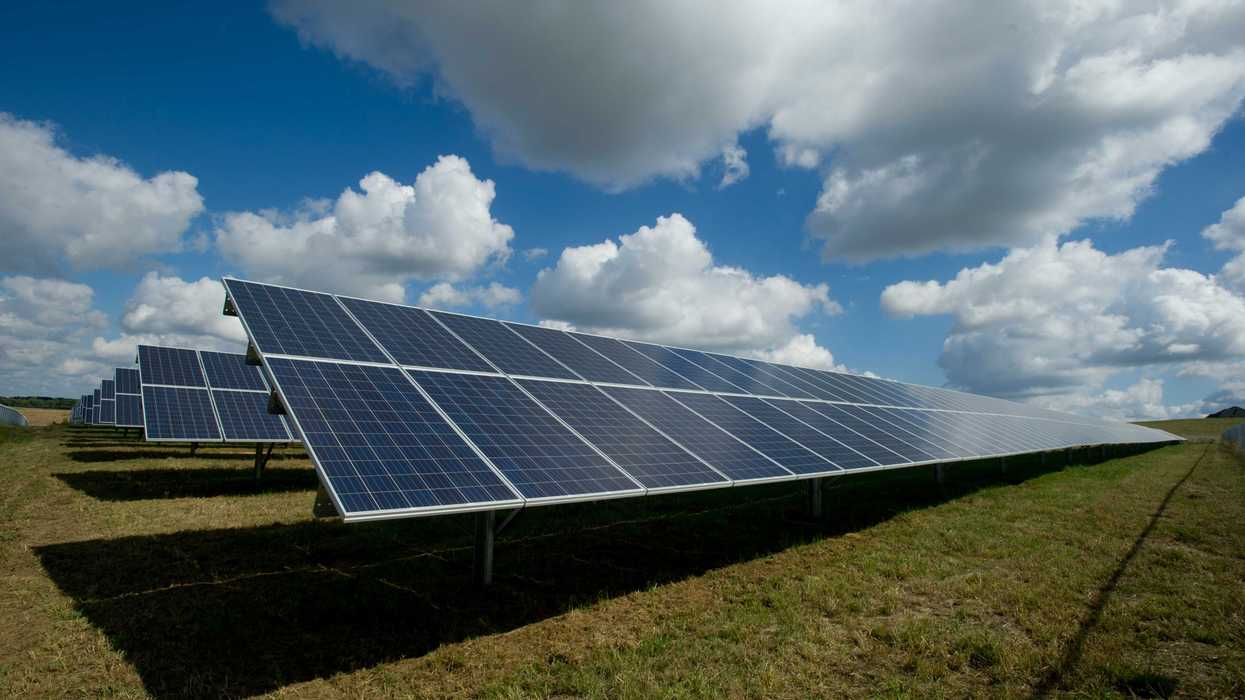

In late June, the Solar Energy Industries Association confirmed that the United States now has enough module manufacturing capacity, nearly 65 gigawatts annually, to meet its entire domestic demand on paper. It was a genuine milestone. But cell production, the more technically demanding upstream step that determines whether those modules are truly American-made, still stands at barely 3.2 gigawatts. The gap between assembly capacity and genuine supply chain independence is where trade policy currently lives, and where it is doing the most damage.
A May 2026 report from Columbia University's Center on Global Energy Policy documented in detail what clean energy project developers have known for two years: US-China trade tensions have not reduced American reliance on Chinese-made solar, battery, and electric vehicle components. They have lengthened the supply chains, added cost, increased lead times, and shifted production nominally to Southeast Asian countries where Chinese firms own much of the manufacturing infrastructure. The net effect on US energy independence is close to zero. The effect on the cost of clean energy deployment is measurable and negative.
China's position in clean energy manufacturing is not a policy choice that tariffs can alter in the near term. It is the accumulated result of two decades of investment. Chinese renewable energy products now reach over 200 countries and meet more than 80 percent of global demand for photovoltaic modules and 70 percent of global demand for wind power equipment. In batteries and electric vehicles, the position is similar.
When the US raises tariffs on Chinese-made solar panels, Chinese manufacturers do not stop producing them. It is to route them through Malaysia, Vietnam, and Cambodia, sometimes with additional value-added steps to satisfy rules of origin. The Columbia analysis found that this transshipment pattern accelerated significantly after the 2025 tariff escalations. The result is that American solar projects import the same Chinese components, pay more for them, and wait longer for delivery.
The Busan trade deal included a notable concession on this front: China agreed to suspend its export controls on rare earths, gallium, germanium, antimony, and graphite, and to issue general licenses for US end users. Those materials are not optional for clean energy manufacturing. They go into everything from battery cathodes to inverters to EV motors. When China restricted them in late 2025, US energy project timelines came under immediate pressure. The suspension bought time. It did not solve the underlying dependency.
US electricity consumers and grid operators absorb the downstream cost of supply chain friction. Solar project developers facing higher panel costs and longer lead times either delay projects, accept higher financing costs, or both. Utilities pass those costs into rate structures. The households that stand to benefit most from affordable clean energy, lower-income renters and homeowners in sun-belt states with high cooling costs, are precisely those least able to absorb higher electricity rates.
Meanwhile, China's position is strengthening regardless of the US tariff policy. China's 15th Five-Year Plan targets 3,600 gigawatts of wind and solar capacity by 2035, six times 2020 levels. The technology, the manufacturing scale, and the cost curves all point in one direction. American tariff policy cannot reverse that, but it can determine whether the US benefits from Chinese manufacturing capacity or pays a premium to partially avoid it.
The case for domestic clean energy manufacturing is not frivolous. Brookings Institution analysts have argued that grid-connected hardware with Chinese software or remote access capabilities raises legitimate cybersecurity concerns. A solar inverter that can be disabled remotely is a different category of risk from a pair of shoes. Those concerns warrant specific, technology-focused policy responses.
What they do not warrant is blanket tariffs on solar panels and battery cells that delay grid buildout without addressing the security concern. A Chinese-made panel with no connectivity hardware is not a cybersecurity threat. A Chinese-made inverter with embedded firmware and remote access capability may be. Policy should reflect that distinction. It currently does not.
There is also a competitive cost that rarely enters this debate. The IRA's 45X manufacturing tax credit has been the single most effective tool in building genuine domestic solar capacity, far more so than tariffs. Canary Media's analysis of the 2026 solar manufacturing landscape found that companies such as First Solar, Qcells, and Heliene have made real upstream progress, not because of import barriers, but because of investment incentives. Tariffs on Chinese panels have instead led to a perverse outcome: raising costs for the same domestic manufacturers they are meant to protect, since those manufacturers still depend on Chinese-origin cells and wafers with no adequate domestic substitutes at scale. Industrial policy that builds capacity and trade policy that raises costs for that capacity are working against each other. Washington has not resolved that contradiction.
The US has set energy independence and carbon reduction as simultaneous goals. Achieving both requires large-scale deployment of solar, wind, and battery storage in a compressed timeframe. The supply chain for that deployment runs, in most critical components, through Chinese manufacturing. A policy framework that acknowledges this reality and manages it through targeted security requirements, rather than blanket tariffs that raise costs without producing domestic capacity, is the only approach that serves both goals. The alternative is slower deployment, higher consumer energy costs, and continued dependence on the same Chinese supply chains, just routed through more countries and at greater expense.
Hugo Balta is the executive editor of The Fulcrum and the publisher of the Latino News Network.