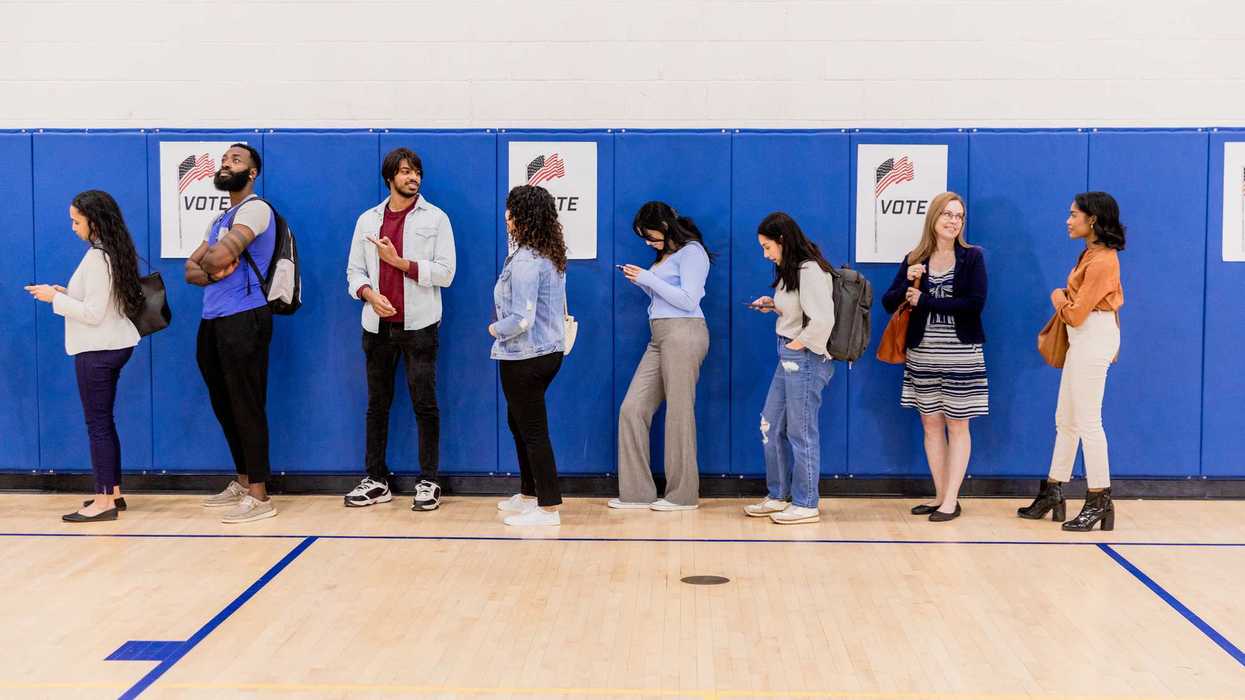




Democracy often rests on the idea that citizens are political equals. They may be associated with different social organisations and ideological traditions, but in the democratic culture, they interact as citizens with equal rights and equal opportunity. In a democracy, devotion was never expected; it was developed to institutionalise disagreement among equals. The democratic system is associated with impersonal rules instead of personal loyalty, where institutions regulate power and citizens have the freedom to interrogate those who govern them.
However, contemporary political culture in India deviates from this democratic spirit. The status of citizenship is gradually turning to the fandom. The success of politicians is increasingly not measured by their ability to contribute to the path of development but by the size of their digital audiences, social media trends, public spectacles, and emotional engagement. The normalisation of social media has accelerated this transformation. Followers, likes, views, and recommendations become a new form of political capital. In this culture, politicians are often more motivated to gain attention than to achieve meaningful policy outcomes. Consequently, politics now resembles celebrity culture, where popularity and visibility are often mistaken for political efficiency.
This change has consequences in terms of the relationship between leaders and citizens. A citizen and a fan occupy different statuses in a society, and this difference often gives them different roles in a democracy. Leaders undergo a continuous monitoring process based on a rational critique, in the great tradition of citizenship. They may support a government in some aspects while simultaneously opposing it in other aspects. Their submissiveness is ultimately toward constitutional principles, democratic procedures, and public institutions. They have a realisation that no leader is above the law and criticism is not an anti-social act but a democratic process.
However, fans are primarily attached to personalities. The nature of their engagement with politics is much more emotional than institutional. The political centrality revolves around the leader, while institutions lose space in public discussions and expectations. Political questions become personalised. Successes are attributed solely to the leader, while failures are blamed on situations and structure or institutions perceived as obstacles. It no longer connects citizens with the state but admirers to an individual.
Citizens need institutions: the judiciary to protect rights, the legislature to make laws, the election commission to ensure free and fair elections, universities to produce and verify knowledge, and the media to scrutinise power. Citizens often prioritise democracy over any individual because institutions outlast governments and provide coherence to public life. They realise that public trust must rest in procedures rather than personalities.
Contrary fans operate differently. They often invest their trust in the leader, instead of institutions. As a result, if the institution questions the leader, the institution itself may be labelled as ineffective or outdated. Any unfavourable interpretation from the court and the media can be portrayed as biased. Even the research or data that come with the findings contrary to the ideology or personality of the leader may face criticism for disrupting the social system. In this type of political culture, legitimacy depends more on loyalty to the leader than on rules and procedures.
Citizens are increasingly encouraged to associate with personalities instead of institutions.
Supporters may argue that strong leaders are necessary to run the government. Indeed, democracies need leadership, persuasion, and public enthusiasm. Charismatic leaders can mobilise participation, inspire confidence, and overcome political challenges. They can motivate citizens and bring neglected issues into public discourse. Leadership itself is not the problem. The risk emerges only when admiration evolves into unquestioning loyalty and enthusiasm replaces citizenship.
The social risk of fandom lies in the logic of differentiation. Citizenship creates a model of equality despite differences. It enables a political community of relatively diverse people with mutual disagreement to remain within the same political community. Fandom, on the other hand, creates division in society into competing segments of supporters and non-supporters. It shrinks the space for open discourse because the goal is no longer persuasion but affirmation. Public intellectualism shifts from evaluating policies to showcasing loyalty. Criticism is often interpreted as hostility, and disagreement becomes evidence of disloyalty. In this situation, a democratic opponent is no longer regarded as a fellow citizen with a different opinion but as an adversary whose legitimacy itself is questioned.
Ergo, over time, this type of political culture can create a situation of institutional crisis. Consequently, far-reaching democracy declines, and political organisations function centred on individual personalities. Public officials may become reluctant to challenge leaders even when institutional norms require them to do so. Citizens begin evaluating institutions not by their integrity but by whether their decisions favour preferred leaders. Accountability deteriorates when criticism is interpreted as disloyalty. Eventually, governance moves increasingly towards personal authority rather than adhering to constitutional principles.
History is evident that charismatic leaders, despite long rule, failed to provide long-term stability to their society, while strong institutions often provide democratic stability. Leaders may rise and fall, governments can change, and political movements will evolve. It is the Institutions that ensure continuity, accountability, and legitimacy of power. When the role of citizen goes to prioritise as the role of fan, institutions would weaken in favour of personal loyalty, and democracies become more vulnerable to instability because the mechanisms intended to manage disagreement lose public legitimacy, and the public may use an anarchist way to showcase their disagreement.
Democracy requires participation, conviction, and political passion. But above all, it requires citizens. Leaders may inspire a nation, but only institutions can sustain one. When citizens become fans, institutions become dispensable; and when institutions become dispensable, democracy itself becomes fragile. The survival of democracy depends not on the strength of its leaders but on the strength of its citizens and the institutions they choose to trust.
Ashwani Kumar is teaching Sociology at UILS, Chandigarh University, Punjab. Reach Kumar at ashwinsociology@gmail.com