


As the United States approaches its 250th anniversary, we are being asked to confront what kind of nation we still want to be. Anniversaries often invite celebration, but this one arrives at a moment when the distance between our founding ideals and our lived reality feels especially stark. That tension is painfully visible in Minneapolis, where the shooting deaths of Renee Good and Alex Pretti during federal enforcement operations have shaken public trust and forced a reckoning with the responsibilities of a government that claims to serve its people.
Good, a 37‑year‑old mother, was killed on January 7 when an ICE officer fired into her vehicle. The Hennepin County Medical Examiner ruled her death a homicide. Minneapolis Police Chief Brian O’Hara publicly contradicted early federal claims that Good had tried to run over an agent. That kind of discrepancy is not a small matter; it goes to the heart of democratic accountability.
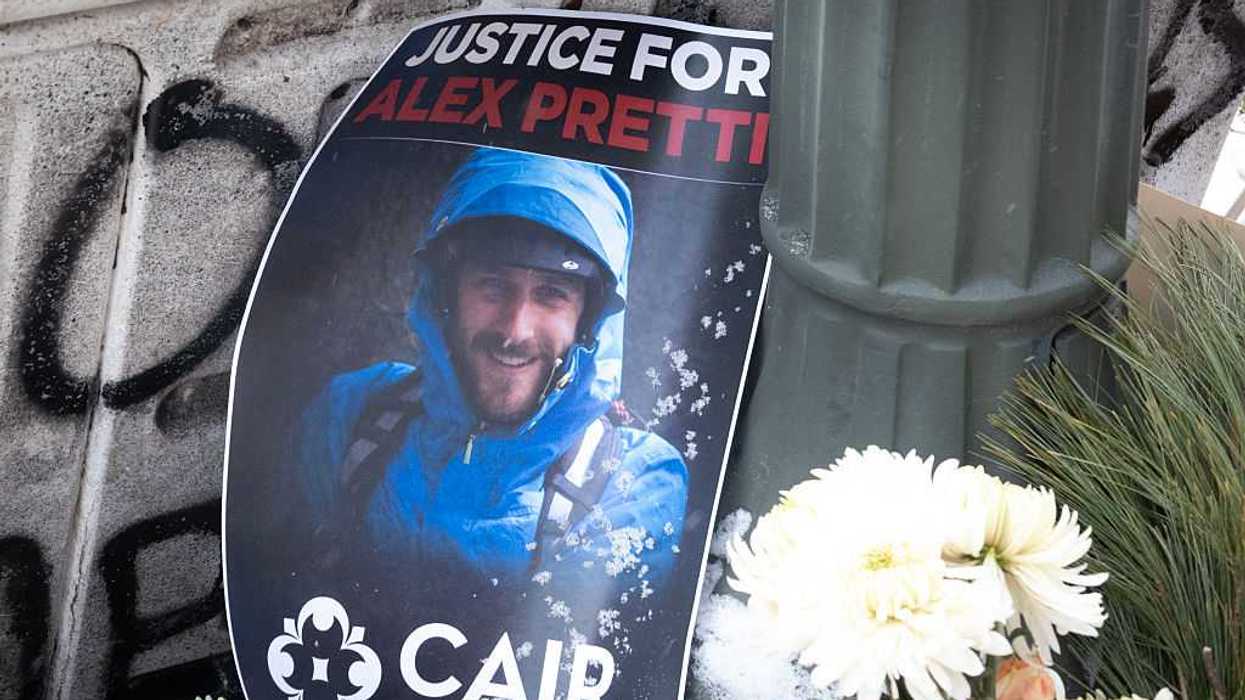
Seventeen days later, Pretti — a nurse and lawful gun owner — was shot and killed by a U.S. Border Patrol agent during a separate operation. Federal officials initially claimed he violently resisted, but witnesses told reporters that the video showed an agent disarming him moments before the shooting. Pretti’s family said in a statement, appealing for people to ‘get the truth about our son.’
These deaths did not occur in isolation. They unfolded amid an expanded federal enforcement posture and growing tension between President Donald Trump and state and local government leaders. Minnesota Governor Tim Walz said the state was seeking full transparency and not shifting narratives. When state and local officials feel compelled to publicly contradict federal accounts, it signals a deeper institutional fracture — one that citizens cannot afford to ignore.
For many Americans, these events have become a rallying point. Civic groups, immigrant‑rights organizations, veterans who served alongside Pretti, and local residents are part of a renewed Resistance — a broad, citizen‑driven movement committed to defending democratic norms, civil liberties, and institutional accountability.
I support The Resistance and encourage others to do the same. Not as a partisan identity, but as a civic commitment to ensuring that government power remains answerable to the people. This is not a new idea. The country was founded on a distrust of unchecked authority. The Revolution itself was a response to a government that operated without accountability to those it governed. If democracy means anything, it means we don’t stay silent when the government kills people and won’t explain why. Silence is complicity — as old as the republic.
Democratic resilience depends on institutions that earn legitimacy through openness and accountability. The public response in Minneapolis reflects that understanding. Protests formed within hours of each shooting. Civil rights groups demanded independent investigations. Local officials challenged federal accounts. These actions are not signs of instability; they are signs of civic health. They show a public unwilling to accept ambiguity when lives are lost, and government force is used.
But civic outrage alone is not enough. If the 250th anniversary is to mean anything, it must be a catalyst for strengthening the systems that failed the families of Renee and Alex. That includes transparent investigative processes when federal agents use lethal force; clear communication between federal and local authorities; independent oversight mechanisms that the public can trust; and a renewed commitment to civil liberties in enforcement contexts. These are not radical demands. They are the basic maintenance of a functioning democracy.
Renee and Alex should still be alive. Their families should not have to fight for clarity about what happened. Their deaths remind us that the American experiment survives only when ordinary people insist that government power be exercised with restraint and accountability. The founders left us a framework, not a finished project. Two hundred and fifty years later, the responsibility to carry it forward is ours — and The Resistance, in its many civic forms, is one expression of that responsibility.
Hugo Balta is the executive editor of The Fulcrum and the publisher of the Latino News Network, and twice president of the National Association of Hispanic Journalists.




 Following our HWF Civic Futures kickoff last week with Eric Liu, our design partners at Public/Official have created a unique visual to capture the “civic scaffolding” spirit of this conversation.
 Lisa, Coaches Rev and Matt Elkin, and former Stanford Men’s Basketball star Maxime Raynaud at Stanford’s “All Vote No Play” Democracy Day, 2025