



This fall, I got a phone call from a longtime friend in Mali, West Africa. I could hear the familiar hum of insects in the background, even as I heard the audible strain in his voice. A tragedy had just unfolded - innocent people were being displaced, villages destroyed, and people killed in the name of religion and political extremism. Even though it has been over two decades since I last visited, Mali is a place I grew to know and love - and for over 25 years, I’ve been blessed with a close friendship with my host family, with whom I lived during my time in the U.S. Peace Corps. I had been one of just over 2,500 volunteers who had served in the country until security concerns forced the closure of Mali’s Peace Corps program in 2015. And now, the village where I lived had been burned down, and my friends and host family were refugees on the run.
It was a reminder about how quickly things can change. One day, you wake up to the familiar path of sunlight across mud brick walls and the large baobab trees that frame the dirt path leading from the main road. Another day, you wake up to a worst nightmare - a country in chaos, extremism on the loose, and the very real force of violence right at your doorstep. It was also a reminder that political unrest can strike close to home, to the places and people I know and love, and that political instability and violent, polarizing rhetoric takes its toll.
My host father, Ismail, had called to let me know that the village had been attacked by a group called JNIM - Jama'at Nusrat al-Islam wal-Muslimin - which translates roughly as “the group for the support of Islan and Muslims,” and whose aim has been to drive foreign aid and forces (especially French and the United Nations) out of the country and to impose its version of Islamic law. He had been alone at home when the attackers flooded the village, and he had hidden himself in the surrounding trees and bushes while a gunfight ensued. Everyone fled, and at least four members of the community were killed, including my host mother’s younger brother, who was shot in the back as he was running to escape. The village was then burned down - along with many others in the region. The destruction had spread not only to homes but also to grain stores and agricultural fields. Now, everyone from the village was on the move in different directions. The whole family had scattered, and he was scrambling to find out where everyone was.
While coverage in the international news has been minimal, a political and humanitarian crisis has been brewing in Mali for years, with the country ranking fifth in 2024 by the Global Terrorism Index among countries most affected by terrorism. Armed conflict has led to thousands of deaths, with a growing number of people suffering from political violence coupled with the ongoing challenges of food insecurity, drought, and political instability.
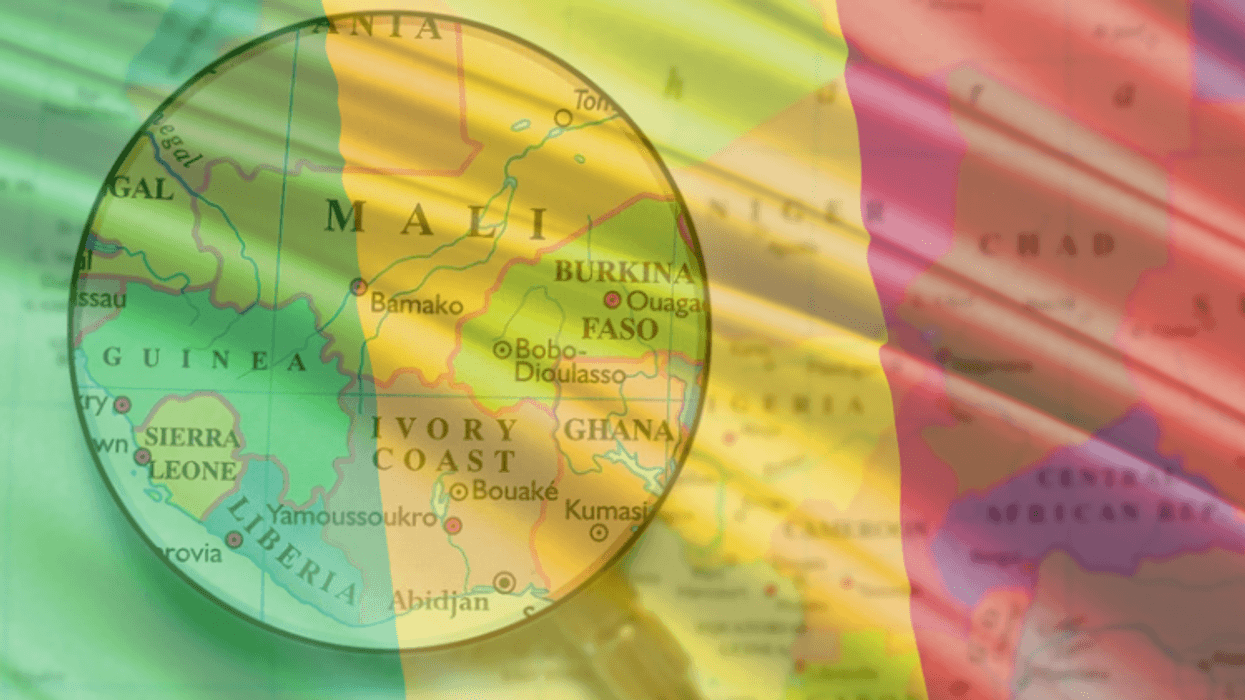
In the span of 25 years - one generation - everything had changed. I was 21 years old, and it was the late 1990s when I first stepped off the plane in the capital city of Bamako. I had just graduated from college and was about to realize a long-time dream of becoming a Peace Corps volunteer, which became my reality and has profoundly impacted my life ever since. For two years, I lived in southern Mali as a public health volunteer, working at the local health center, weighing babies and talking with mothers about child nutrition. On other days, I organized well-repair workshops, soap- or jam-making workshops, and taught guest lessons at the local school. The border of the Ivory Coast was a bus ride to the south, and nearby Burkina Faso was a day’s bike ride to the east through dirt paths, past banana trees and villages with mud houses and thatched roofs.
In the Bambara language (spoken by most Malians either as a first or second language), the word for one’s host family is jatigi, which roughly translates as ‘shadow keeper.’ Having a jatigi in Mali in the late 1990s was an essential component of any successful Peace Corps volunteer’s tenure in the country. It meant that, during my time living in the village, I had a host family and, in particular, a host ‘father’ who was indeed like the keeper of my shadow, ensuring my safety and connecting me with neighbors, the village chief, and collaborators across the region.
My host father, in particular, did indeed become like a real family, welcoming my own parents and brother when they visited, attending my wedding years later, and even staying at my grandparents' home during one of his two visits to America since my time living with his family. Being part of a ‘jatigi family’ meant that I also had host mothers and siblings with whom I shared every aspect of life. These were the people who I ate daily meals with and sat by the fire with in the evenings, drinking tea and talking late into the night, On days when the Peace Corps public health work was slow, I would walk to the rice fields to help plant rice, or bike to the other fields to help with the peanut, corn or cotton farming. Living in West Africa had left me with an overwhelming experience of hospitality and collaboration - peppered with the best of humanity across borders, language, culture, and religion. The enduring friendship has been a reminder of the possibility of solidarity across differences.
Back then, there was no electricity or running water in the village, and cell phones were just ramping up in the United States. I had to take a bus or ‘bush taxi’ (as they were called) to a town 30-some miles away to find the nearest telephone to call home. When I came back to the United States, staying in touch was a feat of magic, requiring planning phone calls months in advance and often foiled by poor connections and downed power lines. Since then, phone booths have cropped up close to the village, along with electricity, cell phones, and the internet, which now make it much easier to text or make a phone call to stay in touch.
Mali had been a constitutional democracy with a multi-party system, having just transitioned away from authoritarian rule in the early 1990s. Democratic institutions were taking hold, and political parties were allowed to operate. For two decades, Mali was often seen as a prominent example of democracy in West Africa, until a 2012 military coup. JNIM, which has been designated as a terrorist group by the U.S. State Department, was formed following years of tumult and has now been expanding its geographical reach throughout Mali, with the Malian army and Russia’s Wagner Group, along with local militias, contributing to the deepened instability and unrest in the country. This fall saw record levels of violence and mass atrocities throughout Mali, especially in the Sikasso region in the southeast, where Ismaill’s village is.
When I spoke with Ismail and lamented with him about how people had died and were being killed across the region - he corrected me by saying, “No - they are not just being killed. A young boy’s throat was slit, killing him like a sheep.” He wanted me to understand that this wasn’t only about death. This was about the horror - and dehumanization - of how people were dying. They were being slaughtered like animals.
Why do I tell this story? I tell it not only because it is a heart-wrenching reminder of the degree of cruelty that we humans can be capable of, but also to bring awareness to a largely unknown tragedy underway in West Africa. I tell this story because it has not been in the news: a vast human rights, humanitarian, and refugee crisis with murders and mass migrations following on the heels of recent extreme weather events (including severe flooding and drought conditions just last year).
I also tell this story as a reminder of how swiftly political systems and stability can shift. Mali went from being an emerging multi-party democracy to then experiencing three successful military coups in 2012, 2020, and 2021, establishing military rule that continues today. In both the buildup and aftermath, terrorist groups such as JNIM have grown and spread - a whole country and region’s previous tenuous stability swept away by the voracious and indiscriminate force of political and religious extremism. It didn’t matter that this destroyed village was a village populated by devout Muslims. It didn’t matter that they were fellow Malians or West Africans. The rise of fundamentalism and extremism on any side risks the worst of the worst ends: the overall breakdown of civility, senseless violence that knows no boundary, and indiscriminate cruelty and destruction.
Perhaps we are too inundated with our own vicious, stressful news cycles, self-absorbed, like frogs in boiling water in our own country, on the precipice of preventable disasters. Fueled by the flames of political violence and dehumanizing policies here at home, a profound uptick in violent rhetoric and the destabilizing of civic and democratic institutions, the rise of authoritarianism and fundamentalism looms right here in the world’s oldest modern, continuing democracy - a shadow of its former self.
This story is a reminder of what happens when extremism of any kind is allowed to take root - and when tending to the basic humanity of one another is systematically neglected. When demonizing and dehumanizing the ‘other’is tolerated as a norm, especially by our leaders, we risk grave consequences. We are suffering these consequences already in the United States as violent political rhetoric runs rampant and unchecked, and those who have the power and influence to step in and counter it have failed to do so (yet). This is what happens when we neglect the basic human connection and empathy that is possible even across vast divides.
As someone who has dedicated my career to issues spanning public health, homelessness, environmental conservation, and climate change, my journey to join the Peace Corps represented the raw idealism I wanted to believe America stood for. At the time, I was proud to be an American overseas - part of a “global effort to promote world peace and friendship through community-based development and intercultural understanding.” Today’s America is grossly different with DOGE’s cuts to the Peace Corps and the axing of international development and humanitarian aid - the impacts of which have been devastating and culminating in hundreds of thousands of preventable deaths across the globe.
What new version of America will prevail? While the tides of political instability and authoritarianism continue to wreak their havoc, Ismail and his family return home to survey the damage and begin rebuilding their community. Some Americans are still looking for ways to do good by our global neighbors - even ones far away on a separate continent. Over 20 families and friends here in the U.S. have just come together to support the region in its rebuilding. It will make all the difference for this one place’s survival and recovery. Did it matter who we voted for? No. Did we reflect different political beliefs? Yes. Did it matter that we still knew how to come together to remember our basic humanity and the basic humanity of others? Absolutely - more than ever.
As ICE agents continue to amass and inflict violence in the name of ‘safety,’ and as threats to our collective constitutional rights mount, I consider what is worth defending and protecting now here at home - remembering that in one short generation everything we hold dear can be extinguished just like the throw of fire that destroyed a community I know well and love, even from far away.
Deborah McNamara is a former Peace Corps volunteer in Mali, West Africa. She studied Philosophy, Political Science and Environmental Policy at Boston University and Environmental Leadership at Naropa University and is currently the Executive Director of a U.S. based environmental NGO. She invites people who want to support Mali’s recovery to consider donations to the International Rescue Committee, Doctors Without Borders, or Human Rights Watch.







The President Invited Iran to Bomb My Home