
Skip to content
Search

Latest Stories

Follow Us:
Top Stories

Fulcrum Roundtable: Crisis in Minneapolis

Opinion

Fulcrum Roundtable: Crisis in Minneapolis

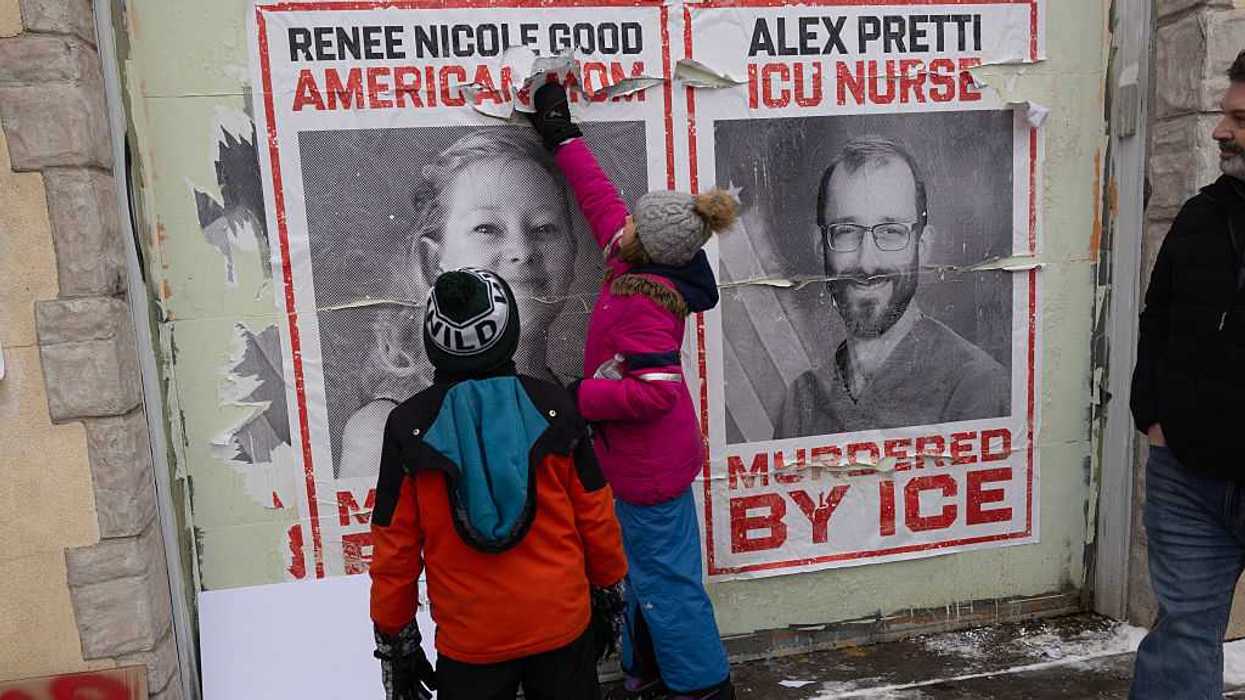
Street scenes next to the site where Alex Pretti was shot and killed by two Federal agents, February 1, 2026, on Nicollet Avenue in Minneapolis, Minnesota. As part of President Trump's plan to deport immigrants, over 3,000 Immigration Customs Enforcement (ICE) agents were sent to Minneapolis, against the wishes of most of the community, the mayor, and the governor.

(Photo by Andrew Lichtenstein/Corbis via Getty Images)

In the weeks leading up to the shootings of Renee Good and Alex Pretti, Minneapolis was marked by a growing sense of unease as federal immigration agents increased their presence in neighborhoods where residents already felt over-policed and under-protected.

Rumors of aggressive tactics circulated alongside firsthand accounts of raids that blurred the line between enforcement and intimidation. This atmosphere created a simmering fear—especially among immigrants, artists, and activists—who felt they were being singled out not just for their status, but for their voices and visibility. When Good, a poet known for speaking truth to power, and Pretti, a healthcare worker committed to serving vulnerable patients, were killed, the tension snapped into open outrage. Protests erupted almost immediately, fueled by grief but also by a deeper sense of betrayal: two people who embodied service and expression had been met with state violence instead of protection.


Valencia Walker and Maria Bonn—two writers whose recent columns confront the human and societal fallout of federal immigration enforcement were guests on The Fulcrum Roundtable. Their work becomes a lens through which broader national fractures come into focus.

- YouTube youtu.be

Walker’s column, Alex Pretti’s Death Is a Code Blue for the U.S., is highlighted as a central point of discussion. Her work emphasizes the vulnerability of healthcare workers—like Pretti—who find themselves caught in the crosshairs of aggressive immigration enforcement. She argues that the killing demands accountability and collective action, urging the public to defend civil rights and protect those who serve communities in crisis. Walker’s perspective is rooted in both advocacy and urgency, reflecting a broader concern about the normalization of state violence.

Bonn’s article, Word Kill: Politics Can Be Murder on Poetry, expands the conversation beyond law enforcement and into the cultural realm. By connecting the killing of poet Renee Nicole Good to a long lineage of persecuted truth-tellers—from Federico García Lorca to contemporary academics—Bonn underscores how political repression often targets artists first. Her analysis suggests that the death of a poet is not merely a tragedy but a warning: when societies silence their storytellers, they erode the foundations of democratic discourse.

Through the voices of Walker and Bonn, the conversation confronts the intertwined crises of violence, censorship, and institutional distrust. Their insights remind viewers that understanding these events is not just an intellectual exercise—it is essential to navigating the stakes of this moment.

Hugo Balta is the executive editor of The Fulcrum and the publisher of the Latino News Network.

Read More

Ukrainian POW, You Are Not Forgotten
Recruits at roll call at the infantrymen's deployment site. Recruits, including former prisoners who have voluntarily joined the 1st Separate Assault Battalion named after Dmytro Kotsiubailo "Da Vinci," take part in weapons handling and combat readiness training in an undisclosed location in Ukraine on November 11, 2025.
(Photo by Diana Deliurman/Frontliner/Getty Images)

Ukrainian POW, You Are Not Forgotten

“I have very good news,” beamed former Ukrainian POW and human rights activist Maksym Butkevych, looking up from his phone. “150 Ukrainian prisoners of war have just been released. One is from my platoon.”

This is how I learned about last week’s prisoner exchange during a train ride from Champaign to Chicago. In addition to the 150 Ukrainian defenders, seven citizens were released on February 5 in an exchange with Russia.

Keep Reading Show less
2025 Crime Rates Plunge Nationwide as Homicides Hit Historic Lows
do not cross police barricade tape close-up photography

2025 Crime Rates Plunge Nationwide as Homicides Hit Historic Lows

Crime rates continued to fall in 2025, with homicides down 21% from 2024 and 44% since a recent peak in 2021, likely bringing the national homicide rate to its lowest level in more than a century, according to a recent Council on Criminal Justice analysis of crime trends in 40 large U.S. cities.

The study examined patterns for 13 crime types in cities that have consistently published monthly data over the past eight years, analyzing violent crime, property crime, and drug offenses with data through December 2025.

Keep Reading Show less
Ending the Cycle of Violence After Oct. 7

People visit the Nova festival memorial site on January 23, 2025 in Reim, Israel.

(Photo by Chris McGrath/Getty Images)

Ending the Cycle of Violence After Oct. 7

The United States and Israel maintain a "special relationship" founded on shared security interests, democratic values, and deep-rooted cultural ties. As a major non-NATO ally, Israel receives significant annual U.S. security assistance—roughly $3.3 billion in Foreign Military Financing and $500 million for missile defense—to maintain its technological edge.

BINYAMINA, NORTHERN ISRAEL — The Oct. 7 attack altered life across Israel, leaving few untouched by loss. In its aftermath, grief has often turned into anger, deepening divisions that have existed for generations. But amid the devastation, some Israelis and Palestinians are choosing a different response — one rooted not in vengeance, but in peace.

Keep Reading Show less
The Beautiful Game’s Betrayal

A vibrant soccer ball rests on a lush green field inside an empty stadium, capturing the essence of sports.

The Beautiful Game’s Betrayal

The City of Angels has a year that some might want to forget. A fiery beginning followed by an unjust summer led those who lived in Los Angeles to a mindset of fear and vulnerability.

Even more so, a majority of the city’s sports teams turned their back on the people when they needed them most. Within Carson, Calif., the Major League Soccer side, the Los Angeles Galaxy, just ended their 2024 campaign with a championship. After such a momentous year, the following a turn for the worse. A 2025 season filled with disappointment and an absence of winning was only further tainted by the club’s choice of silence when ICE and federal took to the streets of Los Angeles.

Keep Reading Show less