
On May 4, 1970, following Republican President Richard Nixon’s April 1970 announcement of the expansion of the Vietnam War into Cambodia, the Ohio National Guard opened fire on a group of Kent State students engaged in a peaceful campus protest against this extension of the War. The students were also protesting the Guard’s presence on their campus and the draft. Four students were killed, and nine others were wounded, including one who suffered permanent paralysis.
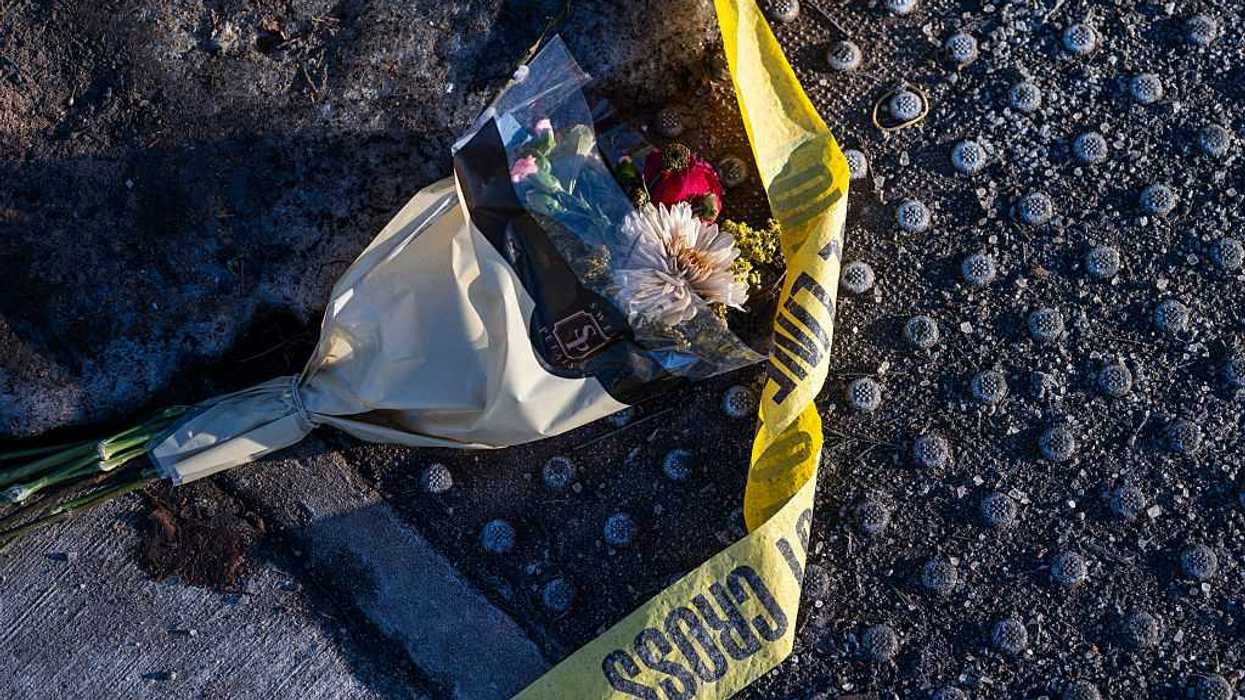
Fast forward. On January 7, 2026, Renee Good, a 37-year-old U.S. citizen, was fatally shot by United States Immigration and Customs Enforcement (ICE) agent Johathan Ross in Minneapolis, Minnesota. Ross was described by family and friends as a hardcore conservative Christian, MAGA, and supporter of Republican President Donald Trump.
Good was a writer and poet and lived with her wife and 6-year-old child; she had just dropped her child off at school.
Including the recent Portland, Oregon, shootings on January 8, 2026,[1] Good’s killing was the eleventh time ICE agents had opened fire on people since September 2025. Four other people had been killed during the Trump administration’s deportation operations.
A number of videos of the shooting show that Good was in her vehicle, bantering with the ICE agents engaged in these operations. When she attempted to drive slowly away from the ICE agents, Ross fired three shots point-blank, killing Good.[2] One video showed that Good was denied medical care even after the person offering her help identified himself as a physician. An ICE agent responded, “I don’t care.”[3]
President Trump, Homeland Security Secretary Kristi Noem, and their associates defended the shooting as one of “self-defense”—i.e., that Good was trying to run over the agent with her vehicle. Indeed, Noem went so far as to characterize Good as a “domestic terrorist.”[4]
By any fair view of the videos, it is clear that Good was trying to slowly and carefully drive away from the ICE agent(s), not toward or into any of them.[5]
Mark Twain noted that if history doesn’t repeat itself, it often rhymes. And there are a couple of obvious parallels between the Kent State and Renee Good killings.
First, both military and law enforcement authorities were, among other things, forcibly trying to prohibit ordinary people from exercising their rights of free speech, to peaceably assemble, and to petition their government with their grievances, all guaranteed by the First Amendment of the federal Constitution. Whether it be an unpopular military war or Trump’s war on immigrants, people have the right to raise their voices in opposition and interject their personal presence against such government actions without threat of being attacked or killed by their government’s agents.
Second, while it would be unfair to paint all of these agents with the same brush (and I do not), it is impossible to ignore that some are acting with a level of aggression and recklessness that endangers the very people they are supposed to protect. The issue is not simply that individuals prone to overzealous or militaristic behavior find their way into federal enforcement ranks—especially in the absence of meaningful screening—but that their leaders, supervisors, and at times even courts and juries, implicitly condone this “shoot first, justify later” posture. What we are witnessing is not merely individual misconduct but a systemic failure of supervision and accountability.
Let us not have history repeat itself. The Kent State Guardsmen were acquitted of criminal responsibility for their conduct, notwithstanding that trial evidence showed that none were ever in danger from the students.[6] With the killing of Renee Good, the President and Homeland Security Secretary Noem (and their sycophants) immediately rallied around the ICE agents with the false narrative that she was trying to run over the agent(s) when the actual video evidence is clearly to the contrary.
In short, when government agents violate constitutional rights without consequence—when accountability is absent and misconduct is met with institutional silence or even tacit approval—public safety and the rule of law are placed in jeopardy. When those entrusted with authority operate beyond meaningful oversight, every one of us is at risk.
What few of us will risk speaking out, marching, or engaging in peaceful protest when doing so carries the possibility of being seriously harmed—or even killed—by an inadequately supervised government agent acting with undue aggression, and with little fear of facing consequences. The mere perception that such force may be used without accountability is enough to silence many who would otherwise exercise their constitutional rights.
The bottom line is this: if one cannot exercise a Constitutional right, it is, for all intents and purposes, chilled; it is effectively extinguished.
Kent State and the killing of Renee Good both stand as stark warnings about how quickly the First Amendment can be imperiled when government force is used without restraint. We should have learned that lesson the first time. Because we didn’t, Renee Good ended up a corpse in her car—the victim of an overzealous government agent whose actions were defended, or at least excused, by the President of the United States and the Secretary of Homeland Security, who branded her a “domestic terrorist.” When leaders signal that such conduct is acceptable, the message is unmistakable: constitutional rights can be overridden, and those who exercise them do so at their peril.
James C. Nelson is a retired attorney and served as an associate justice of the Montana Supreme Court from 1993 through 2012.