

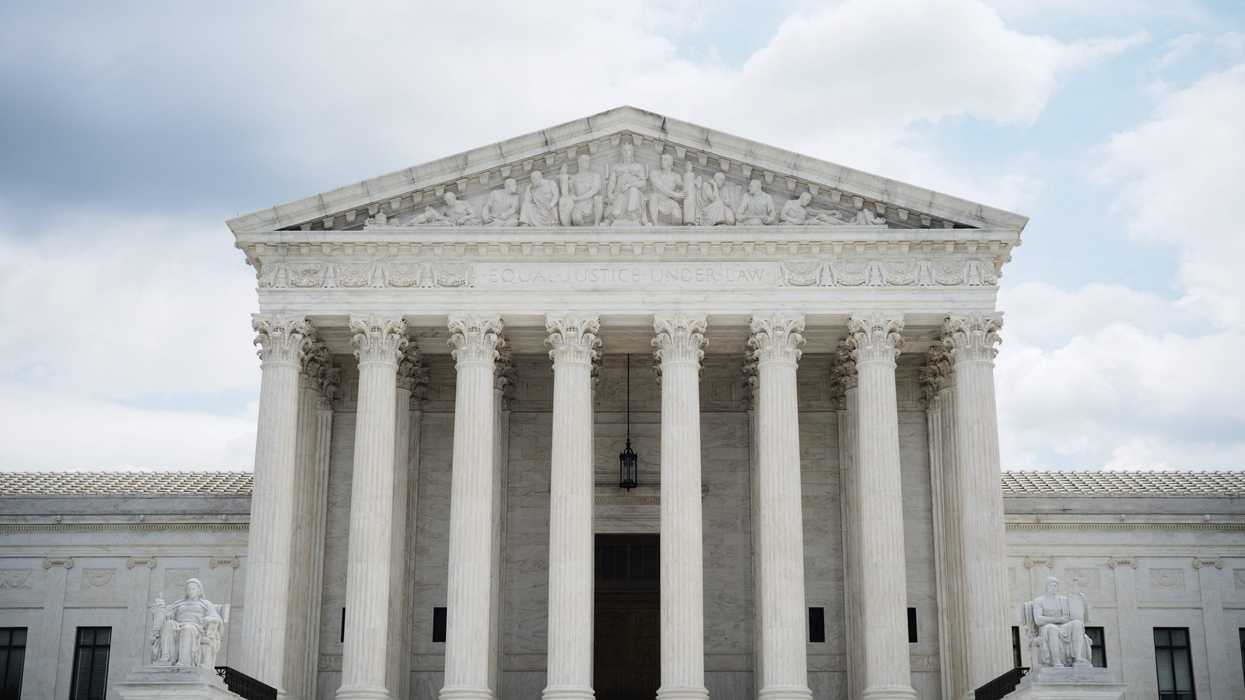

The Supreme Court Learning Resources, Inc. v. Trump (Tariffs) and consolidated related cases relate to the following issues:
(1) Whether the International Emergency Economic Powers Act (IEEPA) authorizes the tariffs imposed by President Donald Trump; and
(2) If IEEPA authorizes the tariffs, whether the statute unconstitutionally delegates legislative authority to the president.
Aside from the aforementioned issues, a favorable SCOTUS ruling for the Trump administration would be a ruling for authoritarian policymaking over policymaking by representative government. Without elected legislators representing citizens' ideas and concerns, deliberating and debating policies.
The United States is a representative democracy. This means that citizens elect our government. These officials represent the citizens' ideas and concerns in government.
Former SCOTUS associate justice Antonin Scalia believed the structure of government, particularly the separation of powers, is the most important feature for preserving liberty, arguing that a Bill of Rights alone is insufficient without a system of checks and balances to prevent government overreach. He saw the Constitution's structural provisions as the "real constitution," essential for preventing tyranny and protecting individual liberties by dividing power horizontally among the branches.
In May of 2025, one of America’s greatest minds expressed one such concern: Warren Buffett criticized President Donald Trump’s hardline trade policy, without naming him directly, saying it’s a big mistake to slap punitive tariffs on the rest of the world.
“Trade should not be a weapon,” Buffett said, “I do think that the more prosperous the rest of the world becomes, it won’t be at our expense, the more prosperous we’ll become, and the safer we’ll feel, and your children will feel someday.”
Trade and tariffs “can be an act of war,” and I think it’s led to bad things. Just the attitudes it’s brought out. In the United States, I mean, we should be looking to trade with the rest of the world, and we should do what we do best, and they should do what they do best.”
Even if our elected representatives determine that United States industries warrant protection, tariffs are not the sole option; affordability varies significantly by the option chosen, whether it should be a revenue raiser or revenue neutral.
Tariffs are taxes imposed by governments on imported goods. The tax is paid by the company importing the product, and the cost can be passed on to domestic consumers through higher prices, thereby affecting affordability. This passing on of costs to consumers may eventually be only part of the cause of higher prices.
Businesses survive by making a profit margin on the costs they incur. Unless tariff costs are marked up, a business’s profit margin will shrink, to the dismay of its shareholders. Not marking up tariffs may gain the company market share; however, if its earnings are less appealing than competitors', its stock price may suffer. If profit maximization does not become outdated, the adverse effect of tariffs on affordability will outweigh the revenue raised.
In both form and substance, tariffs and a sales tax on imported goods are vastly different. Unlike tariffs, a sales tax is transparent to consumers, is not a cost of doing business for businesses, and cannot be marked up; therefore, its ultimate effect on affordability is less punitive than tariffs. An administration focused on affordability could consider a cash register sales dividend. Ideally, the sales dividend would be on domestically produced items purchased.
A revenue neutral sales tax on imported goods, with a sales dividend on domestically produced items purchased, could work as follows: If the sales tax rates on imported goods and sales dividend on domestically produced purchases were 24% and 6 %, respectively and the consumer purchased $100 of imported goods and $400 of domestically produced, the imported goods sales tax would be $24 and the domestic sales dividend would be $ 24, as well ($100 times 24% and $ 400 times 6%, respectively. The revenue-neutral sales tax on imported goods, with a sales dividend on domestically produced goods, will be transparent to American consumers.
The Trump administration has its own agenda on tariffs, much of which is not transparent. This tariff regime allows Trump to wreak havoc with our international relations, "End run around the legislative branch", as well as promises to end or significantly reduce Federal income taxes and promises $2,000 tariff dividend checks, with the inability to deliver on both promises.
Hugh J Campbell, Jr, CPA, is a Governance, Risk & Compliance (GRC) professional and a student of W. Edwards Deming, the American Statistician, often credited as the catalyst for the Japanese Economic miracle after WWII.