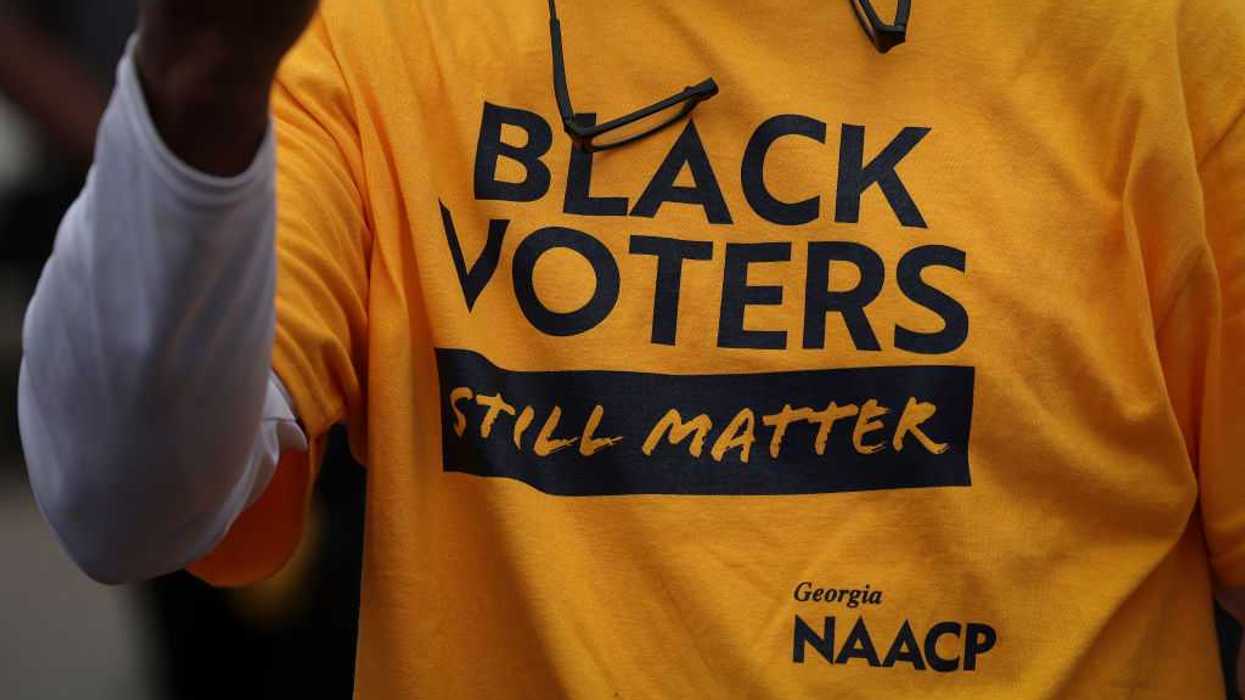
Across every continent, marginalized communities face systematic, escalating threats wherever democracy comes under attack. In the United States, Black Americans confront voter suppression and attacks on our history. Across the Americas, immigrants and racialized communities face racial profiling and assault by immigration enforcement. In Brazil and across South America, Indigenous peoples endure environmental destruction and rising violence. In Europe, Roma communities, immigrants, and refugees experience discrimination and hostile policies. Across Africa, the Middle East, and Asia, members of marginalized ethnic and religious communities face state violence, forced labor, and the denial of basic human rights. In every region of the world, members of the LGBTQ+ community face discrimination and threats.
These are not random or isolated acts of oppression. When considered together, they reveal something more sinister: authoritarianism is becoming increasingly more connected and coordinated around the world. This coordination specifically targets the most vulnerable because authoritarians understand that it is easier to manipulate a divided and fearful society. Attacking those who are most marginalized weakens the entire democratic fabric.
As dire as these circumstances may be, there are steps that civil society organizations (CSOs) can take to counter these challenges. The tactics, which I’ll explain later in this piece, provide a framework for forging solidarity—the solidarity without borders that this moment demands.
The Authoritarian Playbook Is Global
Authoritarian coordination has evolved from opportunistic, one-off deals into sophisticated, institutionalized networks that increasingly shape global politics. Now, autocrats increasingly operate through an infrastructure designed for sustained collaboration that helps insulate them from international accountability, coordinate militarily, share repression technologies, and systematically suppress opposition movements across borders. At international summits and through cross-border advisory teams, autocratic leaders exchange and refine strategies on digital surveillance, effective propaganda, lawfare, and disinformation. At the same time, transnational repression—including state-sponsored intimidation, extradition requests, and attacks against exiles—is facilitated through mechanisms including Interpol abuse, coordinated financial pressure, and intelligence sharing. Mass surveillance, weaponized disinformation, and unscrupulous emergency laws now represent a playbook copied and shared globally. Civil society leaders, journalists, and members of marginalized communities are being silenced, jailed, or driven into exile at rates not seen in decades.
Today’s far-right authoritarians have created a network that supports illiberal populists globally and enables rapid diffusion of deceitful election narratives, anti-NGO regulations, and assaults on the rights of members of marginalized communities. This has all been achieved by openly citing one another’s “successes,” protecting each other diplomatically, and synchronizing messaging through proxied think tanks, media platforms, and conferences.
The two largest democracies in the Western Hemisphere, Brazil and the United States, illustrate these global dynamics. Both countries grapple with the enduring legacies of slavery and Native/Indigenous dispossession. Both struggle with police violence against Black communities and environmental destruction of Indigenous lands. Both recently experienced violent coup attempts (January 6, 2021, in the US and January 8, 2023, in Brazil).
Last year, the Trump administration intervened in Brazil’s domestic judicial processes in attempts to shield Brazil’s former President Jair Bolsonaro from prosecution, demonstrating how coordinated and brazenly authoritarian mutual aid now operates. Civil society leaders in both countries are responding with their own coordination. Brazilian civil society organizations (CSOs) have traveled to the United States to defend democracy and US groups have challenged our government’s interference in Brazil’s courts. What they’re building together could offer a template to movements everywhere.
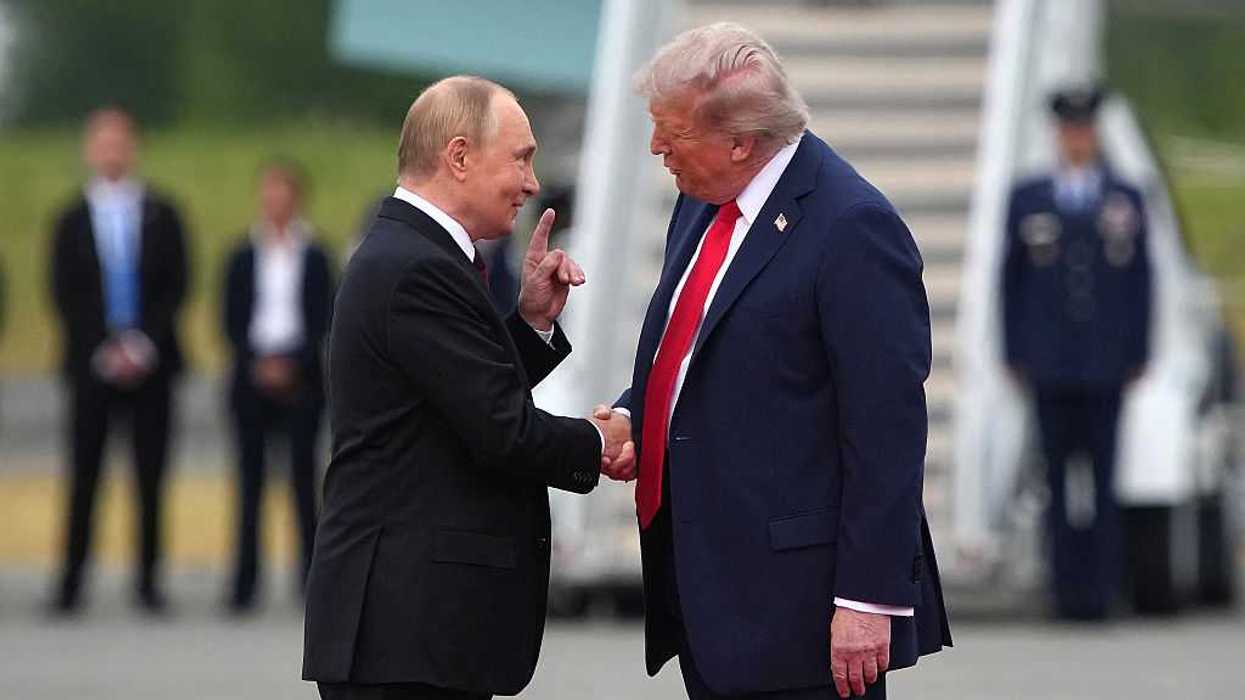
Similar to the support of Bolsonaro, there are other examples of global complicity. US President Donald Trump announced, days before Honduras’s presidential election, that he would grant (and has since granted) a full pardon to former Honduran President Juan Orlando Hernández, who was convicted in US courts of facilitating massive cocaine trafficking. This effectively provided political cover and propaganda support to Hernández and his allies at home. And in January 2026, US forces carried out an illegal military incursion into Venezuela and abducted President Nicolás Maduro and his wife. This move has been widely denounced by international law experts and regional bodies as a violation of sovereignty and a blatant bid to control Venezuela’s natural resources.
The United States also recently granted Hungary, alone among EU nations, exemption from sanctions for purchasing Russian oil and publicly praised President Viktor Orbán’s dismantling of the country’s democratic institutions. One government publicly intervening to protect another nation’s authoritarian figure from legal and political consequences represents a dangerous precedent and demonstrates how authoritarian mutual aid operates at the highest levels. Every time powerful states disregard international law or use force to decide another country’s political fate, they create a precedent that authoritarians everywhere will exploit. These reasons and more make coordinated civil society resistance not just morally imperative but also necessary for our collective survival.
What’s at Stake
The coordination of authoritarian power isn’t just threatening democracy in the abstract. It’s hampering humanity’s ability to address the collective existential crises facing all countries on the planet.
- The climate catastrophe looms as the defining challenge of our era, yet autocrats and oligarchs represent the primary obstacle to climate action. They profit from extraction, hoard resources, silence and disappear Indigenous land defenders, and weaponize energy dependence to maintain geopolitical control. They do this all while ensuring marginalized communities and developing nations bear disproportionate costs.
- Economic inequality threatens social unity and democratic stability as wealth concentration ensures billions remain in poverty while oligarchs amass fortunes that dwarf entire nations’ GDP. This concentration of wealth only serves to foster the destitution and desperation that authoritarians exploit while funding the movements that protect their own interests.
- The risk of catastrophic war escalates as authoritarian coordination emboldens leaders to invade, occupy, and commit atrocities with diminishing fear of consequences. Each unpunished atrocity makes the next more likely.
- Democratic space continues shrinking globally as dozens of countries have adopted laws restricting civil society, often using nearly identical “foreign agent” language to stigmatize and constrain NGOs.
Authoritarians are currently building a future that includes exile for truth-tellers, normalized violence against marginalized communities, an uninhabitable planet, obscene economic inequality, and perpetual war. We cannot accept this. Coordinated movements have defeated the forces of global authoritarianism before—from ending apartheid in South Africa to the passage of the Universal Declaration of Human Rights. We can do it again. But to do so, we must build coordination now.
The Urgent Work
To begin to counter authoritarian efforts, democratic defenders must first match the sophisticated coordination and resources being wielded by those in the authoritarian movement. Using the promising coordination between US and Brazilian civil society as an example, the following five tactics provide a practical framework for building the cross-border solidarity this moment demands.
- Information Politics: Coordinated data collection, documentation, and strategic information sharing form the foundation of effective cross-border solidarity. US and Brazilian CSOs are already demonstrating this: Brazilian groups document police violence in favelas while US organizations document police killings in the United States. Groups in each country cite the other’s evidence to demonstrate how anti-Black state violence is a global phenomenon that requires coordinated solutions. To expand these efforts, when Brazilian civil society develops innovative strategies for combating disinformation, those lessons must immediately reach the relevant CSOs in India, the Philippines, and Kenya. Further, when legal strategies successfully defend Indigenous land rights in one country, they must be shared broadly so that they can be adapted elsewhere.
- Symbolic Politics: Synchronized protest days and coordinated remembrance campaigns create powerful visual evidence that these issues are global struggles and not isolated incidents. When Brazilian and US movements simultaneously commemorate victims of police violence, honoring those killed by police in Rio de Janeiro and Salvador alongside those killed in Ferguson and Minneapolis, the global infrastructure of anti-Black state violence becomes visible. And that visibility can build transnational solidarity for dismantling it. When movements simultaneously protest with unified messaging, dismissing those actions as merely local grievances becomes more difficult.
- Leverage Politics: Collective action multiplies impact. Brazilian civil society can share effective strategies with US civil society on organizing under authoritarian regimes, strengthening both movements’ ability to pressure their governments. Meanwhile, US CSOs can leverage their domestic credibility to defend Brazil’s democratic institutions. For example, when the New York City Bar Association condemned US government interference in Brazil’s courts last year, it imposed political pressure that international criticism alone could not. This is leverage politics—when movements use their unique positioning to create pressure that isolated movements cannot generate. CSOs should coordinate advocacy within multilateral institutions like the UN, Organization of American States, African Union, G7, EU, and Caribbean Community; build alliances with sympathetic lawmakers in countries with geopolitical leverage; engage funders who can condition support on rights protection; and pressure corporations whose reputations depend on ethical practices.
- Accountability Politics: Scorecards grading governments on commitments to human rights, climate action, and democratic governance can help leverage tools like shame and embarrassment. CSOs can mutually amplify each other’s exposure of government corruption, overreach, and failure. When Brazil’s civil society documents environmental destruction in the Amazon or when Brazilian NGOs expose violent police operations, such as the recent and deadliest in Rio de Janeiro’s history, with more than 100 people killed, US groups should amplify those findings to US audiences and policymakers. When CSOs in the US document voter suppression or police violence, organizations in Brazil should cite that evidence when challenging similar tactics and show that these are coordinated patterns. Governments that face coordinated international accountability cannot easily isolate defenders or dismiss criticism as partisan attacks.
- Solidarity Networks: Leadership exchanges encourage participants to spend time embedded in movements in other countries and build relationships that sustain coordination for decades. Programs that bring Indigenous, Black, and other marginalized youth from Brazil and the United States together for shared leadership development can build lasting solidarity. Participants return home with relationships, shared analysis, and commitment to mutual support that sustains borderless movements through crises. CSOs could establish digital networks that maintain day-to-day contact and enable rapid response when crises emerge. They could also build crisis response teams that provide emergency funding, legal support, media amplification, diplomatic pressure, and a safe haven when defenders face arrest, violence, or persecution.
A Universal Call to Action
CSOs everywhere can coordinate in service of equity, justice, and liberation. They should identify organizations in other countries working on similar issues to foster sustained relationships, join existing cross-border solidarity networks, and build international coordination into an organized infrastructure using these five tactics as a framework. Groups must also keep in mind that the key to effectively implementing these tactics is to be in community with and follow the lead of affected communities. Members of these communities are best placed to analyze and contextualize challenges and to generate tailored solutions and opportunities to achieve real equality.
Funders must support cross-border coordination through multiyear, flexible grants. They must also support translation and communication, movement convenings, and protection for threatened defenders. And they must trust movement leadership and fund organizations led by those most affected.
This work will not be easy. It will not be quick. But it can be done if it is done together—across borders, languages, religions, ethnicities, and class. Together means Black rights movements coordinating across the Americas, Africa, and Europe. Together means Indigenous peoples from the Amazon to the Arctic defending their lands as one coordinated resistance. Together means LGBTQ+ movements around the globe refusing to accept that any of us can be truly free while others remain oppressed. Together means people with and without disabilities working to ensure accessibility for everyone. Together means labor movements joining forces. Together means forging borderless, cross-sector coalitions to address all global struggles.
Imagine a world built through sustained coordination: a world where Indigenous land rights are protected, ensuring climate stability for all; where Black liberation movements have dismantled anti-Black racism’s global infrastructure; where LGBTQ+ people are safe because attacks in one place trigger worldwide coordinated defense; and where oligarchs cannot hoard wealth while billions struggle to have basic needs met.
That world is possible. That future is within reach. But only if we build it together, starting now, with the urgency this moment demands.
This article was originally published as part of Resilience & Resistance, a Charles F. Kettering Foundation blog series that features the insights of thought leaders and practitioners who are working to expand and support inclusive democracies around the globe.
Darius Edgerton has nearly 15 years of experience in American diplomacy and national security, including senior roles at the White House and the US Department of State. He has helped shape US foreign policy at the highest levels. Edgerton served as Senior Advisor to the State Department’s first Special Representative for Racial Equity and Justice, Director for Diplomatic Affairs to the President and supported the UN Permanent Forum for People of African Descent. As a freelance consultant, he now advises movements, philanthropies, and civil society organizations across the globe on how to engage Washington, influence policy, and build cross‑border coalitions that advance human rights and democratic resilience.