


Skip to content
Search

Latest Stories

Follow Us:
Top Stories

Facts about Alex Pretti’s death are undeniable. The White House is denying them anyway

Opinion

Facts about Alex Pretti’s death are undeniable. The White House is denying them anyway

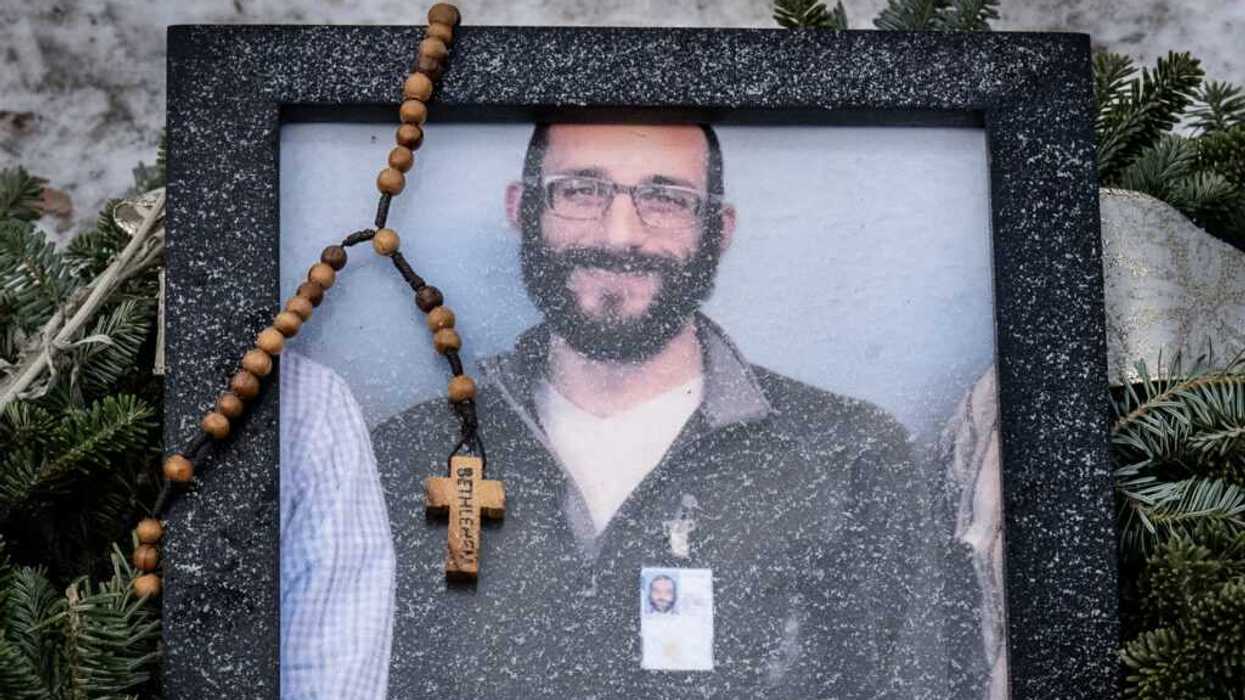
A rosary adorns a framed photo Alex Pretti that was left at a makeshift memorial in the area where Pretti was shot dead a day earlier by federal immigration agents in Minneapolis, on Jan. 25, 2026.

(Tribune Content Agency)

The killing of Alex Pretti was unjust and unjustified. While protesting — aka “observing” or “interfering with” — deportation operations, the VA hospital ICU nurse came to the aid of two protesters, one of whom had been slammed to the ground by a U.S. Customs and Border Protection agent. With a phone in one hand, Pretti used the other hand, in vain, to protect his eyes while being pepper sprayed. Knocked to the ground, Pretti was repeatedly smashed in the face with the spray can, pummeled by multiple agents, disarmed of his holstered legal firearm and then shot nine or 10 times.

Note the sequence. He was disarmed and then he was shot.


That’s why the killing is undeniably unjust and unjustified. Unjust because Pretti didn’t deserve to die, even if he’d been fully “obstructing” federal agents, death is not a just price for that. But he wasn’t obstructing an agent from deporting an immigrant. He was obstructing an agent from further assaulting a woman in the street.

The killing was unjustified because a gang of agents didn’t need to shoot Pretti after they disarmed him. If you want to argue that merely bringing a gun to any protest justifies being shot by law enforcement, even after being disarmed, you’re going to sound as politically dumb, hypocritical or authoritarian as a whole bunch of administration officials and GOP defenders undeniably did over the weekend.

I keep using that word — “undeniable.” Sadly, it really doesn’t mean what it used to mean. “Undeniable” describes something that is so obviously and clearly true that no one can refute or dispute it. With this administration, truth ain’t got nothing to do with anything.

In the immediate aftermath of Pretti’s killing, members of the Trump administration took to TV and social media to describe Pretti as a “domestic terrorist” and an “assassin.” The head of CBP, Gregory Bovino, said, “This looks like a situation where an individual wanted to do maximum damage and massacre law enforcement.” Department of Homeland Security Secretary Kristi Noem echoed the same talking points. Pretti’s motive, she claimed, was “to inflict maximum damage on individuals and to kill law enforcement” because he was a “domestic terrorist.” White House Deputy Chief of Staff Stephen Miller asserted that Pretti was an “assassin” who tried to “murder federal agents.”

The administration is making all of this up. But that doesn’t necessarily mean they are lying. They just don’t care what the truth is.

In his seminal book “On Bulls—” (the actual title isn’t censored), philosopher Harry G. Frankfurt argues that lying implies a certain respect for, and knowledge of, the truth. “It is impossible for someone to lie unless he thinks he knows the truth. Producing bulls— requires no such conviction.” What this administration does is worse than lying because they don’t care whether something is true or false, only whether it will be believed.

The Trump White House is a bulls— distribution hub, that connects via tubes, canals and sluices across the media landscape. Like some vast Rube Goldberg contraption, the guy on the giant hamster wheel powering the whole thing is a president who spent his life saying whatever he needed to say at any given moment to make a deal, get out of trouble, whatever.

Raised on “the power of positive thinking” and the prosperity gospel, Donald J. Trump has always believed he could conjure the reality he wants through sheer will and a relentless repetition of what he wants people to believe. He makes claims about what “they” are “saying” and recounts tales about what people have told him, some of which are surely made up while others are probably true but insincerely told, given that everyone knows the president believes all flattery he hears.

Trump sprayed bovine excrement throughout his first term, too. But he also had staff with hazmat suits, containment and cleanup gear at the ready.

Now, in his second term, everyone grabs a hose — but that’s not water in those tanks. Terminally online and obsessed with cable news narratives, this White House is full of people who have learned at the (kissed) feet of the master. The truth and lies are just different kinds of tools for the job that matters: constructing a narrative the president wants to hear, mostly about himself or for his benefit.

That’s why the administration’s Sunday show spinners are so bad at the job. The mission isn’t primarily to reassure, never mind to inform, the public, but to reassure the president that the public is being properly told how great the president is. Because they know he’s watching.

Trump is reportedly “reviewing” the policies that left Pretti dead in the street. That’s good. But Trump’s motive isn’t to prevent more needless deaths, just the needless deaths that don’t make him look good.

Jonah Goldberg is editor-in-chief of The Dispatch and the host of The Remnant podcast. His Twitter handle is @JonahDispatch.



Read More

Hands resting on another.

An op-ed challenging claims of American moral decline and arguing that everyday citizens still uphold shared values of justice and compassion.

Getty Images, PeopleImages

Americans Haven’t Lost Their Moral Compass — Their Leaders Have

When thinking about the American people, columnist David Brooks is a glass-half-full kind of guy, but I, on the contrary, see the glass overflowing with goodness.

In his farewell column to The New York Times readers, Brooks wrote, “The most grievous cultural wound has been the loss of a shared moral order. We told multiple generations to come up with their own individual values. This privatization of morality burdened people with a task they could not possibly do, leaving them morally inarticulate and unformed. It created a naked public square where there was no broad agreement about what was true, beautiful and good. Without shared standards of right and wrong, it’s impossible to settle disputes; it’s impossible to maintain social cohesion and trust. Every healthy society rests on some shared conception of the sacred — sacred heroes, sacred texts, sacred ideals — and when that goes away, anxiety, atomization and a slow descent toward barbarism are the natural results.”

Keep ReadingShow less
Collective Punishment Has No Place in A Constitutional Democracy

U.S. Secretary of the Department of Homeland Security Kristi Noem during a meeting of the Cabinet in the Cabinet Room of the White House on January 29, 2026 in Washington, DC.

(Photo by Win McNamee/Getty Images)

Collective Punishment Has No Place in A Constitutional Democracy

On January 8, 2026, one day after the tragic killing of Renee Good in Minneapolis, Minnesota, Kristi Noem, Secretary of the Department of Homeland Security, held a press conference in New York highlighting what she portrayed as the dangerous conditions under which ICE agents are currently working. Referring to the incident in Minneapolis, she said Good died while engaged in “an act of domestic terrorism.”

She compared what Good allegedly tried to do to an ICE agent to what happened last July when an off-duty Customs and Border Protection Officer was shot on the street in Fort Washington Park, New York. Mincing no words, Norm called the alleged perpetrators “scumbags” who “were affiliated with the transnational criminal organization, the notorious Trinitarios gang.”

Keep ReadingShow less
Why does the Trump family always get a pass?

Eric Trump, the newly appointed ALT5 board director of World Liberty Financial, walks outside of the NASDAQ in Times Square as they mark the $1.5- billion partnership between World Liberty Financial and ALT5 Sigma with the ringing of the NASDAQ opening bell, on Aug. 13, 2025, in New York City.

(Tribune Content Agency)

Why does the Trump family always get a pass?

Deputy Attorney General Todd Blanche joined ABC’s “This Week” on Sunday to defend or explain a lot of controversies for the Trump administration: the Epstein files release, the events in Minneapolis, etc. He was also asked about possible conflicts of interest between President Trump’s family business and his job. Specifically, Blanche was asked about a very sketchy deal Trump’s son Eric signed with the UAE’s national security adviser, Sheikh Tahnoon.

Shortly before Trump was inaugurated in early 2025, Tahnoon invested $500 million in the Trump-owned World Liberty, a then newly launched cryptocurrency outfit. A few months later, UAE was granted permission to purchase sensitive American AI chips. According to the Wall Street Journal, which broke the story, “the deal marks something unprecedented in American politics: a foreign government official taking a major ownership stake in an incoming U.S. president’s company.”

Keep ReadingShow less
Trump taxes

A critical analysis of Trump’s use of power, personality-driven leadership, and the role citizens must play to defend democracy and constitutional balance.

Getty Images

Trump, The Poster Child of a Megalomaniac

There is no question that Trump is a megalomaniac. Look at the definition: "An obsession with grandiose or extravagant things or actions." Whether it's relatively harmless actions like redecorating the White House with gold everywhere or attaching his name to every building and project he's involved in, or his more problematic king-like assertion of control over the world—Trump is a card-carrying megalomaniac.

First, the relatively harmless things. One recent piece of evidence of this is the renaming of the "Invest in America" accounts that the government will be setting up when children are born to "Trump" accounts. Whether this was done at Trump's urging or whether his Republican sycophants did it because they knew it would please him makes no difference; it is emblematic of one aspect of his psyche.

Keep ReadingShow less