


Secrecy is like a shroud of fog. By limiting what people can see and check for themselves, the public gets either a glimpse (or nothing at all), depending on what gatekeepers decide to share. And just as fog comes in layers, so does withholding: one missing document, one delayed detail, one “not available” that becomes routine.
Most adults understand there are things that shouldn’t be shown. Lawyers can’t reveal case details to people who aren’t involved. Police don’t release information during an active investigation. Doctors shouldn’t discuss your medical history at home. The reason is simple: actual harm can follow when sensitive information is revealed too early or to those who shouldn’t be told.
But another kind of secrecy has been developing over time. It’s less about protection and more about insulation. It’s the kind that says, “You don’t get to ever know.” This veil isn’t meant to protect a person or preserve an investigation. It protects the system from questions.
And when it becomes routine, it’s not just transparency that gets limited. Restricting what the public can verify is how legitimacy begins to fray.
Silence isn’t being used as an occasional tactic anymore. Concealment has become the new normal: the structure of how systems work.
When reticence becomes a framework, lawfulness starts wobbling.
Permissibility isn’t a mood. It’s a public agreement that power is being used in fair, limited, accountable ways, not perfectly, but enough that consent isn’t something authorities simply demand.
Consent needs visibility. Not full transparency. No sane person is asking for live-streamed investigations or open-source intelligence files. But we do need enough clarity to verify claims, understand guardrails, and recognize consequences when boundaries are crossed.
When documentation is withheld, trust doesn’t vanish overnight. It erodes. And over time, people stop treating official claims as “true by default” when the supporting facts can’t be checked, all while drifting toward the “most credible” narrative minus receipts.
Sometimes obscurity shows up in quiet ways: disclosures that arrive too late to matter; carefully framed details that feel vacuum-sealed; paragraphs blacked out. Other times it’s more direct: sealed investigations, buried records, decisions made behind closed doors—followed by the public being told that transparency is dangerous.
Not all secrecy is bad. Some information must be kept secret: cases can be ruined by publicity; witnesses can be intimidated; a vulnerable person can be dragged through a digital town square as punishment. But there’s a point when “necessary confidentiality” becomes power without visibility. That’s when legitimacy starts rotting — not with a dramatic collapse, but with a slow administrative shrug.
The public doesn’t need to know everything. We need enough to answer one basic question:
Is power being used with limits, or for convenience?
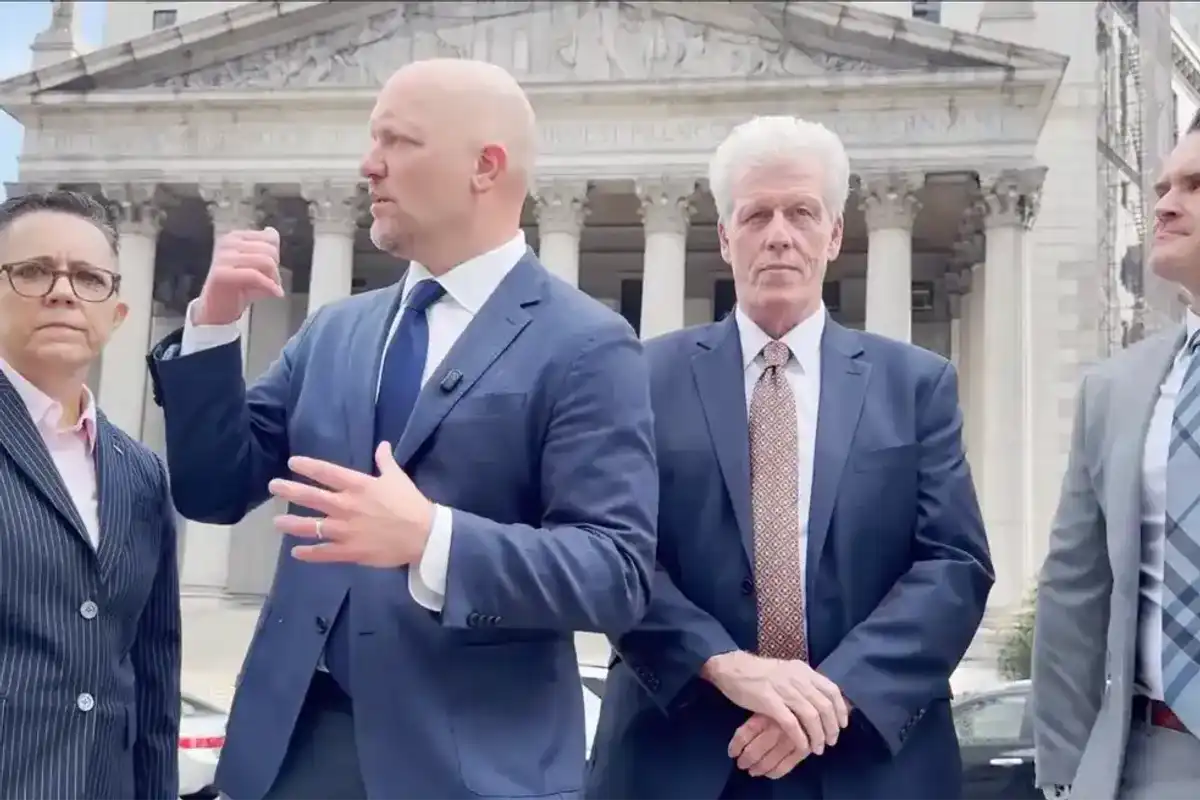
That question stops being abstract when a state announces an investigation tied to something as infamous as Jeffrey Epstein’s Zorro Ranch in New Mexico. Investigation doesn’t automatically mean conviction. Allegations aren’t proof. But when officials announce a serious inquiry connected to a high-profile network of harm, headlines aren’t enough. People want to know what is demonstrable, what can be documented, what will be sealed (and why), and how the inquiry is structured.
This is where obscurity shows up. High-stakes cases often follow the same pattern: statements that sound informative but deliver less; more hedging, highlights, and half releases; even when officials insist they’re doing the work well. The structure can still feel engineered to limit scrutiny, not because everything is unfair, but because scrutiny is inconvenient.
This is the purity gap: systems request belief while delaying the information that makes belief reasonable.
Silence doesn’t have to be deliberate to disrupt. Too many people can benefit (quietly, for a wide range of reasons) from withholding. It limits responsibility. It controls accountability. It leaves the public in a fog of jumbled discourse. The system it was meant to safeguard begins to disintegrate, gradually enough that what once would have triggered an alarm becomes normal.
It starts as a choice: a move to keep something out of the public view. What starts as a decision becomes a rule. Habits are normalized. Then they turn into a process.
One method is the hardening of “need to know.” Intended for sensitive information, it gets stretched beyond recognition — because it becomes useful for hiding what’s embarrassing, politically costly, or simply inconvenient. In this climate, the definition of “need” retracts, the circle of access tightens, and suddenly “need to know” isn’t just about confidentiality.
It’s about who gets to hold power and who gets protected while rank is enforced.
And plausible deniability doesn’t require lying. By learning where not to seek facts (what questions not to ask, what records not to request, what concerns not to connect), people learn how not to know. Cultural signaling does the rest. So does the quiet math of saving your job.
The process often starts with a legitimate reason: safety, privacy, diplomacy, or an active investigation. Over time, withholding becomes a way to avoid oversight, conflict, or dissent. New people arrive and are told, “This is just how things are done.” No longer a tactic, it becomes cultural inheritance.
Opacity rarely arrives all at once. Each step looks reasonable by itself. Add one more approval. Include one more restricted folder. Tag on another redaction. Slap on more intermediaries. Tack on legal reviews. Eventually, a black box appears.
People adapt to the “new normal.” Informationalism replaces explanation; sound bites replace evidence; proof becomes optional. When evidence isn’t forthcoming, believable narratives get accepted. When proof is consistently inaccessible, suspicion becomes the default operating system.
“Trust the process” can be sincere. More often than not, it’s used as a substitute for explanation.
People don’t flip trust on and off like a light switch because they were asked nicely. Acceptance is a conclusion reached after repeatedly witnessing: consistent rule of application, consequences for broken rules, justified secrecy, and credible oversight.
A system that conducts itself as if it’s being scrutinized earns trust. A legitimate system doesn’t treat review as a threat. It may dread misunderstanding, but it recognizes that accountability is part of stewardship, not an enemy of it.
The last decade has produced a strange shift: institutions increasingly behave as though citizens’ questions aren’t “friendly.” Sometimes there’s a cause. People can be righteously
angry. Values can change without explanation. People can feel lied to. But the answer to anger isn’t doubling down on hidden facts. It’s improved oversight for what must remain confidential—alongside truthful, irrefutable transparency about what can be seen.
So, the question is no longer “secrecy or transparency.” It’s this:
Where is the line—and who enforces it?
People can tolerate confidentiality when given clear standards, narrow definitions, and the ability to review records later. People can accept “not yet.” They cannot live with “never” dressed up as “trust us.”
As long as secrecy remains in place, accountability must be structurally built in. It must be a design choice, not a public relations campaign.
There should be a framework for what is held back, why, for how long, and what triggers disclosure later. Predictable rules matter more than constant detail. There should be a default timeline, with exceptions that are convincing.
Too many systems don’t give ordinary people a credible path to contest secrecy decisions. There should be an avenue for challenge that doesn’t require bleeding retirement funds into lawsuits.
This doesn’t require full disclosure. It requires a reviewable reason, a time limit, and independent appeal options when “confidential” becomes a familiar tune. Agencies can be protected with an open framework. When review is possible (even later), people are less likely to assume the worst now. Eventual disclosure robs conspiracy thinking of oxygen.
At present, the vacuum is filling itself.
The deeper issue is volatility: the public can’t discern fact from fiction and becomes susceptible to the most emotionally charged story. Distrust turns into currency. Whether deserved or not, every agency gets treated like a defendant before trial.
Volatility compounds: legitimate rules aren’t followed strictly; eagerness to bypass systems increases; conversations unmoor from facts; division accelerates; and every action is presumed malevolent, which makes governance harder.
Believing they’re protecting themselves, institutions respond by tightening secrecy even more. And the loop goes like this: more privacy, less trust. Less trust, more silence. That’s how secrecy becomes infrastructure, all while everyone else tilts at windmills.
This isn’t a philosophical complaint about “clearness.” It’s a warning about system stability.
It’s also a moment where information is plentiful, but review is limited, and artificial intelligence (AI) can generate logical nonsense at scale. In that climate, institutions can’t afford to treat legitimacy as an emotional public relations problem. Legitimacy is operational: it’s the difference between challenging opinions being accepted with clean boundaries—and every decision being treated as a power grab because the lines aren’t visible.
Otherwise, you aren’t asking for trust. You’re demanding it. And people don’t follow demands for very long. They either conform out of fear or rebel out of resentment. Neither is stable.
At some point, fog stops being weather.
It becomes architecture.
And whether we like it or not, fog shapes behavior.
Linda Hansen is a writer and the founder of Bridging the Aisle, a nonpartisan platform fostering honest, respectful dialogue across divides and renewed trust in democracy.