


The United States and Israel maintain a "special relationship" founded on shared security interests, democratic values, and deep-rooted cultural ties. As a major non-NATO ally, Israel receives significant annual U.S. security assistance—roughly $3.3 billion in Foreign Military Financing and $500 million for missile defense—to maintain its technological edge.
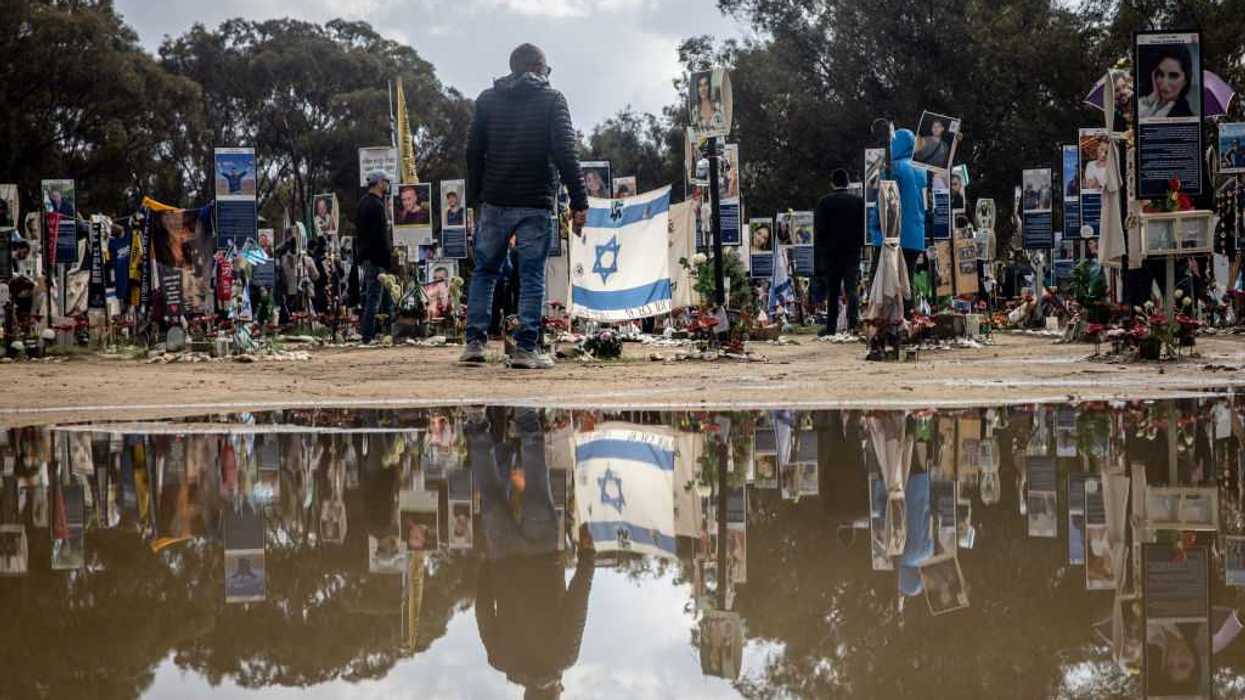
BINYAMINA, NORTHERN ISRAEL — The Oct. 7 attack altered life across Israel, leaving few untouched by loss. In its aftermath, grief has often turned into anger, deepening divisions that have existed for generations. But amid the devastation, some Israelis and Palestinians are choosing a different response — one rooted not in vengeance, but in peace.
Maoz Inon is just one of them. An Israeli peace activist, Inon, lost both of his parents during the Oct. 7 attack by Hamas. Being raised in the communities of Kibbutz Nir Am and Netiv HaAsara, conflict was never unfamiliar to him. What he never imagined was that the final contact with his parents would come through a family WhatsApp group chat.
“No one answered us the entire morning,” Inon said. “Only in the afternoon were we able to reach a neighbor, who told us that my parents’ house had burned to ashes — and that there were two bodies inside.”
In the days following the attack, Inon and his family were confronted with a choice — one he believes many before them faced and failed.
“By choosing revenge, we’re only going to escalate the cycle of fear, hate, and bloodshed that Israelis and Palestinians have been trapped in for a century,” he said. “It didn’t start on Oct. 7.”
Still consumed by grief, Inon described feeling physically and emotionally shattered. For days, he said, he was “drowning in an ocean of sorrow and pain.”
It wasn’t till days later that he had a life-altering vision— one where collective tears healed bodies scarred by war and washed blood from the land, revealing what he described as “a path to peace and reconciliation.”
“When I woke up, I made a decision to walk on that path,” he said.
For Inon, the decision was not abstract or symbolic. He said choosing peace was the only way he could begin to heal.
A Life Built on Bridging Communities
Long before Oct. 7, Inon had dedicated his work to bringing people together across cultural and religious divides. He served as a tourism entrepreneur using it as a tool for understanding — one that could break down the physical and mental walls separating Israelis and Palestinians.
“I was very much involved and invested in tourism, but not just tourism for fun or for the experience,’’ Inon explained. “But tourism that was meant and created to bridge...between Jews and Arabs and local communities.’’
Inon said his approach was shaped by time spent living alongside Indigenous communities abroad, where learning came not from books or guides, but from sharing meals, homes, and daily life. That experience, he said, forced him to confront how little he knew about the Palestinian people living alongside him.
“When there is ignorance, there is fear,” Inon said. “And when there is fear, there is hate.”
For Inon, peace began with proximity — with knowing the other not as an enemy, but as a neighbor.
A Partnership Born From Loss….
Inon’s work eventually led him to partner with Aziz Abu Sarah, a Palestinian peace activist who also understands loss. Abu Sarah’s brother was killed during the first Intifada in the early 1990s after being tortured in an Israeli prison
The two men, Inon said, were meant to be enemies — divided by nationality, history, and grief. Instead, they found common ground in their refusal to let loss dictate hatred. In the days following Oct. 7, Abu Sarah reached out to Inon with a message that would deepen their shared resolve.
As long as he acted from anger and revenge, Abu Sarah wrote, he was living the life his brother’s killers had chosen for him. Only by rejecting hatred, he said, was he able to reclaim his freedom.
Together, the two began amplifying a message they believe is often overshadowed by violence: that reconciliation, even among those most affected by conflict, is possible.
Amplifying Peace on a Global Stage
As Inon’s work gained international attention, he and Abu Sarah met with Pope Francis in 2024, sharing their personal losses and calling for reconciliation amid ongoing violence. For Inon, the meetings were not symbolic, but a reminder that peacebuilding belongs on the global stage alongside political and military decisions.
“If we must differentiate,” Inon said, “let it be between those who believe in equality, dignity, justice, and peace — and those who don’t believe in those values yet.”
Their individual efforts have now come together in a book, The Future Is Peace, A Shared Journey Across the Holy Land (Crown Publishing Group), out April 2026. In September of last year, both came together at a NYC-area live event where they spoke about reconciliation and peace-building, themes they explore in their book.
In a moment defined by grief, fear, and division, Inon’s choice stands in quiet defiance of what history has repeated for generations. Rather than allowing loss to harden into hatred, he continues to walk a path he believes is the only one capable of healing — for himself, and for a land still searching for reconciliation.
“I don’t want to make my parents victims of terror,” said Inon. “I want to make them victims of peace.”
Marissa Muniz is a senior at Baylor University. She completed this piece as a media fellow with Fuente Latina.







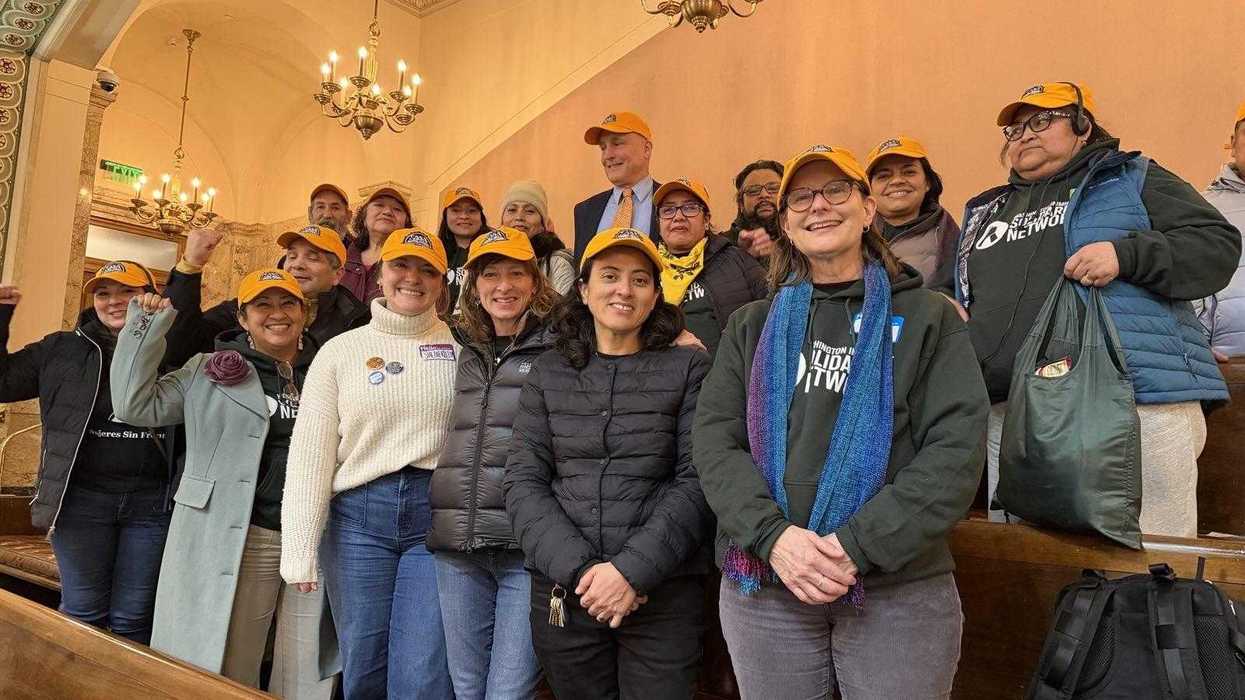
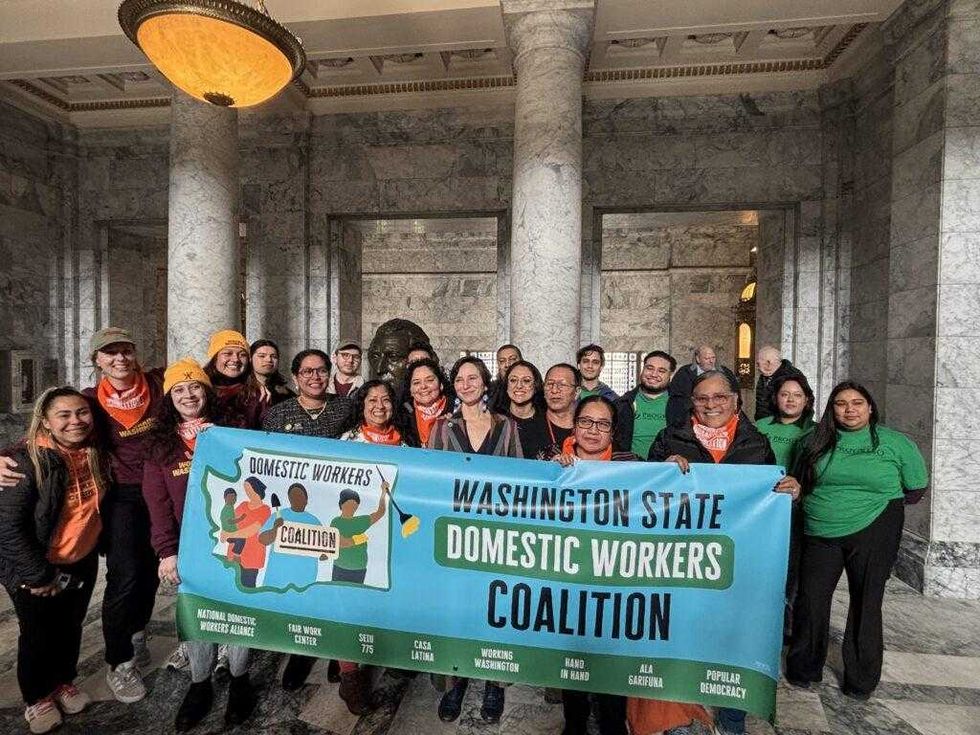 State Sen. Rebecca Saldaña, center, stands with members of the Washington State Domestic Workers Coalition at the state Capitol on Feb. 28, 2026. The Domestic Workers Bill of Rights passed in the House that day, before being signed into law in March. (Photo courtesy of Casa Latina)