


Skip to content
Search

Latest Stories

Follow Us:
Top Stories

Alex Pretti’s Death Is a Code Blue for the U.S.

Opinion

Alex Pretti’s Death Is a Code Blue for the U.S.

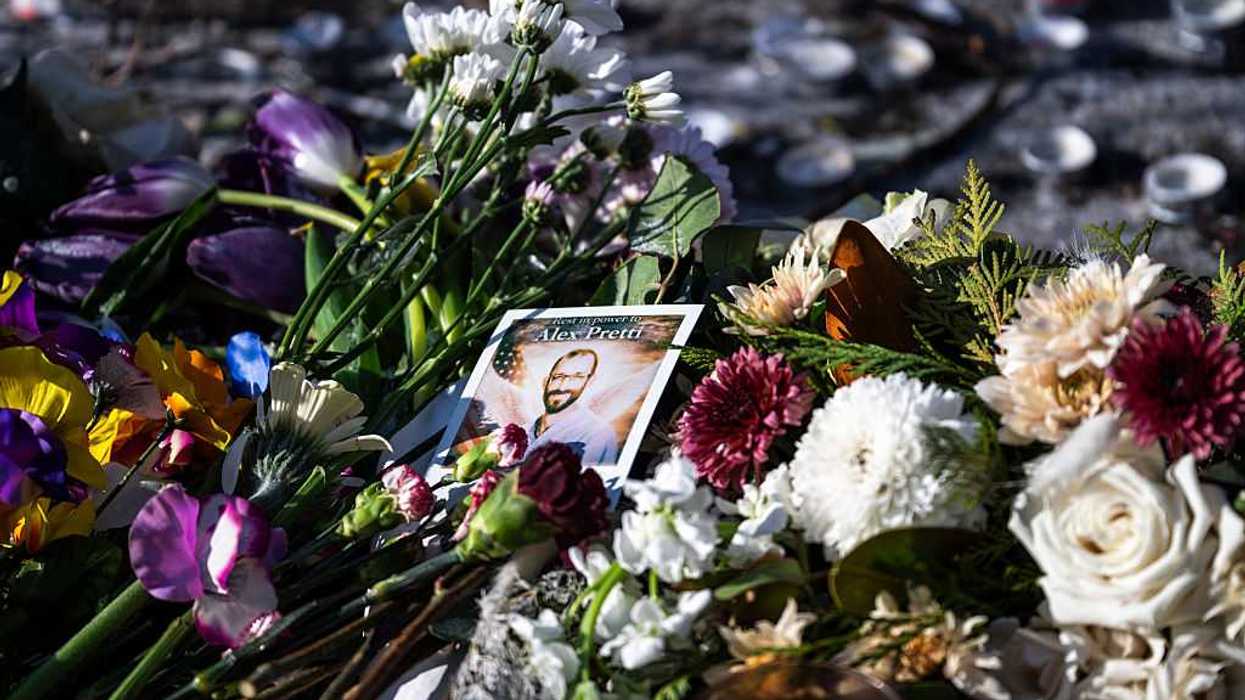
A portrait stands at a memorial for Alex Pretti on January 25, 2026 in Minneapolis, Minnesota. Pretti, an ICU nurse at a VA medical center, died on January 24 after being shot multiple times during an altercation with U.S. Border Patrol agents in the Eat Street district of Minneapolis.

(Photo by Stephen Maturen/Getty Images)

The violent death of Alex Pretti on Saturday by ICE agents in Minnesota has become a code blue for America. He was an ICU nurse who cared for military veterans at a Veterans Affairs hospital. He was a U.S. citizen, a Boy Scout, and a beloved son. He definitely was not one of the undocumented people federal agents were sent to detain. Nothing about his life fits the narrative of a lawless person impeding the work of removing violent criminals who are not legally permitted in the United States.

As a physician who also works in an intensive care unit for infants, I recognized the moment that triggered his instinct to care for and protect the injured and vulnerable. Numerous bystander videos show that he came to the defense of two different women who were aggressively assaulted by ICE agents. His actions spoke loudly about his professional training as a critical care nurse (professional training that appears absent from those most recently carrying out ICE raids). As medical professionals, we are charged to “first, do no harm.” So, I know his training as an ICU nurse had taught him to perform his duties in chaotic, complex situations – even when he lacked resources and support to protect himself from harm.


Without question, this was another chaotic and violent incident during ongoing protests in Minnesota. Federal officials immediately took to the airwaves to demonize him. The familiar refrain of “Why didn’t he comply?” is already on repeat in the usual places. Though he exercised his rights to own a weapon and legally acquired a concealed carry permit, federal officials are arguing that anyone showing up to protest peacefully does not bring a gun. But these are not well-reasoned or logical arguments. They are just more examples of people grasping to make sense out of senseless situations. We likely cannot change the perspectives of those who allege that the ICE agents agitating and escalating the situation were in danger and feared for their lives.

For the rest of us, though, this is our moment of moral reckoning.

This is a moment that calls for all of us to act. Watching another video of a person being violently murdered by ICE agents will worsen our national mental health crisis. Our current nursing crisis means we cannot lose another nurse and make access to healthcare even harder to get. With prices for health insurance and groceries soaring beyond what people can afford, we must reject a reality in which we cannot afford to get sick or stay healthy.

Likewise, we cannot deny that America is critically ill and in need of intensive care. The symptoms include a government shutdown that kept babies from receiving SNAP benefits, children again dying from preventable infectious diseases like measles and whooping cough, and federal agents killing a U.S. citizen with no criminal record while exercising his First, Second, and Fourth Amendment rights. When the NRA speaks out against what happened, it shows that everyone understands how sick America really is.

Still, there is hope. With people pushing back against this federal administration’s unprecedented actions, they dropped their legal appeal over anti-DEI funding threats to schools and colleges. When they tried to remove funding for substance abuse and mental health services, that decision was reversed in less than 48 hours. Commander Greg Bovino was just relieved of his leadership over ICE raids in Minneapolis. Yes, elections have consequences, and the consequences demand actions. Keep pressuring elected officials to intervene against ICE agents using unnecessarily harsh tactics. Help your neighbors whose safety has been violated during indiscriminate ICE raids. Tell your local, state, and federal legislators to vote for bills that keep insurance affordable so people can get the care that Alex Pretti dedicated his life to giving. America is coding, and it will take all of us to resuscitate her.

Valencia P. Walker, MD, MPH, FAAP, is a Public Voices Fellow of The OpEd Project in partnership with the National Black Child Development Institute.

Read More

NRF Moves to Defend Utah’s Fair Map Against Gerrymandering Lawsuit

USA Election Collage With The State Map Of Utah.

Getty Images

NRF Moves to Defend Utah’s Fair Map Against Gerrymandering Lawsuit

On Wednesday, February 11, the National Redistricting Foundation (NRF) asked a federal court to join a newly filed lawsuit to protect Utah’s new, fair congressional map and defend our system of checks and balances.

The NRF is a non‑profit foundation whose mission is to dismantle unfair electoral maps and create a redistricting system grounded in democratic values. By helping to create more just and representative electoral districts across the country, the organization aims to restore the public’s faith in a true representative democracy.

Keep ReadingShow less
A Constitutional Provision We Ignored for 150 Years

Voter registration in Wisconsin

Michael Newman

A Constitutional Provision We Ignored for 150 Years

Imagine there was a way to discourage states from passing photo voter ID laws, restricting early voting, purging voter registration rolls, or otherwise suppressing voter turnout. What if any state that did so risked losing seats in the House of Representatives?

Surprisingly, this is not merely an idle fantasy of voting rights activists, but an actual plan envisioned in Section 2 of the 14th Amendment, which was ratified in 1868 – but never enforced.

Keep ReadingShow less
People wearing vests with "ICE" and "Police" on the back.

The latest shutdown deal kept government open while exposing Congress’s reliance on procedural oversight rather than structural limits on ICE.

Getty Images, Douglas Rissing

A Shutdown Averted, and a Narrow Window Into Congress’s ICE Dilemma

Congress’s latest shutdown scare ended the way these episodes usually do: with a stopgap deal, a sigh of relief, and little sense that the underlying conflict had been resolved. But buried inside the agreement was a revealing maneuver. While most of the federal government received longer-term funding, the Department of Homeland Security, and especially Immigration and Customs Enforcement (ICE), was given only a short-term extension. That asymmetry was deliberate. It preserved leverage over one of the most controversial federal agencies without triggering a prolonged shutdown, while also exposing the narrow terrain on which Congress is still willing to confront executive power. As with so many recent budget deals, the decision emerged less from open debate than from late-stage negotiations compressed into the final hours before the deadline.

How the Deal Was Framed

Democrats used the funding deadline to force a conversation about ICE’s enforcement practices, but they were careful about how that conversation was structured. Rather than reopening the far more combustible debate over immigration levels, deportation priorities, or statutory authority, they framed the dispute as one about law-enforcement standards, specifically transparency, accountability, and oversight.

Keep ReadingShow less
Pier C Park waterfront walkway and in the background the One World Trade Center on the left and the Erie-Lackawanna Railroad and Ferry Terminal Clock Tower on the right

View of the Pier C Park waterfront walkway and in the background the One World Trade Center on the left and the Erie-Lackawanna Railroad and Ferry Terminal Clock Tower on the right

Getty Images, Philippe Debled

The City Where Traffic Fatalities Vanished

A U.S. city of 60,000 people would typically see around six to eight traffic fatalities every year. But Hoboken, New Jersey? They haven’t had a single fatal crash for nine years — since January 17, 2017, to be exact.

Campaigns for seatbelts, lower speed limits and sober driving have brought national death tolls from car crashes down from a peak in the first half of the 20th century. However, many still assume some traffic deaths as an unavoidable cost of car culture.

Keep ReadingShow less