


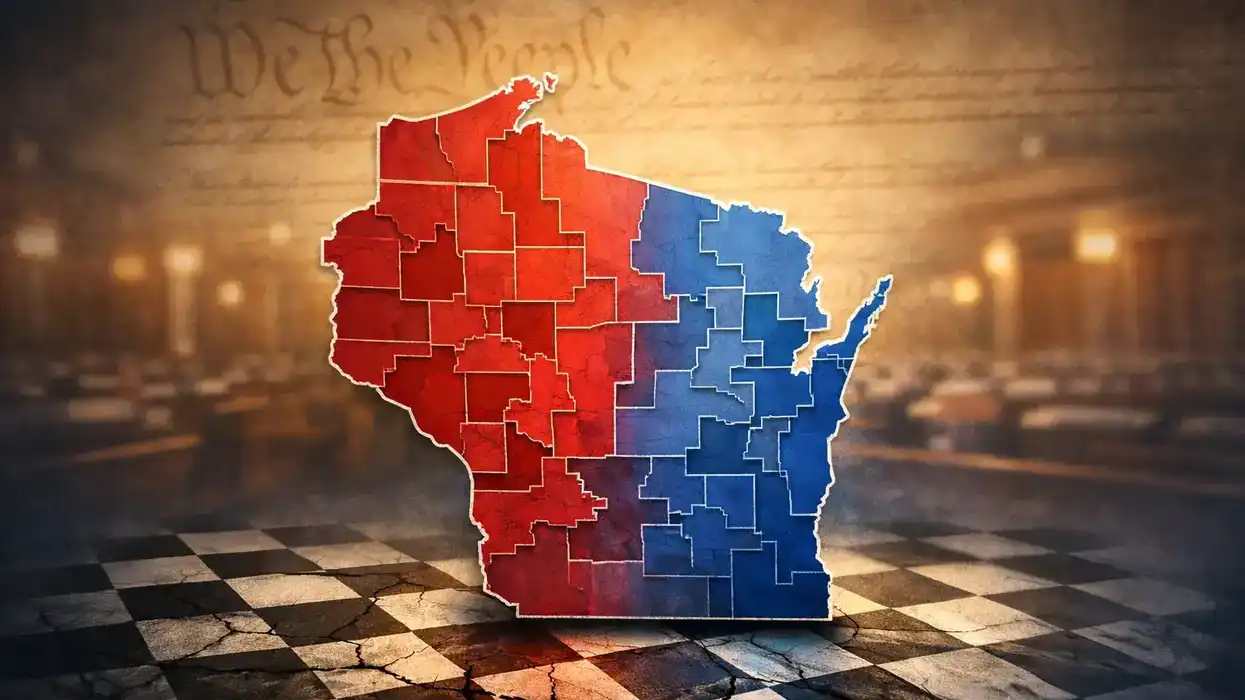
MADISON, Wis. - In his final State of the State address, Wisconsin Gov. Tony Evers announced that he plans to call a special legislative session in the Spring to put an end to partisan gerrymandering “once and for all.”
And he will keep calling lawmakers into session until happens.
- YouTube youtu.be
“There’s one thing that we should all be able to agree on, which is that politics should stay out of redistricting from start to finish,” he said.
He noted that while political differences may get in the way of creating a nonpartisan redistricting commission, state lawmakers and officials can still work together to ban partisan gerrymandering.
And so, he is going to call a special session so that the legislature can adopt a constitutional amendment to make the practice illegal. He also said he was willing to keep calling the legislature into session until they pass the amendment.
“I won’t hesitate to bring the Legislature into special session later this year in August. Or September. Or October,” he remarked. “Heck, I’m old enough to remember when the legislature was willing to meet in December!
- YouTube youtu.be
Evers’ announcement fell under the radar nationally at a time when officials in other states are still trying to push new congressional maps on voters and candidates – like in Virginia and Maryland.
Additionally, 5 states have implemented new maps passed by their legislature in 2025, including Texas, California (which voters approved under Prop 50), Missouri, North Carolina, and Ohio.
Utah will also use a new congressional map under court order.
Evers said the current chaos created by this bipartisan gerrymandering fight started with President Donald Trump, which is true. But then he added, “Democratic Legislatures have been put in the unthinkable position of having to respond by trying to restore balance to our elections.”
This suggests that Democratic-controlled states like Illinois, New Mexico, and Maryland didn’t already have egregiously gerrymandered maps – and that what started with Trump was not also an opportunity for Democrats.
In California, for example, Democrats tossed out an independent congressional map approved unanimously by the state’s redistricting commission for a map that gives their party an advantage in 92% of the state’s US House districts.
On the same day California Prop 50 passed, Maryland Governor Wes Moore called for the creation of a redistricting committee to come up with a new map that would hand the Democratic Party all of the state’s congressional districts.
Moore is getting pushback in the Maryland Legislature.
This is why independent reformers do not refer to the “you take our seats, we will take yours” mentality as “rebalancing.” They call it a race to the bottom, because when officials "fight fire with fire" everyone inevitably gets burned.
While Evers may not be willing to hold his own party accountable for its role in escalation, he wants no part of the power grab.
“Compared to all of the chaos, dysfunction, and recklessness in Washington, here in Wisconsin, we’ve worked to lead by example. And a big part of that is the fact that, today, lawmakers are elected under the fair maps I signed into law,” he said.
“But here’s the problem, Wisconsin: new maps are redrawn every ten years. While we have fair maps today, we still don’t have a nonpartisan redistricting process in place. That means there’s no guarantee Wisconsinites will still have fair maps after the next US Census.”
In 2024, Evers signed into law new legislative maps that he initially submitted to the state Supreme Court for consideration. The Republican-controlled Legislature passed his maps with bipartisan support.
The maps enacted for state House and Senate have been given A grades by the Princeton Gerrymandering Project. However, the state’s congressional map still has an F, failing in partisan fairness in particular.
Evers previously pledged to push for an independent redistricting process that takes map drawing out of the hands of legislators. His remarks at the 2026 State of the State signal his skepticism that it will happen under the current political environment.
So, for now, the proposed constitutional amendment will have to do – if the legislature gets on board. In order to amend the state constitution, a proposed amendment needs to clear the legislature in two consecutive legislative sessions.
Tony Evers’ Final Mission as Governor: End Partisan Gerrymandering for Good was originally published by Independent Voter News and is republished with permission.