




Job cuts at federal agencies in 2025 hit Black workers especially hard, contributing to record-high Black unemployment in the Washington, D.C., Virginia and Maryland metro area, according to an Economic Policy Institute analysis.
Researchers found the Black unemployment rate nationwide reached 7.6% in the first three months of 2026. In the D.C.-area region, it was just under 10%.
Valerie Wilson, director of race, ethnicity and the economy for the institute and the study's author, said the numbers are moving in the wrong direction.
“Relative to recent historical lows, absolutely we are seeing it trending up and moving away from what had been some positive progress on bringing the rate down,” Wilson explained.
In 2025, administration officials President Donald Trump called the Department of Government Efficiency reduced the federal workforce by more than 300,000 jobs. Wilson pointed out the cuts disproportionately affected workers in the D.C., Virginia and Maryland region and had an especially high impact on Black adults, adding the increase in unemployment did not stem from a surge of new job seekers entering the labor force. Instead, it reflected fewer people working.
Wilson stressed the cuts have particularly affected Black women, who had made significant inroads in the federal workforce in recent years.
“Over that last year, there were massive federal job losses,” Wilson emphasized. “That in particular had a significant impact on Black women’s employment declining, and specifically among those who were college graduates.”
Wilson underscored the latest Black unemployment numbers represent a reversal of gains made in previous years.
“We had record low Black unemployment as recently as 2024 or 2023,” Wilson noted. “The rate was like 5.5%, somewhere in that range. The previous low was just before the pandemic in 2019.”
Federal Job Cuts Bring Increase in Virginia’s Black Unemployment Rate was first published by Public News Service and republished with permission.
Mark Richardson is a producer for PNS.
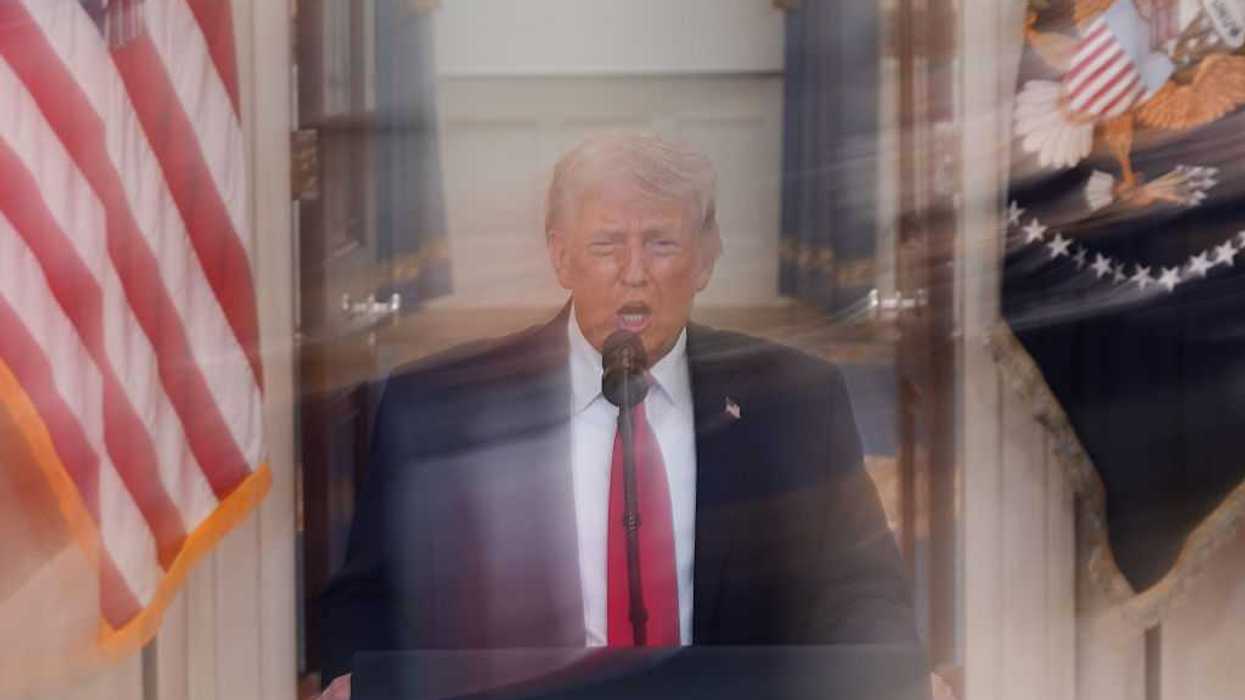











President Donald Trump says Americans’ financial struggles matter “not even a little bit” as inflation rises, gas prices surge, and a controversial $1.7 billion taxpayer-funded compensation plan for political allies emerges.
Trump Says Americans’ Pain ‘Doesn’t Matter’ as $1.7B Aids His Allies
Perhaps the most effective ad in the 2024 campaign was “Kamala is for they/them. President Trump is for you.” Since that ad ran, the American people have learned that it is anything but true.
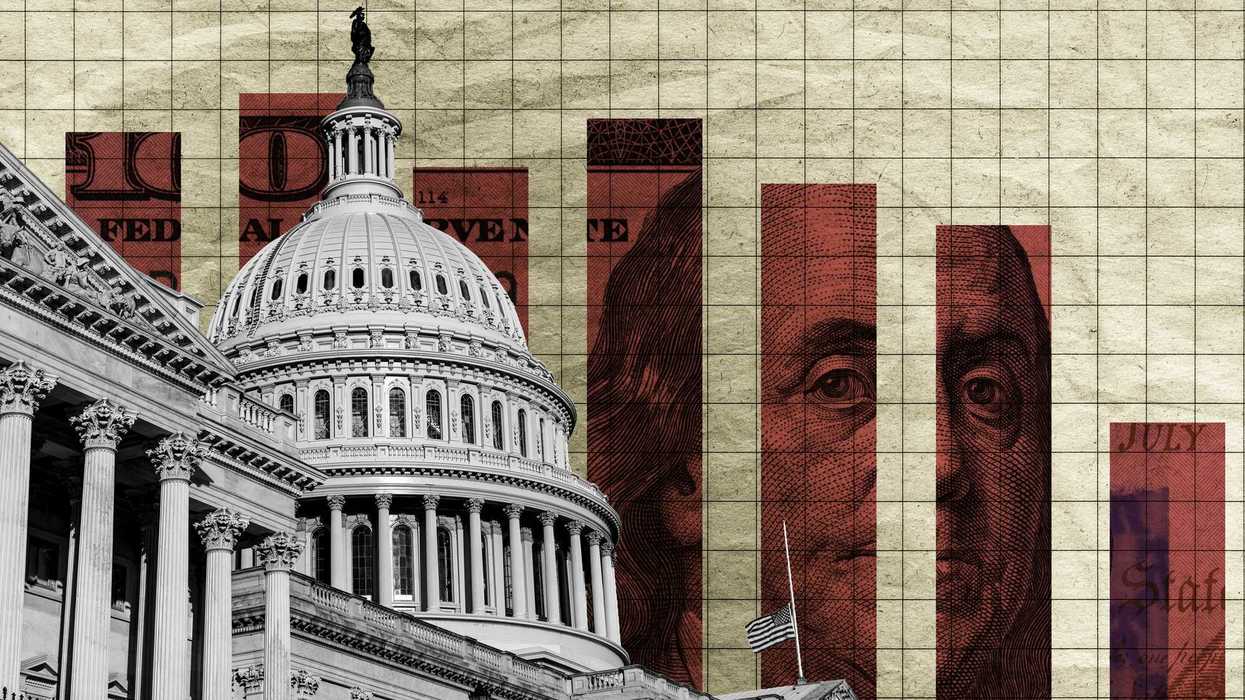
With gas prices having surged 28% in two months, inflation climbing to a three-year high of 3.8%, and the average family is spending an estimated $5,000 more this year than last due to rising costs across the board, a reporter asked Trump a simple question: To what extent are Americans’ financial situations motivating him to reach a deal to end the war in Iran?
Trump's answer was startling in its candor.
“Not even a little bit,” the President said. “The only thing that matters when I'm talking about Iran — they can't have a nuclear weapon. I don't think about Americans' financial situation. I don't think about anybody.”
But perhaps the most clarifying lens through which to view those words is what emerged just days later: Trump was suing the Internal Revenue Service (IRS) for $10 billion in damages over an IRS contractor’s leak of his tax returns but is now expected to drop that $10 billion lawsuit, not because justice has been served, but in exchange for the creation of a $1.7 billion fund to compensate his political allies.
The money would come not from any congressional appropriation but from the Treasury Department's Judgment Fund, a public fund funded by taxpayers that exists to pay legitimate court judgments against the federal government.
Under the proposed terms, a five-member commission with total authority to disburse that $1.7 billion would operate with no obligation to disclose its procedures or decision-making. Trump himself would retain the power to remove commission members without cause.
The beneficiaries? Among them: the nearly 1,600 individuals charged in connection with the January 6 Capitol attack, some of whom pleaded guilty, and people Trump already pardoned upon returning to office, as well as allies who claim they were targets of “weaponization” of the legal system under former President Joe Biden. Entities associated with Trump himself are not explicitly barred from filing claims.
The contrast here is not subtle. When asked directly whether the financial pain of working Americans factors into his decision-making, the president answers “not even a little bit.”
Yet within the same week, a deal surfaces in which $1.7 billion in public funds could flow to Trump allies, Proud Boys, Oath Keepers, and potentially Trump-linked entities — all under a commission the president controls, with no transparency requirements.
While ordinary Americans are losing ground financially, the president himself is doing remarkably well — and the numbers are staggering.
According to Forbes, Trump's net worth jumped from roughly $2.3 billion when he returned to the White House in January 2025 to an estimated $6.3 billion by April 2026 — nearly tripling his fortune in little over a year.
A New York Times investigation found that he personally gained approximately $1.4 billion in 2025 alone, a single-year increase that approaches the combined net worth of every other U.S. president while in office throughout American history.
The primary engine of that growth has not been real estate, the business that built his brand over five decades, but rather cryptocurrency ventures, meme coins, and media deals, all industries he has simultaneously deregulated from the Oval Office.
The American people are not the constituency this president governs for. The data bears that out. Real wages are losing ground as energy costs surge. The personal savings rate has dropped to 4%. Small businesses have shed hundreds of thousands of jobs under the weight of tariffs. Gas sits at over $4 a gallon. And the president's answer to the question of whether your financial pain is even in his mind is: no.
There is, of course, an argument to be made that preventing Iran from acquiring a nuclear weapon is a legitimate and serious national security priority that may justify some economic disruption.
But that argument is entirely separate from whether a president should care about the daily financial suffering of the people he was elected to serve. One can hold two things in mind at once. Trump apparently cannot — or will not.
We clearly have a portrait of a president whose conception of governance begins and ends with him and his loyalists. And when ordinary Americans ask if their struggles even register, they get the most honest answer this administration has offered: not even a little bit.
Lynn Schmidt is a columnist and Editorial Board member with the St. Louis Post-Dispatch. She holds a master's of science in political science as well as a bachelor's of science in nursing.