
Ah love, let us be true
To one another! For the world, which seems
to lie before like a land of dreams
So various, so beautiful, so new…. (Matthew Arnold)
The fireworks have sizzled, the leftover hot dogs have been fed to the Golden Retriever, the flags lining our sidewalks have been rolled up and put away, and the celebration of America’s birth as a nation 250 years ago is fading into our memories now.
We witnessed and participated in this 250th birthday party celebration by the privilege of living in this time and this place. Now, as fleeting as “U S A” written in sparkler trails, the party is over, and we face again the continuing challenge of keeping our country moving forward, nourishing and building upon our nation’s principles, our forefathers’ dreams, and our own.
We are such stuff as dreams are made on… (Shakespeare)
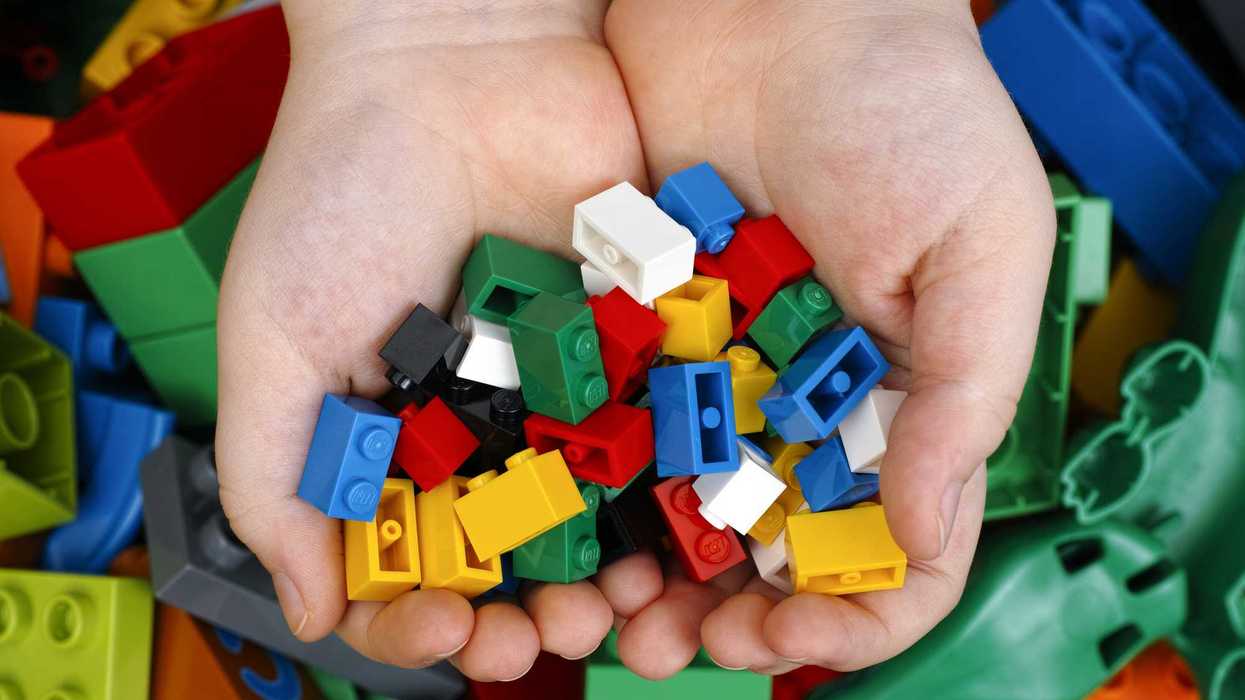
There is a dream that came to fruition, which most of the world is very familiar with. It began in 1932, during the Great Depression, when a Danish carpentry workshop owner named Ole Kirk Kristiansen started making toys, which would later be called “Legos.” “Leg godt” is Danish for “play well.”
Throughout the ups and downs of changing trends, the Lego company reinvented itself time and again. In 2004, the company almost went bankrupt. They attributed their financial losses to the fact that not only were people having fewer children, but those children were getting less time to play.
Talk to any great entrepreneur, study anyone who breaks the molds of the ordinary, and you will invariably hear how they have found their success through play. They truly enjoy their “work” because it is “play"; it is their creativity coming to fruition, their dreams being realized.
If you want your children to be intelligent, read them fairy tales. If you want them to be more intelligent, read them more fairy tales. (Albert Einstein)
For escape into the stories of our times and our past, we have books and movies and music, all we call “the arts.” There are also Legos. Walk into a Lego store, even in an airport, and immediately you are transported into a “land of possibilities.”
Legos have translated so many of our planet’s heroic tales into tactile form. We can build some of the dreams different visionaries have imagined: stories of Star Wars, Marvel heroes… Harry Potter, Narnia, Disney, fairy tales… great achievements in architecture, automobiles, space exploration…beautiful botanicals, bonsai trees…Formula Racing, even the FICA World Cup…on and on and on. There are even Duplos (twice the length, height, and width of Legos) for the under-five group to begin building their dreams. And for the truly ambitious, Lego has an “Art World Map” with just 11,695 pieces.
Of course, Lego is not a non-profit company, and these building sets are based on marketable themes. Still, we cannot forget the value of play, nor discount what a treasure our dreams are. As the signers of the Declaration of Independence did in formulating the words that gave shape to our country, “hitching our wagon to a star” yields not only joy and purpose in life but also the ability to change the world.
Others, family, friends, and in the broadest sense, humanity itself, are essential to the glory and success of our dreams. In the last lines of Arnold’s poem, he compares humanity to a soldier on a dark battlefield at night, where, in a chaotic and often faithless world, human connection is all we have left.
And we are here as on a darkling plain
Swept with confused alarms of struggle and flight
Where ignorant armies clash by night.
It is imperative that we nurture and maintain our bonds with each other, not only to live, but to live well, so our dreams can prosper.
With our work—and our play—before us, we move towards the next big milestone of our country’s inception, its Tricentennial. Those who can remember the Bicentennial will likely not be among those celebrating on July 4, 2076, yet our words and actions now will give shape to the next great milestone in our country’s success.
Most of all, our dreams will.
We are strivers and builders and dreamers…. Of all colors and creeds, of all backgrounds and beliefs. It is in our blood. (James Talarico, Texas nominee for Senate)
So, here’s to a vision begun a quarter of a millennium ago. Here’s to the centuries of our country behind us and before us, to the years of building, of dreaming and striving, and yes, of disagreeing. Because despite politics, despite corrections and turns and contradictions—and also because of them—our flag flies high, our aspirations are ongoing.
The United States of America is the greatest country mankind has ever known.
And our forefathers’ dreams, coming ever to fruition, are yet the light of the world.
Amy Lockard is an Iowa resident who regularly contributes to regional newspapers and periodicals. She is working on the second of a four-book fictional series based on Jane Austen’s “Pride and Prejudice."