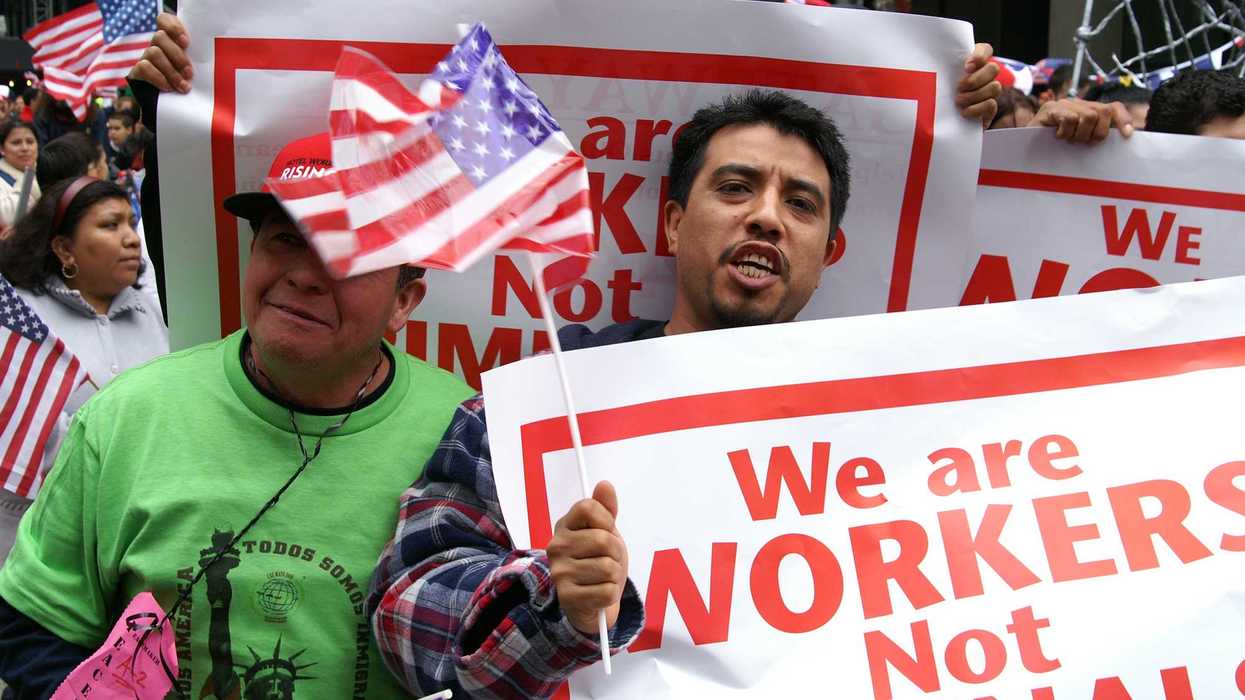



From observing people and politicians over the years—I can find no data on this—I have the impression that liberals as well as conservatives think that the typical person living in poverty is Black or Hispanic. The image most Whites have of people of color is someone who is poor—except for celebrities—with little education; they are not aware of many people of color who are middle class. On the other hand, they are not aware of many Whites who are poor and so they think their number is low.
Why is the perception of poverty important? The perception of who is poor has significant impact on the support for government programs that aid the poor. Given the extent of racism in this country, whether subtle or violent, (see my post, “Whether the Issue is Gun Violence or Inequality, It Always Comes Back to Race/Racism”), it’s not surprising that support for anti-poverty programs is non-existent among MAGA Republicans and for that matter has always been weak among Republicans; 45% of Republicans would even cut food stamp support. Their attitude is "it's your fault;" so government has no responsibility to help. They feel the causes of poverty are personal: bad life choices, drugs, lack of work ethic, and the breakdown of families—all negative perceptions of Black culture.
Liberals of course support such programs as an expression of economic justice, of fighting the systemic causes of poverty—discrimination, an unfair economic system, and the lack of educational opportunities. Although often one feels support is given somewhat begrudgingly; there is a little bit of racism in most of us.
But this perception of poverty is in fact fundamentally wrong. While Blacks and Hispanics do have much higher poverty rates, there were more White people living in poverty (19.6 million) in 2014 than either Blacks (10.2 million) or Hispanics (13.4 million). Even when combined, Blacks and Hispanics, according to Census data from 2024, accounted for just 52% of people living in poverty. Minorities have also historically accounted for no more of the welfare caseload than White families.
Why does this misperception of poverty persist? The main cause is the biases and perceptions we are raised with. But there is also much fault with the media. When it presents images of poverty, they are almost always that of Blacks or Hispanics. The images from the depression—think of the photographs of Walker Evans and Dorothea Lange—showing white Americans living in poverty, have very few equivalents in contemporary media.
Both government and the media must address this misconception. Especially in this polarized age, having an understanding of the oneness of all people is very important.
But it is also important that poor White Americans become more vocal in arguing for government support in bettering their lives and the futures of their children. There is no shame in being poor; it is not, as Republicans often say, "your fault." Asking for support is not asking for charity. Whether you are White or a person of color, most people are poor because of the circumstances of their birth and the resulting milieu the grew up in; getting beyond that barrier is very challenging regardless of race.
But this will be difficult. Although poor Whites benefit from anti-poverty programs, poor Whites seem to have the same perception as most that anti-poverty programs are geared to help people of color because that is how Democrats usually phrase their support; Democrats rarely speak about poor Whites—a big mistake. And this fits in with their racial biases; they do not want to think of themselves as comparable to Blacks. This is in part a result of history: in the antebellum South, planters feared the combined strength of poor Whites and slaves and so they used racism and force to keep poor Whites and poor Blacks separated.
Helping all poor people should be the goal of existing anti-poverty organizations; they should advocate for both people of color and Whites, which would only make their case more compelling. But when I googled to find organizations advocating for poor Whites, I found none.
This is what is fueling part of the Trump base. Poor Whites and poor people of color have been separated by the forces of racism—not just their own but of society's. Poor Whites are supporting Trump because no one else listens to them and no one else says he advocates for them. Even though he really doesn’t.
Poverty should never be seen as primarily a Black issue because it is not in fact. If we seek to end the grip of poverty on people and enable them to lift themselves up, programs and their marketing must be designed with Hispanics and Whites in mind as well. This is not a hand-out. This is about government fulfilling its responsibility under the Declaration of Independence to secure the right to life, liberty, and the pursuit of happiness for all Americans. It is supporting all Americans—including the poor, regardless of color—in the pursuit of their dreams.
The poverty of Whites must be brought visibly and audibly into the public consciousness in a positive way so as to increase public support for programs to fight poverty. If poor Whites, Blacks, and Hispanics aligned themselves in this common cause, they would present a very potent political force.
Ronald L. Hirsch is a teacher, legal aid lawyer, survey researcher, nonprofit executive, consultant, composer, author, and volunteer. He is a graduate of Brown University and the University of Chicago Law School and the author of We Still Hold These Truths. Read more of his writing at www.PreservingAmericanValues.com