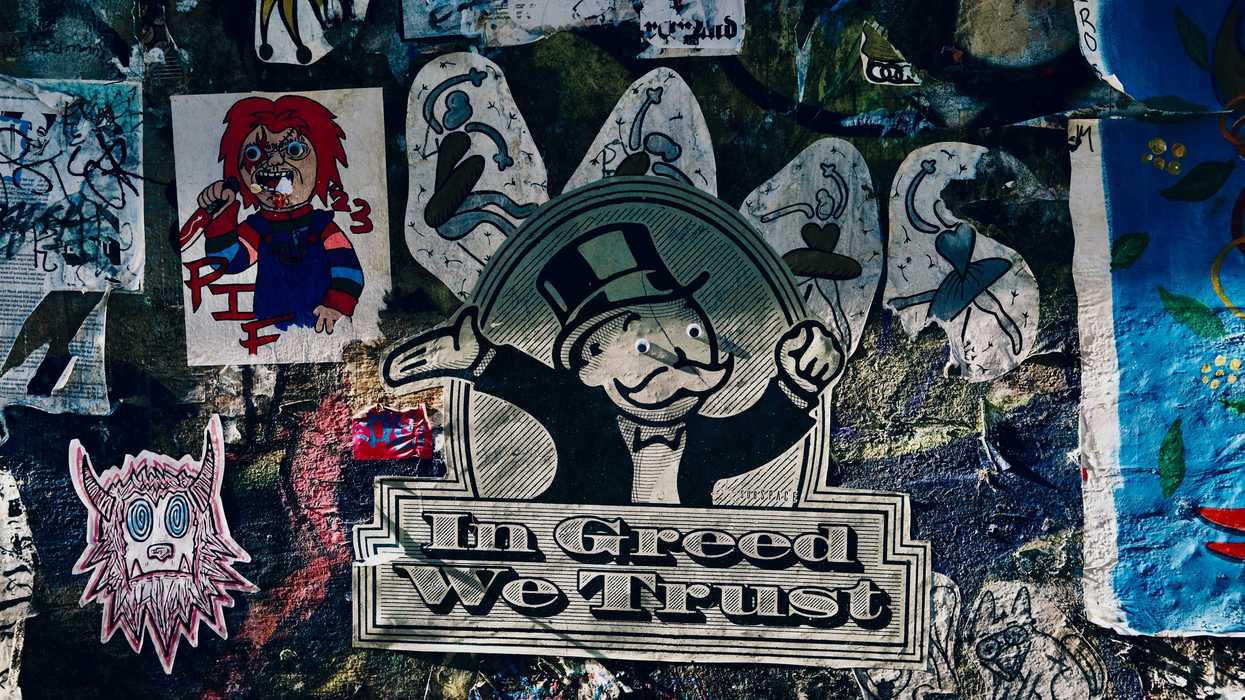
The signs are everywhere. For many Americans, buying power has improved only modestly despite decades of economic growth. Corporate profits are at an all-time high. We have reached a level of wealth inequality last seen almost a hundred years ago. By many measures, our capitalist economy seems to have failed to deliver broadly shared prosperity.
However, the failure isn’t with the free market as an economic approach. Instead, it’s our failure to regulate and moderate the free market, or more accurately, that we have spent 40 years undermining or removing the regulations of the New Deal that made our economy work for more Americans.
Almost a century ago our country rejected both socialism, the complete government control of the economy, and unregulated, survival-of-the-fittest capitalism. Instead, President Franklin Delano Roosevelt navigated a middle path between the two, the New Deal. We stayed with capitalism, with the free market, but Roosevelt’s administration implemented a broad range of financial and corporate regulations to ensure our economy worked for more Americans. Using the power of government to moderate capitalism was a fulfillment of the most basic promise of our Constitution, the promise of equality of opportunity.
Moderated capitalism had broad support throughout society, and even support from the Republican Party. While they certainly saw the mix differently, Republicans and Democrats agreed that the government should both nurture the free market and make sure it served the whole of our country.
And moderated capitalism worked. It allowed us to tap into the immense talent and ambition of every part of our population. Capitalism is more efficient if there is one set of rules; a level playing field allows everyone to compete equally, creating the greatest value for society. Making sure more people shared in that value through reforms like the 40-hour workweek, overtime pay, and unionization put money in people’s pockets and helped create the engine of our massive consumer economy.
Our country has backed away from its commitment to moderated capitalism. In part, this happened because of the ebb and flow of history. Our free-market model had won, producing far greater wealth and personal freedom than socialism. Once the Soviet Union collapsed, we stopped paying as much attention.
However, most of the blame rests with the two major parties. Both began to step back from, and actively undermine, the compromise of moderated capitalism. The true believers in unfettered capitalism still had a home in the right wing of the Republican Party. They claimed the victory over socialism as their own and argued our economy had matured and needed less regulation. At every opportunity they cast government as inherently incompetent and untrustworthy. Part of the Democratic Party also bought into the idea of “triumphant capitalism,” happily going along with deregulating our economy
Page 1 of 2
while collecting ever larger donations from corporate interests. The Republican Party slowly chipped away at the protections of moderated capitalism, and the Democrats either helped with the dismantling, or stood by and did nothing.
As a result, in ways large and small, our country has stepped back from moderated capitalism. We’ve pulled away from using the powers of government to ensure everyone can participate in our economy. We’ve allowed our bridges and roads to slip into disrepair. We’ve retreated from ensuring every student has access to a quality education. We’ve allowed unions to be undermined. We’ve weakened the parts of government that protect us from products that harm us or our environment. We have rolled back financial regulations and consciously chosen not to extend regulation as Wall Street created new financial products, or as new technologies like the Internet were transforming our society. In many different ways, we’ve backed away from our commitment to providing a level playing field.
The return of unregulated—even predatory—capitalism has also led to a renewed interest in socialism, in the government takeover of our economy. But the answer still isn’t to abandon the free market—it’s to go back to moderating it. We need to again make sure that every American has the ability and the opportunity to participate in our economic system. We need to get back to one set of financial, investing, and insurance rules. We need to get back to an updated New Deal, to again make our economy work for all Americans.
Blake Ashby is author of Socialism and the Democratic Party: The Case for a Return to Moderated Capitalism, President of the Ferguson Democratic Township, and a political consultant working with Democratic candidates.