



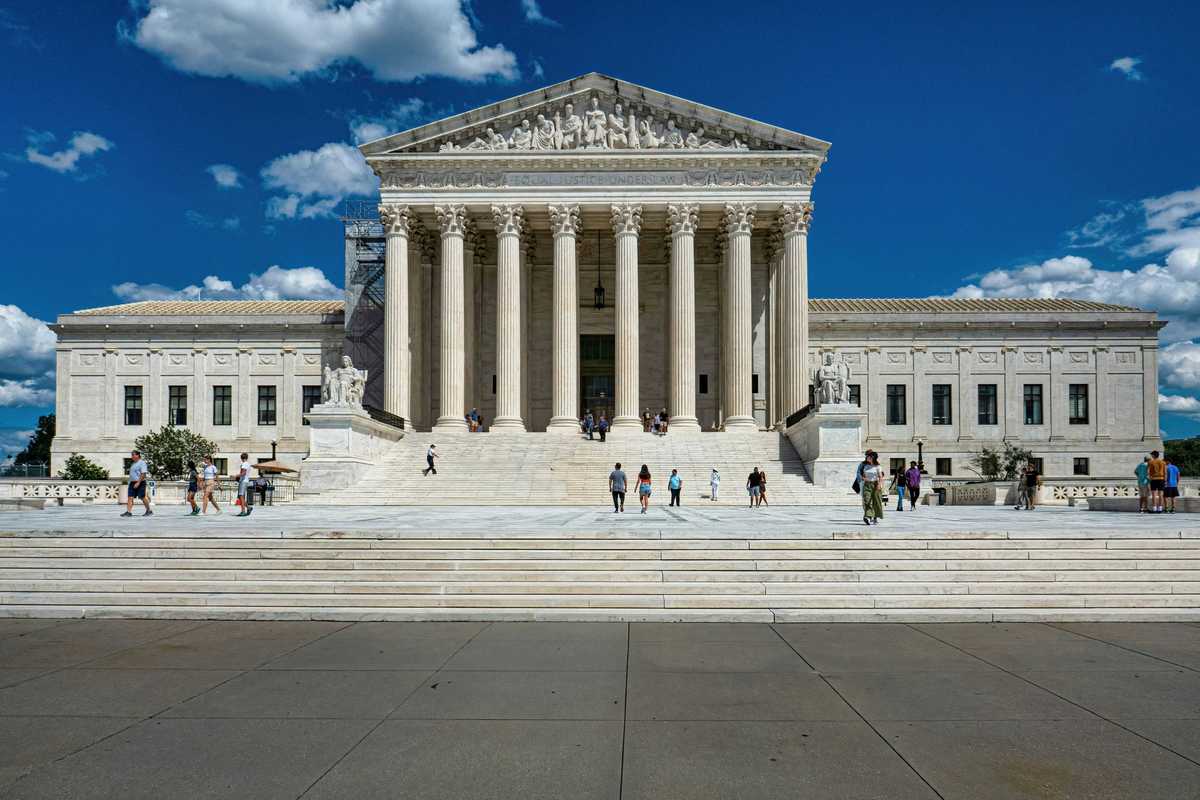


At midnight on July 11, the 21st Century ROAD to Housing Act became law without a presidential signature, the largest housing statute since 1990. President Trump refused to sign it, dismissing it as "a big yawn" and holding it hostage to an unrelated voter-identification bill. The timing matters because the price it is meant to address keeps climbing: the median existing home sold for $440,600 in June, roughly 49 percent higher than in 2020. Democrats say Trump snubbed struggling families. Republicans call it a win for homeownership. Both are selling a law that will do far less than either claims.
Start with the provision everyone is talking about. Section 901, titled "Homes are for People, Not Corporations," bars large institutional investors, defined as entities controlling 350 or more single-family homes, from buying additional single-family houses. It is the populist centerpiece, the line that lets a Republican Congress and a Democratic minority both claim they stood up to private equity.
Now the arithmetic. Investors who own more than 1,000 homes hold about 500,000 properties nationwide, which is 0.34 percent of American housing stock and roughly 3 percent of single-family rentals. The cap targets a sliver. Worse for its own logic, it is porous: Redfin's chief economist has noted that a firm can split its holdings into entities that each sit below the 350-home line and keep buying. The ban does not force anyone to sell a single existing house. It does not add one new home. It reshuffles who is allowed to bid at the margin of a market where these buyers were never the main story.
The concentration argument has a kernel of truth, and it is worth stating fairly. In a handful of Sun Belt metros, the investor share is large. In Jacksonville, investors own more than a fifth of single-family rentals. Dallas and Phoenix each added at least 16,000 investor-owned homes over the past six years. A national ban aimed at a problem that lives in five or six cities is a blunt instrument, and a leaky one.
What could actually expand supply sits elsewhere in the bill, in the parts nobody is quoting. The law offers grants to local governments that loosen zoning requirements, streamline environmental review for housing, and ease the path for factory-built homes. These are the provisions that could, over years, put more roofs on the market. They are also voluntary nudges to cities that have ignored them for decades, and even the National Association of Home Builders, which backs the law, frames the supply gains as gradual. The mechanism is real. The timeline is slow, and the compliance is optional.
So the marquee provision is close to symbolic, and the substantive provisions are back-loaded and contingent. That is the honest read on the policy. The durable consequence lies somewhere in the housing debate that has not been looked.
The genuinely new thing here is political, and it runs in two directions.
First, a realignment few have named. A federal restriction on capital buying homes is a left-populist idea, the kind Elizabeth Warren has pushed for years. It became law under a Republican Congress, pulled along by a Trump executive order from January that first declared large investors should not outbid families. The right did not block the idea. It adopted it and put its name on it. Housing has quietly become a place where populist left and populist right buy the same policy, which tells you more about where both parties are heading than any zoning grant does.
Second, and more lasting, a procedural precedent. Trump neither vetoed nor signed this bill. He let it lapse into law by inaction, using the delay as leverage in his elections bill. A president turning the absence of his signature into a bargaining chip over unrelated legislation is a tactic both parties will now reach for the moment it suits them. The housing outcome is modest. The precedent is not, and it will outlast every provision in the text.
The market reaction should be muted, which is itself the tell. Single-family rental operators and the real estate investment trusts behind them face a capped runway and years of Treasury rulemaking to define terms, but no forced divestitures and no threat to existing portfolios. That is why their share prices did not move. A law that genuinely reordered the single-family market would have registered on a trading screen. This one did not.
For homebuyers, the near-term message is plain, and it is not the one in the press releases: expect no meaningful price relief this year, and probably not next. Supply takes time to build, and the demand pressure that pushed the median home nearly 50 percent higher since 2020 has not eased. The bill's supporters know this, which is why their statements promise a foundation rather than a result.
The Cato Institute, no friend of the investor ban, made the sharpest structural point from the right: the cap targets less than one percent of the market while establishing that Congress can bar any class of buyer it dislikes, at any time, for any reason. Set aside whether that is good or bad. It is a precedent, and precedents in Washington get reused by whoever holds the pen next.
This law will show up in campaign ads as the moment Washington took on the corporate landlord. The mechanism says otherwise. Its real inheritance is twofold: a bipartisan appetite for telling investors what they may not buy, and a president's demonstration that a signature withheld can be a weapon. Both will shape the next housing fight, and the next fight over everything else, long after the zoning grants have been spent and forgotten.
Imran Khalid is a physician, geostrategic analyst, and freelance writer.












The President Invited Iran to Bomb My Home