




Trust in American institutions has fallen for decades, across nearly every sector, and the usual diagnosis blames the public. Citizens have lost faith; institutions must win it back with better communication, greater transparency, and proof that the proper procedures were followed.
This diagnosis is backward.
The crisis is not primarily in public attitudes. It is in institutional practice. In a democracy, trust is not simply a mood people have about an institution. It is something an institution does. It asks something of citizens, counts on their judgment, gives them responsibility, and shows them what comes of it.
Most institutions no longer know how to do that. They manage people. They do not form them.
American institutions have become very good at following procedure and very bad at earning authority. They can show us the process. They can document compliance. They can survey satisfaction. What they increasingly cannot show us is a public capable of exercising judgment and sharing responsibility for a common life.
That is one reason contempt for credentialed experts and professional managers has become such a familiar feature of American political life. The contempt often becomes crude, indiscriminate, and destructive. But it lands because it names something real.
This is ultimately a story about the professions, because professional practice is where most of us actually encounter institutions: the teacher, the nurse, the caseworker, the librarian, the pastor, the administrator.
Professionals help determine what kind of people institutions produce, and they do it through their ordinary routines: how they exercise authority, distribute responsibility, handle disagreement, and account for results.
They can form citizens capable of judgment and shared work. Or they can form consumers, clients, and managed populations.
Over the past generation, the second model has increasingly displaced the first. People who once belonged to institutions now receive services from them. People who once helped run institutions now fill out surveys about them.
This is a way of governing, not merely a way of managing, and it matters as much as many of the questions that appear on our ballots. Neither political party has escaped it. Their policies differ enormously, but both operate through a professional culture that too often treats citizens as audiences to persuade, constituencies to mobilize, clients to serve, or populations to manage.
On the narrower question of how institutions understand the people they govern and serve, red and blue America often look more alike than either side admits.
But this is not the only model of professional life Americans have ever had.
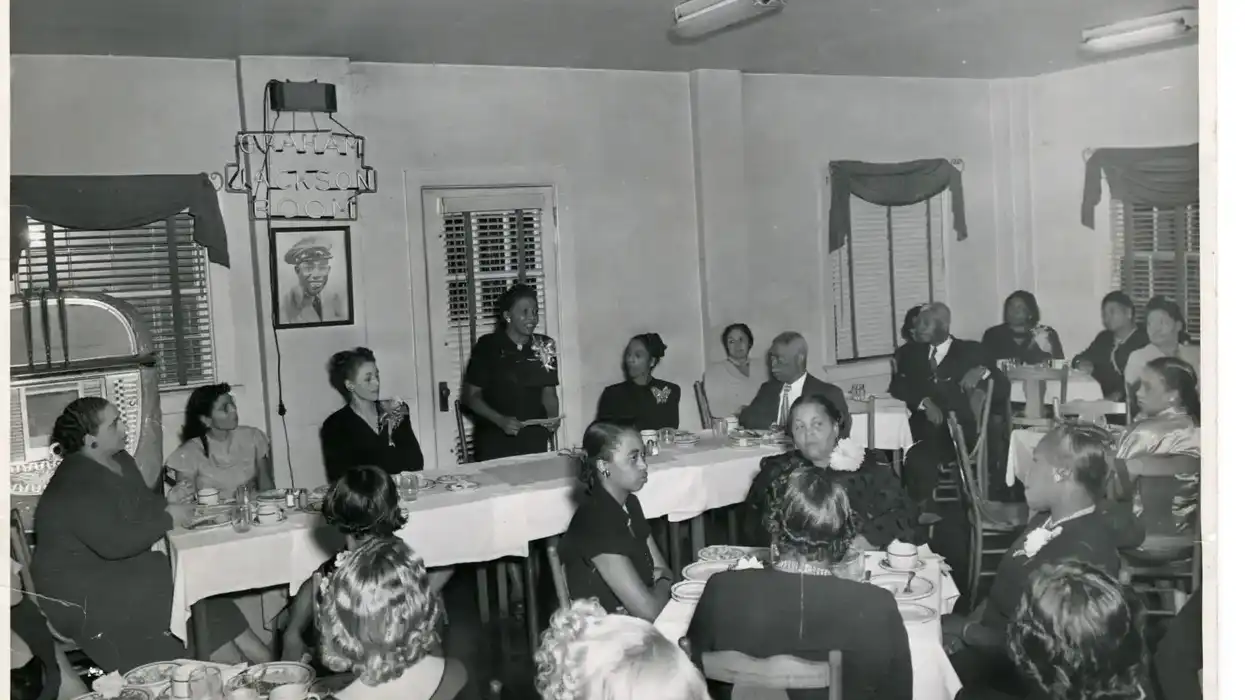
Beginning in 1908, a corps of Black supervising teachers, almost all of them women, organized rural Black communities across the segregated South. They were called Jeanes teachers, but the title is too small for what they did.
They trained local teachers, organized Improvement Leagues and Betterment Associations, raised money for schoolhouses and longer school terms, and organized adult literacy classes. From 1913 to 1928, Jeanes teachers raised approximately $5 million for Black schools.
The connection to the later civil rights schools is not a story of simple institutional descent. It is a continuity of practice and people. By 1916, Jeanes teachers were running moonlight schools for Black adults. Septima Clark, who later designed the Citizenship Schools, began teaching that same year in Charleston County, South Carolina, under the county’s Jeanes post, and she was still teaching in that county’s schools in 1956, the year before the first Citizenship School opened. Highlander’s own 1954 field notes for the Sea Islands counted on that same county post.
Their professional authority did not rest only on expertise. It rested on what their expertise enabled other people to become capable of doing.
The Jeanes teachers were what Harry Boyte calls citizen professionals: people whose work was not only competent but formative. They did not simply deliver services to communities. They enlarged the capacity of people in those communities to judge, organize, build, and act together.
Every profession still produces people like this. We usually treat them as exceptional: the remarkable teacher, the stubbornly civic pastor, the doctor who builds a community rather than merely treating patients, the administrator who gives away enough authority that other people begin taking responsibility.
Institutions celebrate such people.
They rarely reproduce them.
That leaves us with a more important question than whether Americans can be persuaded to trust their institutions again: Can institutions deliberately form citizen professionals?
Better management will not solve the problem. The professions are already managed to death, and management is part of how they were hollowed out. Protest alone will not solve it either. People can win a political fight and still leave the institutional arrangements that govern their lives untouched the next morning.
The professions will be rebuilt where two things meet.
The first is organized people with enough power to keep institutional design honest, enough to keep experts from designing democracy for everybody else without answering to them.
The second is institutions capable of carrying that power forward, so citizens don't have to organize from scratch every time they want responsibility, voice, or consequence.
The Jeanes teachers joined those things. They organized people while building institutions. They developed leadership while creating structures through which leadership could operate. They did not choose between power and institution-building.
That is what gave the work institutional staying power.
This fall, at Huston-Tillotson University in East Austin, the Politics Lab of the James L. Farmer House is convening a semester-long symposium built around a deliberately difficult question: What would it take to build the Jeanes teachers again, here, now, and not only as teachers?
Students and community members will take up that question together. Central Texas Interfaith, a broad-based organizing network, is helping lead the work, with organizers reading organizers. The Institute for Public Life and Work has joined as a partner. The organizers drew up the design before they joined; the test is whether they change it.
The point is not to admire the Jeanes teachers.
It is to test whether a university, a congregation-based organizing network, and ordinary citizens working together can intentionally begin forming citizen professionals, and to say honestly what happens when they try.
We do not know what will come of it, and we should not claim more than the record eventually shows.
But we know what the alternative looks like because we are living in it: institutions fluent in procedure and increasingly empty of authority, managing a public they no longer know how to form.
The professions were not always this way. Black women working under Jim Crow demonstrated another possibility.
Recovering it will require more than asking Americans to trust institutions again.
Institutions will have to become worthy of trust by doing something with citizens again: asking for their judgment, giving them consequential responsibility, and building with them rather than merely delivering things to them.
Trust will return when people can see themselves not simply on the receiving end of institutional life, but among its authors.
No one is coming to do that work for us. The question is whether we will do it ourselves.
Robert M. Ceresa is an associate professor of political science at Huston-Tillotson University in Austin, Texas, and founding director of the James L. Farmer House.











The President Invited Iran to Bomb My Home