




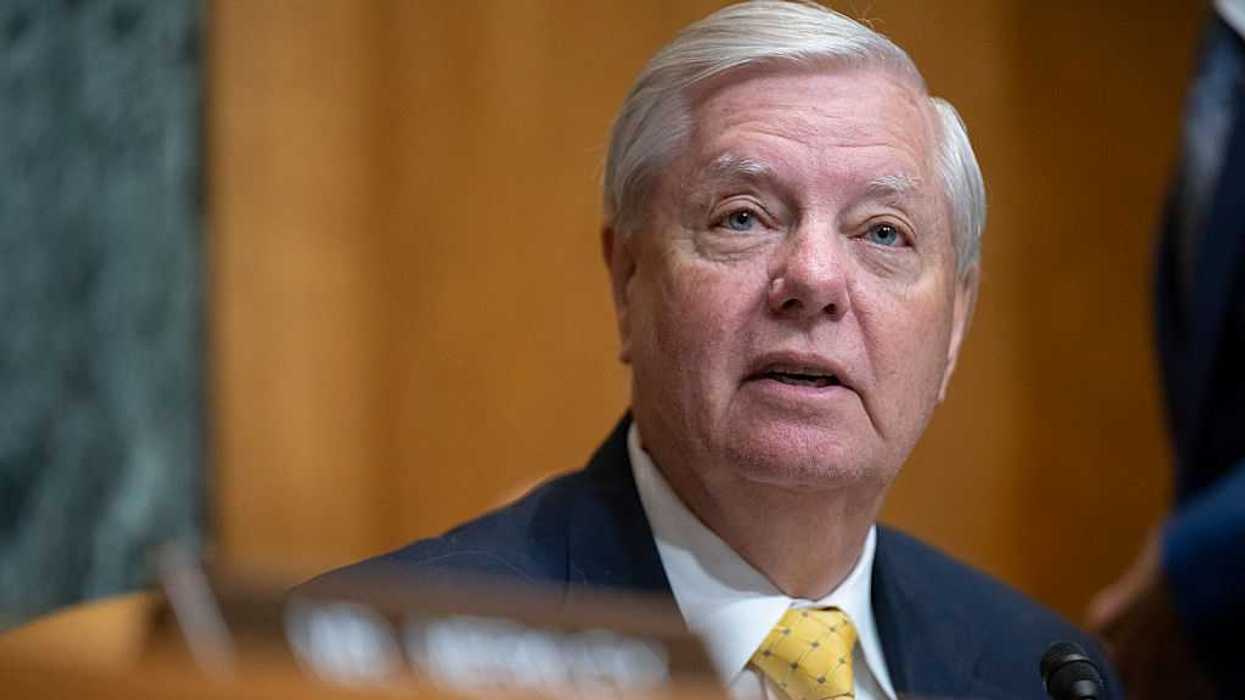

WASHINGTON — Sen. Lindsey Graham, the longtime South Carolina Republican whose career spanned bipartisan deal‑making, fierce party loyalty, and a late‑stage alignment with Donald Trump, died Sunday at age 71.
Graham died at his home in Seneca, South Carolina, after recently facing health challenges. The veteran lawmaker, who “rose from the House to become one of the Senate’s most recognizable Republicans,” was widely regarded as a figure whose political identity evolved alongside the GOP itself.
NBC News, in a special report on his legacy, described Graham as “a complicated figure whose career mirrored the political transformations of the last decade.” One analyst noted, “He was always in the middle of the action — sometimes building bridges, sometimes burning them,” capturing his dual reputation for bipartisan cooperation and sharp partisan combat.
Graham became one of President Donald Trump’s most vocal defenders in the Senate. Trump paid tribute to him on Truth Social early Sunday, writing: “Senator Lindsey Graham, one of the greatest people and Senators I have ever known, is dead! He was always working, and was a true American Patriot. Lindsey will be greatly missed!!!”
Tributes from across the political spectrum followed. Senate Majority Leader John Thune, R‑S.D., said, “my heart is heavy this morning to learn the passing of my friend and colleague.” South Carolina Gov. Henry McMaster called him “irreplaceable,” adding, “The fiercest of fighters for South Carolina and America.”
Under South Carolina law, McMaster will appoint a temporary successor until a special election is held. Graham’s seat “instantly becomes one of the most closely watched in the country,” reflecting the state’s central role in Republican politics.
Graham entered the U.S. Senate in 2003 after serving three terms in the House, where he first won election in 1994. Known early in his Senate career for working across the aisle on immigration and military policy, he later became a defining voice of the Trump era as the party’s internal dynamics shifted.
Born in 1955 in Central, South Carolina, Graham served in the Air Force JAG Corps before entering politics, beginning a congressional career that would span more than three decades.
Hugo Balta is the executive editor of The Fulcrum and the publisher of the Latino News Network















Americans across the political spectrum have continued to ask about the late financier and convicted sex offender Jeffrey Epstein’s connections among the political elite. (Angela Weiss/AFP)
Democratic U.S. Senate candidate Graham Platner speaks to voters at a town hall at the Elks Lodge 188 on June 7, 2026, in Portland, Maine.
McConnell and Platner both feel entitled
The two men could not be more different. One, a Republican, octogenarian, seven-term Southern senator, the other a progressive, millennial Maine oysterman who’s never spent a day in elected office.
But Mitch McConnell, the senior senator from Kentucky who’s been MIA for the past few weeks and Graham Platner, the Maine Senate candidate who’s facing calls to drop out of his race against Sen. Susan Collins, apparently do have something in common: an outsized sense of entitlement.
McConnell, who is 84 and not running for reelection, has been hospitalized for three weeks, and yet we still don’t fully know what he was admitted for or what his condition is. Per CNN, “his office has not disclosed a medical reason for the hospitalization or provided specifics on his health status beyond saying last week that he ‘continues to improve’ and ‘is working closely with his staff on Kentucky and Senate matters.’ ”
While several legislators have said they’ve talked to him and insist he sounds strong, others have said they are completely in the dark. One MAGA influencer, Laura Loomer, posted ”High level source close to the White House tells me ‘Mitch McConnell is officially brain dead. He’s not coming back.’ ”
Meanwhile, up in Maine, Platner has been artfully dodging calls from his own party to drop out of his race after several allegations of misconduct from women, including a sexual assault allegation from a former girlfriend, came to light. While Platner, who has managed to survive a Nazi-tattoo scandal, a sexting scandal, and several old tweets scandals, denies the allegations, he has not quit.
High-profile Democrats including Sens. Bernie Sanders and Chuck Schumer, the latter of whom had unsuccessfully hand-selected Maine Gov. Janet Mills to face Collins instead of Platner, have urged Platner to drop out, while other Dems have accused him of trying to influence the picking of his replacement.
Maine Democratic Party Executive Director Devon Murphy-Anderson released a statement Tuesday, which said in part:
“Unfortunately, Graham Platner’s team has repeatedly reached out to us in an attempt to put their thumb on the scale of what this process looks like. We have repeatedly reiterated to Graham Platner’s team that they have no role in determining our next Democratic nominee for the U.S. Senate nor in determining what this process looks like.”
Both incidents show a deep lack of accountability to voters, who in one case deserve to know whether their senator is capable of performing his duties, and in another deserve a candidate who isn’t being accused of crimes, bigotry and deception.
The offensive and odious entitlement of both McConnell and Platner stands out not because it is particularly unique among today’s political class. Tom Kean, the New Jersey GOP congressman, missed more than 100 votes, only sharing after a three-month mystery absence that he was dealing with depression.
Former President Joe Biden’s Defense Secretary Lloyd Austin failed to disclose a hospitalization for prostate cancer surgery, flouting the established rules for Cabinet members and senior U.S. officials.
From Biden’s insistence on running for reelection despite his obvious cognitive and political weaknesses to Trump’s brazen flouting of laws and norms, few politicians seem to appreciate that their public service job comes with responsibilities to constituents, including transparency and honesty.
But both parties increasingly justify the chicanery, because the stakes of winning elections and keeping power are simply too high. But that’s no excuse. If we’ve learned anything over the past decade, it’s that character and accountability do, in fact, matter. And when we, the voters, stop caring about it, well, so do they.
S.E. Cupp is the host of "S.E. Cupp Unfiltered" on CNN.