
Many people who have served, or are still serving in the military, are not thrilled with the state of our country. There are plenty of active duty members who wish they could quit–and many of them are in my DMs asking for my advice–which might be why the number of military personnel inquiring about conscientious objection has risen by 1,000% since the start of the Iran war. Whether they joined to patriotically serve their country or simply for the promise of stability and upward mobility, a draft dodger who “finds the notion of military service difficult to understand, and the idea of volunteering to serve especially incomprehensible” is now holding them hostage in an indefinite war against Iran.
Veterans feel an obligation to speak up against the betrayal. 752 of them are running for Congress in 2026. A record number of them are women.
Trump has never cared about veterans, and it might be his downfall. The President, who has called fallen Americans ‘losers’ and ‘suckers,’ talked about how there will likely be more deaths, and just put words in the mouths of our most recently slain, has practically admitted he is extending the war simply to enrich himself and defense companies. Veterans are pissed, and they are answering the call once again to step up and protect their country. And though Trump and Hegseth are actively seeking to stifle them, veteran voices are proving more critical than ever in pushing back against these warmongers. It seems, as I’ve discovered myself, that a veteran who speaks up about the military-industrial complex is harder to wave off than someone who's never worn the uniform. That credibility is worth something; Americans trust people with military experience more than people without it. Their voices are reaching an audience.
Female veterans, especially, are breaking through, and Trump and Hegseth may have helped activate them. For years, women serving in the military have been more likely to be raped by a fellow soldier than killed by the enemy; it has since come out that women are more likely to be killed by a fellow soldier than by the enemy. Yet Trump, a sex offender, appointed Hegseth, an accused sex offender, to lead the organization. While the misogyny of these male leaders may be enough to make things miserable for women while they’re in, on the outside, they have something to say about it. Nancy Lacore, a retired vice admiral, was removed from her position by Secretary Hegseth in 2025. Now she’s running for Congress in South Carolina’s 1st. In fact, of the 47% increase in vets running for Congress since 2024, the most impressive growth is among female veterans. 95 ran or are running for federal office this year compared to only 40 in 2024. That’s a 137% increase, and also the highest number ever tracked.
The Trump regime has wanted to push women out of the military, but no one seems to have thought about what these women might do next. Women were leaving the military at a rate 28% higher than men even before Hegseth. But now, after Hegseth pulled three women–including Rear Adm. Bauernschmidt, the first female to captain a nuclear-powered aircraft carrier–off the promotion list, the Navy will promote zero women to the rank of admiral for the first time in more than a decade. As Commander Mariner, the Navy's first female Commanding Officer of an aviation squadron, once said, "If the institution says you're not good enough to fight or doesn't want you to, it's natural for people to think you're inferior." As frustrating as that can be, it also means women have been seriously underestimated. The joke may be on those doing the underestimating. I got out of the military in 2025 as a Lieutenant Commander after ten years as a Navy helicopter pilot, where I worked alongside some of the most impressive women I’ve ever met. Now, many of those bonafide badasses are about to get elected to Congress.
Rebecca Bennett, a former Navy helicopter pilot, is running to unseat Thomas Kean Jr. in New Jersey’s 7th Congressional District. Her campaign, which prioritizes affordability, health care, and national security, raised more than $3 million, outpacing the entire field. Former Marine Corps captain Maura Sullivan, who served in Iraq and Southeast Asia as well as in senior roles at the VA and Pentagon, is running a campaign based on lowering costs and fighting corruption in one of the swingiest districts in the country: New Hampshire’s 1st. Cait Conley, who did six overseas deployments including combat tours in Iraq and Afghanistan, is taking on Rep. Mike Lawler in New York’s 17th. JoAnna Mendoza, a veteran running for Congress in Arizona’s 6th, did two tours in Iraq and one in Afghanistan. Marialana Kinter, Navy veteran and former nuclear reactor plant supervisor, is running in Florida’s 7th. And Elizabeth Dempsey Beggs, an Army veteran and former tank commander, is running in Virginia’s 1st. These are just a handful of the female veterans whose races I’ve been following. Many are mothers, many hold advanced degrees, and all of them are incredibly impressive people and candidates.
Perhaps because they are veterans or because they are women or because of this special combination, they have approached their races with a deeply collaborative spirit. Many are even pushing to reclaim patriotism as a bipartisan issue; Nancy Lacore, the vice admiral Hegseth wanted gone, said, "I think that's kind of silly to think that patriotism belongs to one particular party.” Leela Gray, a retired Army brigadier general running for Congress in Florida’s 13th, said: “I served in uniform for 30 years. I had no idea if people were an independent or a Republican or a Democrat. It didn't matter. What mattered was, could you trust the person next to you?” The military teaches you to work with all kinds of people toward a shared mission; you share meals, you train together, you have each other’s backs. When such a broad coalition is a necessity, the community building practically happens by accident. These women are translating that now to the campaign trail. Several of them even belong to a strategy-sharing moral support group called the Hell Cats, an homage to the first women Marines who served during World War I. Mendoza says she checks in with the Hell Cats almost every day.
With primaries still coming up in multiple states, and midterms just around the corner, I obviously hope you vote. But in addition, I hope that you tune in. Some of the most intelligent, hardworking, and competent women in America are continuing their legacies of service and fighting to defend our country, making cogent arguments against a government that has tried to erase them. It is really something to behold. Whether or not they win, they are running thoughtful and important campaigns. If you want to be inspired, then just watch.
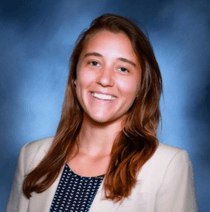
Julie Roland was a Naval Officer for ten years, deploying to both the South China Sea and the Persian Gulf as a helicopter pilot before separating in June 2025 as a Lieutenant Commander. She has a law degree from the University of San Diego, a Master of Laws from Columbia University, and is a member of the Truman National Security Project.