



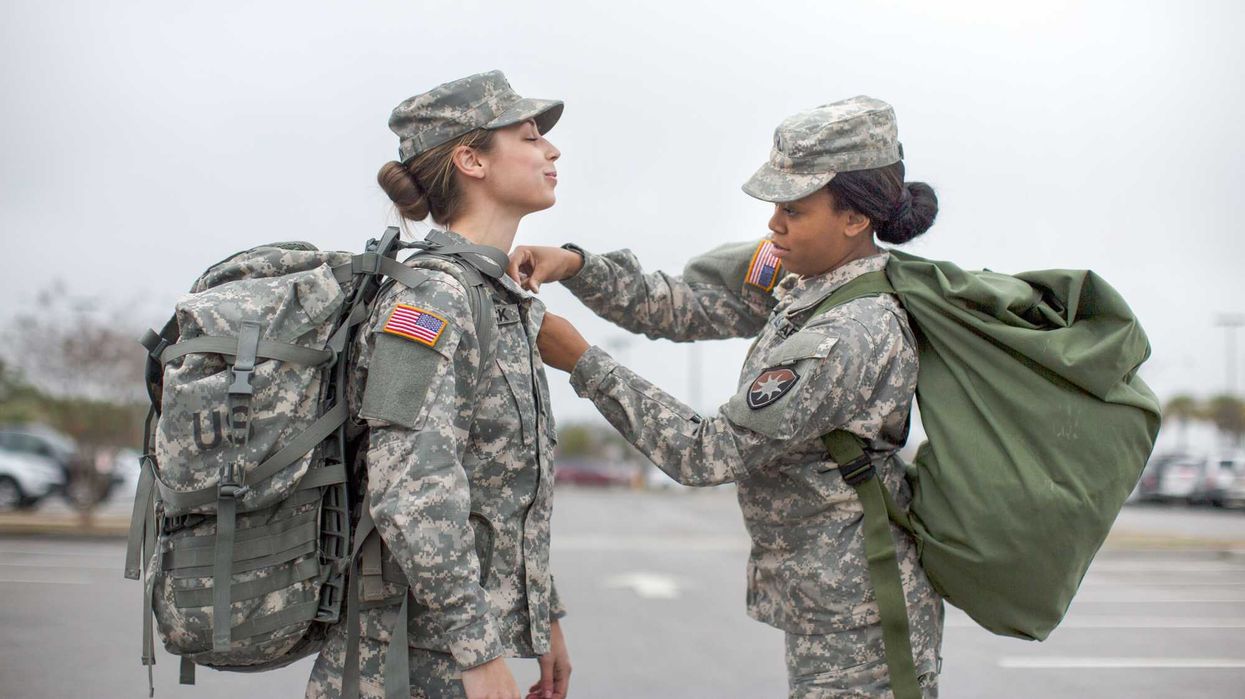

When Hegseth ordered all top brass to assemble in Quantico in September, he declared women could either meet male standards for combat roles or get cut. Strong message, except the military was already doing that, so Hegseth was either oblivious or ignoring decades of history. Confusion aside, it reaffirmed a goal Hegseth has made clear since his Fox News days, when he said, “I'm straight up saying we should not have women in combat roles.” Now, as of January 6th, the Pentagon is planning a six-month review of women in ground combat jobs. It may come as no surprise, but this thinly veiled anti-woman agenda has no tactical security advantage.
When integrating women into combat roles was brought to Congress in 1993, a summary of findings submitted that, “although logical, such a policy would [erode] the civilizing notion that men should protect . . . women.” Archaic notions of the patriarchy almost outweighed logic; instead, luckily, as combat roles have become available to them, more and more women are now serving, increasing military readiness. As it turns out, women are highly effective in combat. Khris Fuhr, a West Point graduate who worked on gender integration at Army Forces Command, calls this new review "a solution for a problem that doesn't exist." She says an Army study between 2018 to 2023 showed women didn’t just perform well in ground combat units but sometimes scored even better than their male counterparts.
The military stands corrected on several other missteps regarding integration. General Arnold wrote in 1941 that “the use of women pilots serves no military purpose,” only to have “nothing but praise” for them by 1944, and a survey in 1945 revealed that most white troops who claimed to have unfavorable views of integrating with African Americans changed their view to favorable after fighting alongside them. To that end, in a study with British Special Operations Forces, researchers discovered that almost all the male soldiers felt women had zero negative influence on their effectiveness in combat; those who disagreed had no concrete reasoning but just a feeling, or a fear that women might have an adverse effect in the future. Sounds like our Secretary of War might be crafting policy out of similar feelings and fears, which are notably not based in reality.
Unfortunately, these baseless biases are far more harmful to combat effectiveness than women being there. According to a study conducted by RAND National Defense Research Institute, the success of gender integration is influenced by whether men perceive women as competent and if women are “accepted as full members of their teams.” If unit cohesion is so impressionable, then whenever Hegseth casts doubt on whether women should hold these roles, he is sabotaging how much more effective these combat units could be.
The military is indeed a difficult place to be a woman, but not because of the mission. Women are more likely to be raped by a fellow soldier than killed by the enemy, and military leaders have repeatedly failed to live up to promises for reform. There are more unplanned pregnancies in the military than in the civilian world; since Dobbs, 40% of female servicemembers are now facing increased health risks simply by being stationed at one of the 100 bases within a state banning abortions. As a result, the likelihood of separation for women is 28% higher than for men. And these were the numbers before the Secretary of War made it harder to complain about assault, bias, and harassment. Alas, Hegseth may be deliberately making the military inhospitable to women to keep them from leadership. Starting with combat roles is strategic: if combat opportunities and physical strength become top metrics to measure leadership ability and competence, gatekeeping women from those roles keeps them subordinate.
The thing is, in the largest recruiting drought since the Vietnam War, the armed forces need women. Women represent a higher percentage of the recruitable population than men; back in 2018, the Navy’s then chief of personnel said of women: “That’s where the talent ishat’s where the talent is.” Plus, diversity is a critical force multiplier, while an overrepresentation of men has a negative effect on security policy initiatives. So why is Hegseth pursuing an agenda that weakens us? Beyond a blinding level of misogyny, it is unclear. Unless…if all the women left the military, then it could be whittled down to a horde of men indoctrinated in machismo and more loyal to specific leaders than the Constitution. Might that be the true goal?
As a nation, we need good people in uniform now more than ever. We must push on our legislators to not allow the military to continue on a war against women, but we must also uplift female servicemembers, and encourage male servicemembers to do the same. We can’t turn our backs–we have to have theirs.
Julie Roland was a Naval Officer for ten years, deploying to both the South China Sea and the Persian Gulf as a helicopter pilot before separating in June 2025 as a Lieutenant Commander. She has a law degree from the University of San Diego, a Master of Laws from Columbia University, and is a member of the Truman National Security Project.







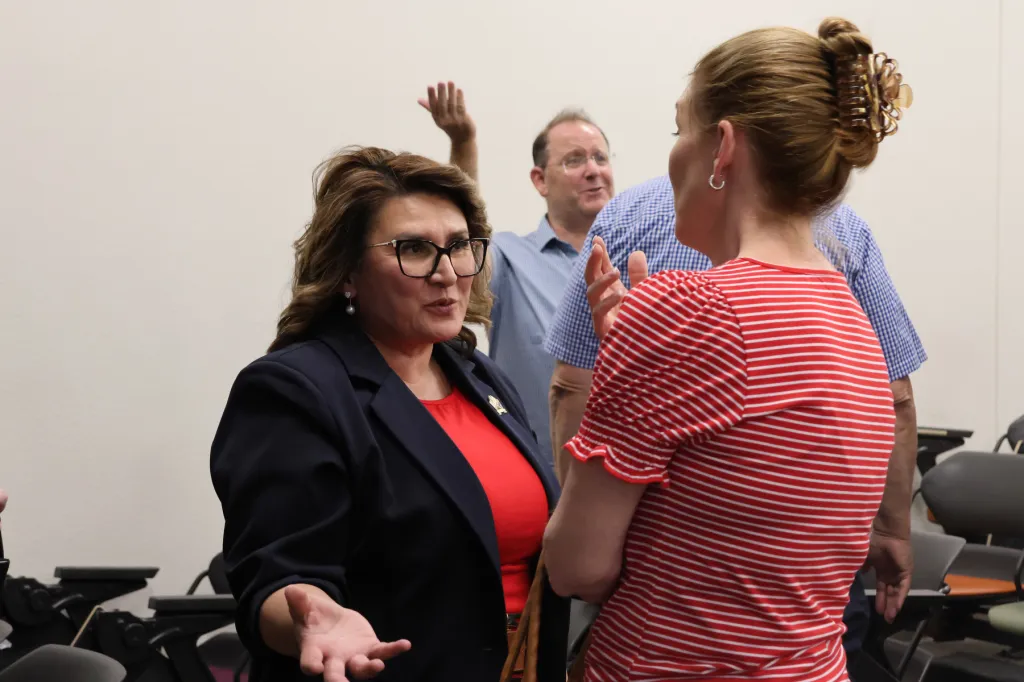 Congressional candidate JoAnna Mendoza has leaned into her working class background as she runs for a seat in the U.S. House to represent Arizona’s 6th congressional district. (Courtesy JoAnna Mendoza campaign)
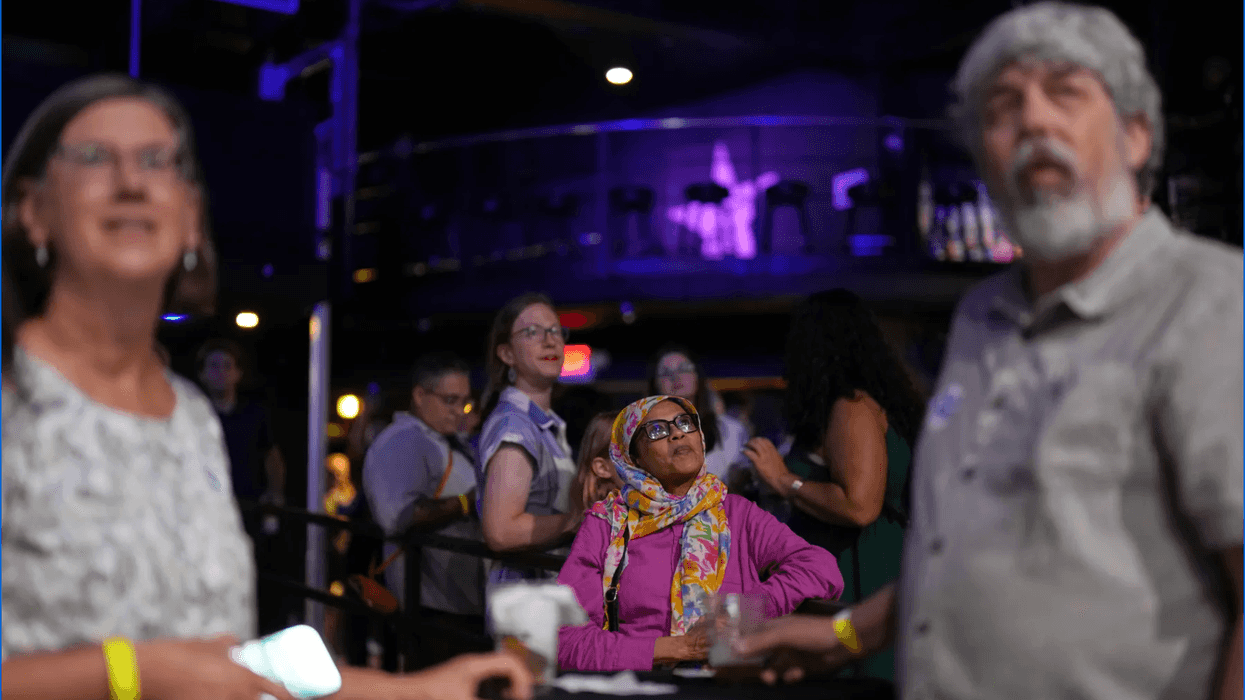
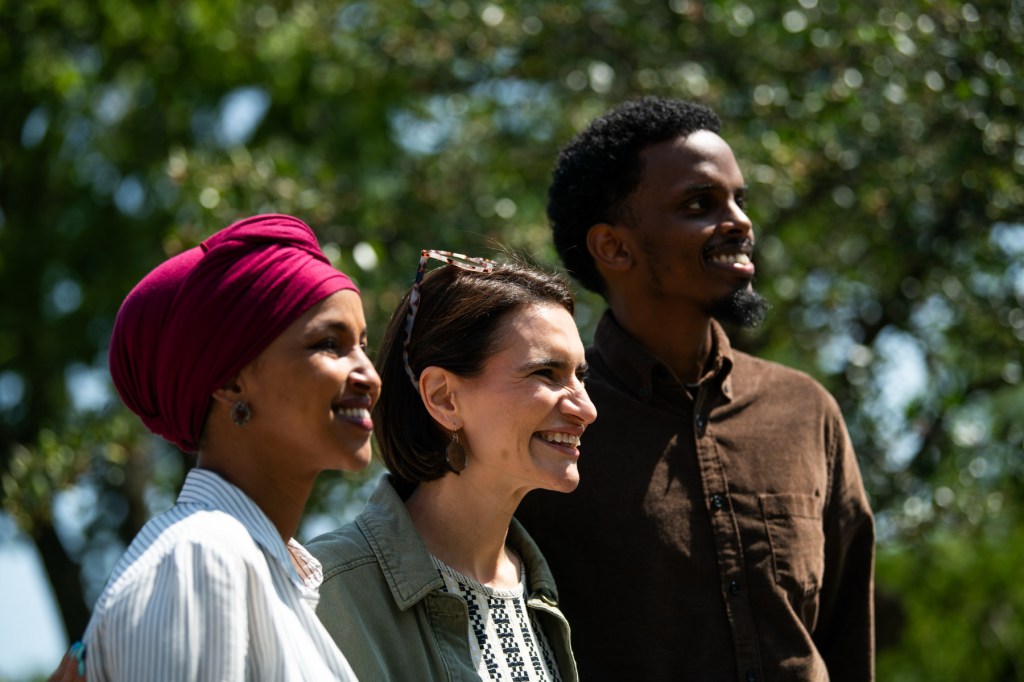 Politicians who come from working class backgrounds, like Minnesota Lt. Gov. Peggy Flanagan (center) and Minnesota state Sen. Omar Fateh (right), are resonating with voters during a particularly challenging economic period. (Stephen Maturen/Getty Images)
The President Invited Iran to Bomb My Home