


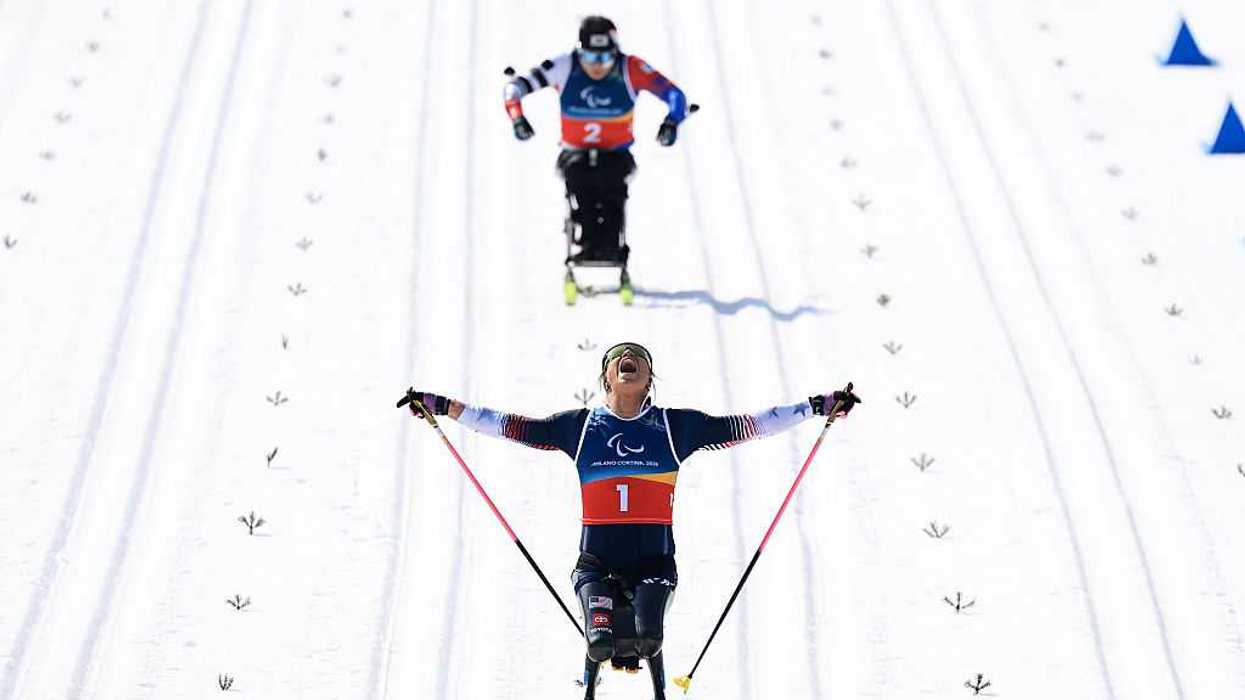

If you’re a sports fan, you likely watched coverage of the 2026 Winter Olympics in Milano Cortina. But will you watch the Paralympics when approximately 665 athletes are expected in Italy to compete in the Para sports of alpine skiing, biathlon, cross-country skiing, ice hockey, snowboarding, and wheelchair curling?
The Paralympics, so-called because they are “parallel” to the Olympics, stand alone as the globe’s premier sporting event for elite athletes with disabilities. According to the International Paralympic Committee, 4,400 disabled athletes competed in the 2024 Paris Summer Games in track and field, swimming, and twenty other sports.
Worldwide, viewers consumed 763.3 million hours of dedicated live coverage during the 2024 Paralympics, an increase of 83 percent from the Tokyo 2020 Paralympics. Yet audience viewership still far underperforms when compared to the Olympics.
As a scholar who teaches about and studies Paralympic sport, and who makes films highlighting Paralympic athleticism, I know why: I’ve seen how often Para-sport can be mistakenly viewed as an inspirational spectacle of athletes “overcoming” disabilities, displaying courage and resilience, but ultimately performing at a lower level than able-bodied athletes.
The reality is that the Paralympics are inspirational, but for different reasons. It’s elite sport at its most essential: focused athleticism, hard-core competitiveness, and record-breaking performances. And to watch it closely is to encounter some of the most complex questions sport has to offer—about fairness, performance, technology, and the body itself. For these reasons, the Paralympics offer a spectator experience that’s less about overcoming and more about mastery with diverse bodies.
For one, the Paralympics make us re-think who counts as an athlete. At the Paralympic Games, athletes with disabilities are missing limbs, they sometimes lack eyesight, and may use assistive devices such as wheelchairs and prosthetic limbs. Yet the athletes in our films view their disabilities as the fact that made possible their world-class Paralympic performances, rather than as impaired bodies defined by the able-bodied world.
Showcasing these athletes’ elite performances also raises important questions about how we define “excellence” in sports. In the Winter Paralympics, you can see double amputee skiers race at speeds up to 80 miles per hour on the same courses used by Olympic skiers. Meanwhile, sitting biathlon athletes will pole their way through courses ranging from 4.5 to 7.5 miles. Lower extremity amputees incorporate a variety of strategies to maintain and manage balance, all while attending to the intensive muscular demands of the solely upper body activity.
These unique bodies demonstrate unique athletic risks and skill demands—reason alone to watch the Paralympics. Excellence in Para-sport is not about overcoming impairment but about maximizing skill execution within the constraints and possibilities of a specific embodied configuration.
At the Paralympics, the question of fair competition pushes the boundaries of how we think about the fundaments of competition. Each Paralympic athlete is assessed by a team of experts who determine the level of function, ensuring that athletes compete against those with similar physical capacity but potentially different disabilities. Decisions about who competes against whom determine medals, funding, and careers. The result is a sporting environment in which fairness is not a questionable assumption but an ongoing negotiation, providing Paralympic audiences with a transparent view of the risks, challenges, and thrills of elite sport.
Yet, the assistive devices that some Paralympians require are sometimes scrutinized as “cheating” or unfair, as 2024 Paralympic high jump gold medalist Ezra Frech has experienced. But carbon-fiber blades, customized racing chairs, and auditory balls are not considered cheating in the Paralympics; they are part of the sport, just as specialized swimsuits, speed skates, and ski jumping suits are elsewhere.
And that’s part of what makes the Paralympics so valuable. It makes bodily differences visible by forcing us to ask difficult questions: What counts as an advantage? Where do we draw the line between technology and talent?
What goes without question is that the Paralympics offer viewers a powerful and expanded view of bodily possibilities and bodies of many configurations as athletes aim for the beautiful and superhuman performances that attract us to watch sport in the first place. Watching the Paralympics won’t just change how you see disability. It will change how you see sport itself.
Susan G. Zieff is Professor of Kinesiology at San Francisco State University and an independent filmmaker.











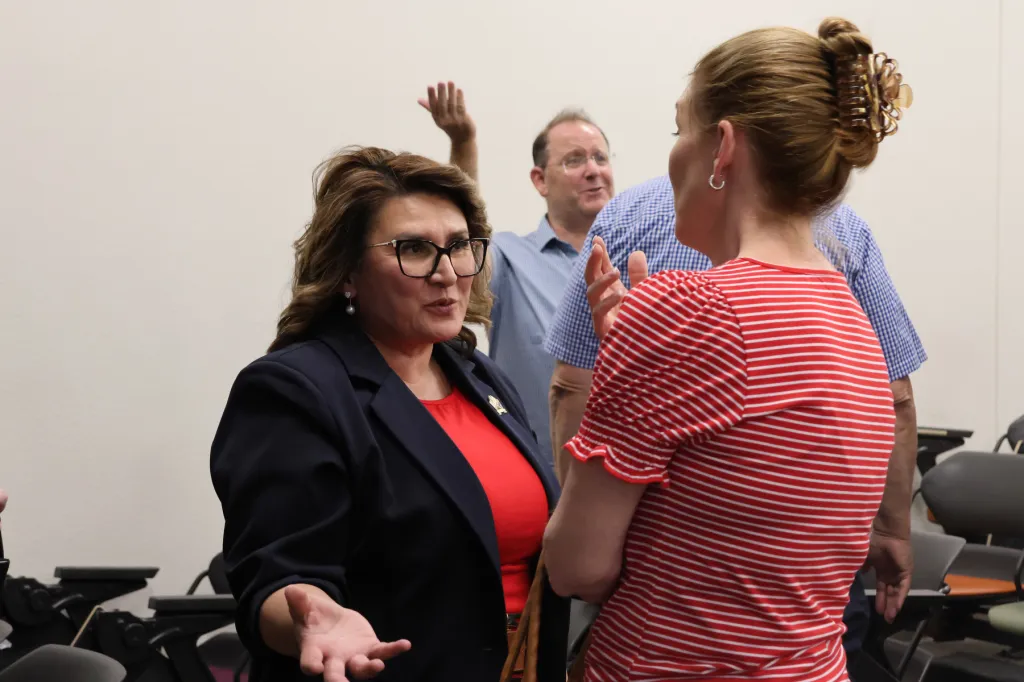 Congressional candidate JoAnna Mendoza has leaned into her working class background as she runs for a seat in the U.S. House to represent Arizona’s 6th congressional district. (Courtesy JoAnna Mendoza campaign)
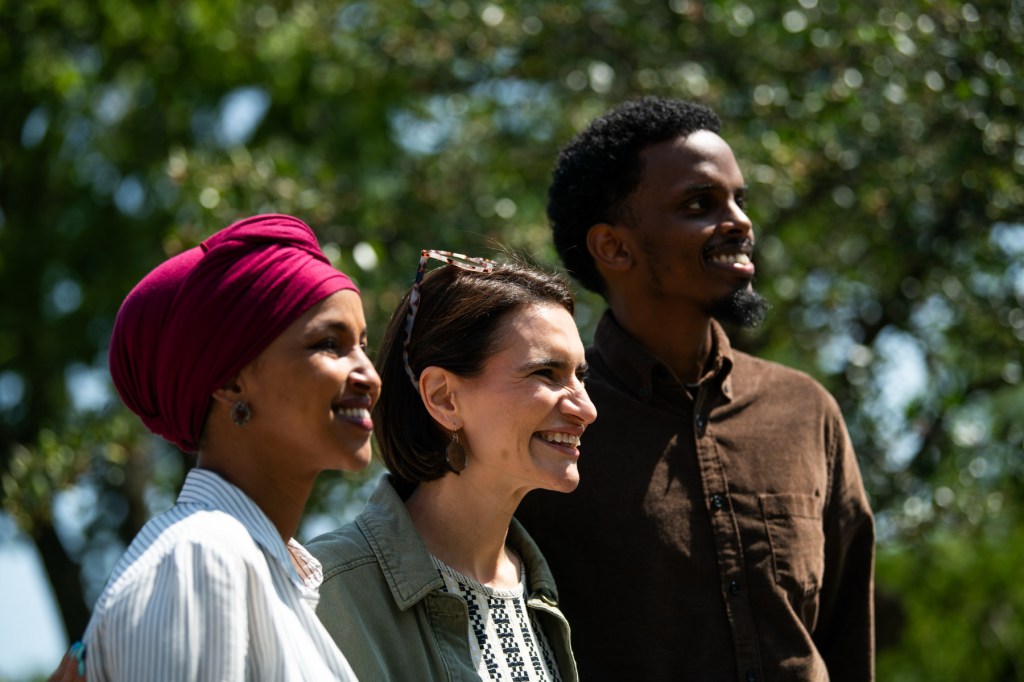 Politicians who come from working class backgrounds, like Minnesota Lt. Gov. Peggy Flanagan (center) and Minnesota state Sen. Omar Fateh (right), are resonating with voters during a particularly challenging economic period. (Stephen Maturen/Getty Images)