


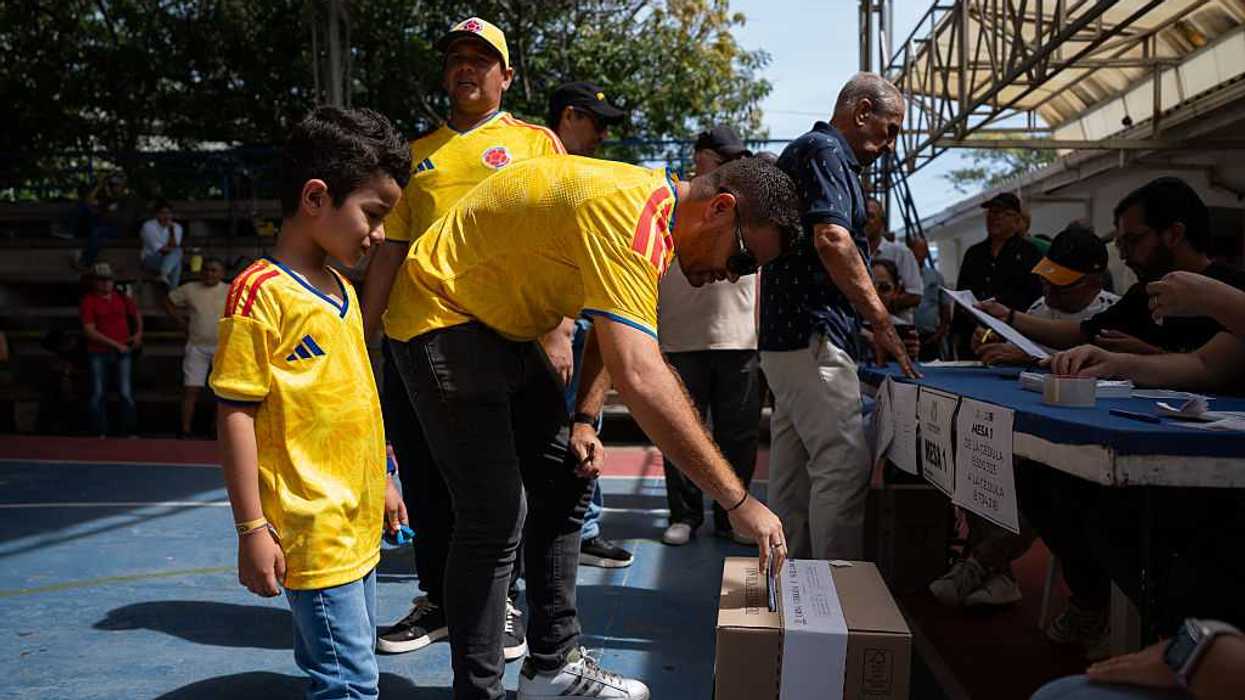

In a closely fought election on June 21, conservative outsider Abelardo De La Espriella prevailed over Iván Cepeda, an ally of current leftist president, Gustavo Petro. Central to the electorate’s choice were distinct policy proposals to fight criminality and the drug cartels, who control large swaths of Colombian territory. The policies president-elect De La Espriella will bring to the fight against these issues matter greatly, not only to Colombia, but to neighboring Ecuador and the United States.
Earlier in March, Ecuadorian President Noboa, desperate to gain traction in his own drug war, announced a partnership with the U.S. to conduct joint operations against drug cartels. The partnership quickly went awry. A New York Times investigation of the first strike indicates that what the joint militaries considered a drug camp was in fact a dairy farm, with no drug connection. Then, on March 17, Colombia accused Ecuador of bombing within its territory with U.S. involvement. These incidents resulted in U.S. lawmakers calling for a suspension of joint operations on May 13. Very quickly, the U.S. partnership has reopened the scars of the Plan Colombia era of the early 2000s, where an overly militaristic approach to the drug war funded by the U.S. resulted in human rights abuses and false positives.
As former Deputy Director of USAID’s mission in Colombia from 2021 to 2025, I’ve seen first-hand how these policies matter both in Colombia and Ecuador. When USAID closed in September 2025, my family and I moved to a small town in Ecuador. In my nine months there, I’ve experienced how the once-peaceful country has been transformed by the cocaine economy.
In Colombia, farmers plant coca and the cartels convert it into cocaine in hidden labs, but the drug is most often exported via Ecuador. During current Colombian president Petro’s tenure, cocaine production flourished, increasing 53% from 2022 to 2024, according to the UN.
Meanwhile, neighboring Ecuador’s murder rate increased by nearly seven times between 2020 and 2025, turning the once-peaceful country into the second-most dangerous in the hemisphere, following Haiti. It is estimated that 70% of the world’s cocaine passes through Ecuadorian ports and that 84% of cocaine in the United States is produced in Colombia.
Coca is grown in Colombia, crosses the border to Ecuador as cocaine, then proceeds to the U.S. and other markets. But, while the cocaine gets exported, it leaves behind horrific violence and crime in Ecuador.
Colombia’s approach to controlling drug production matters to Ecuador in three important ways. The first is through surging narco-on-narco violence. In late November, the small town where we live held its annual fiesta. One Sunday afternoon, with the party in full swing at the town’s soccer stadium and the police fully occupied with the event, a store owner and bystander were gunned down in the center of town, just 200 yards from our house.
The criminals had used the ongoing fireworks to disguise their gunfire. They calmly exited town, leaving behind a dead store owner and an innocent bystander and father, who had left his 7-year-old son in the car while making a quick purchase. The store owner was Colombian and was rumored to have minor involvement in the drug trade.
We were terrified by these events and questioned the wisdom of our decision to move back to Ecuador. We changed our routines and no longer took a daily run to the town’s market for fruits and vegetables, located quite close to the incident. It served as an unpleasant reminder that we were no longer in the Ecuador of our memories.
Next, the cocaine economy has transformed Ecuador by allowing property-related crime to flourish. As police focus on the increase in drug-related crime and violence, their focus on common crime has weakened.
In March, in a neighboring town, a beloved priest, Father Max, was murdered in his home. The outrageous act in highly Catholic Ecuador stunned my neighbors, normally inured to daily reports of crime, like purse-snatchings and break-ins. Neighbors said that laptops and televisions were stolen from Father Max. Others added that the Swiss-born priest had not taken rising crime seriously enough and thus became an easy target for criminals.
Lastly, Colombia’s cocaine economy has transformed the two countries’ bilateral relationship. In January, Ecuadorian president Daniel Noboa raised tariffs on Colombian goods by 30%, stating that Colombia had done little to stem the flow of cocaine into Ecuador and calling the tariffs a “security tax.” Noboa called out a lack of cooperation from Colombia, stating, “Given the lack of reciprocity and decisive action, Ecuador will apply a 30 percent security tariff on imports from Colombia starting February 1.”
Colombia reciprocated and refused to sell electricity to Ecuador. However, on June 1, the dispute was resolved, and tariffs on both sides were eliminated.
The whole episode greatly impacted trade and the economy, especially in much-smaller Ecuador. For regular citizens, Colombian goods disappeared from supermarket shelves, power outages became more common, and the principal border crossing was often closed by protesters.
Colombia’s election matters for Colombia, Ecuador, the United States, and the region as a whole. It's critical that President-elect De La Espriella implement serious and effective policies to reduce cocaine production for its own citizens’ welfare, but also for its neighbors in Ecuador. Doing so will give Ecuadorians a chance to bring back the much-valued security they had enjoyed for years.
Jeremiah A. Carew was the deputy mission director of the U.S. Agency for International Development (USAID) in Colombia from 2021 until the mission’s closing in August 2025. Over his 21-year career with USAID, he served in Peru, Afghanistan, Uganda, Vietnam, South Sudan, and Washington, D.C. He currently resides in Ecuador, where he writes on international development topics for Razón Pública in a monthly column; his work has also appeared in Foreign Policy, El Tiempo and the Foreign Service Journal.













The President Invited Iran to Bomb My Home