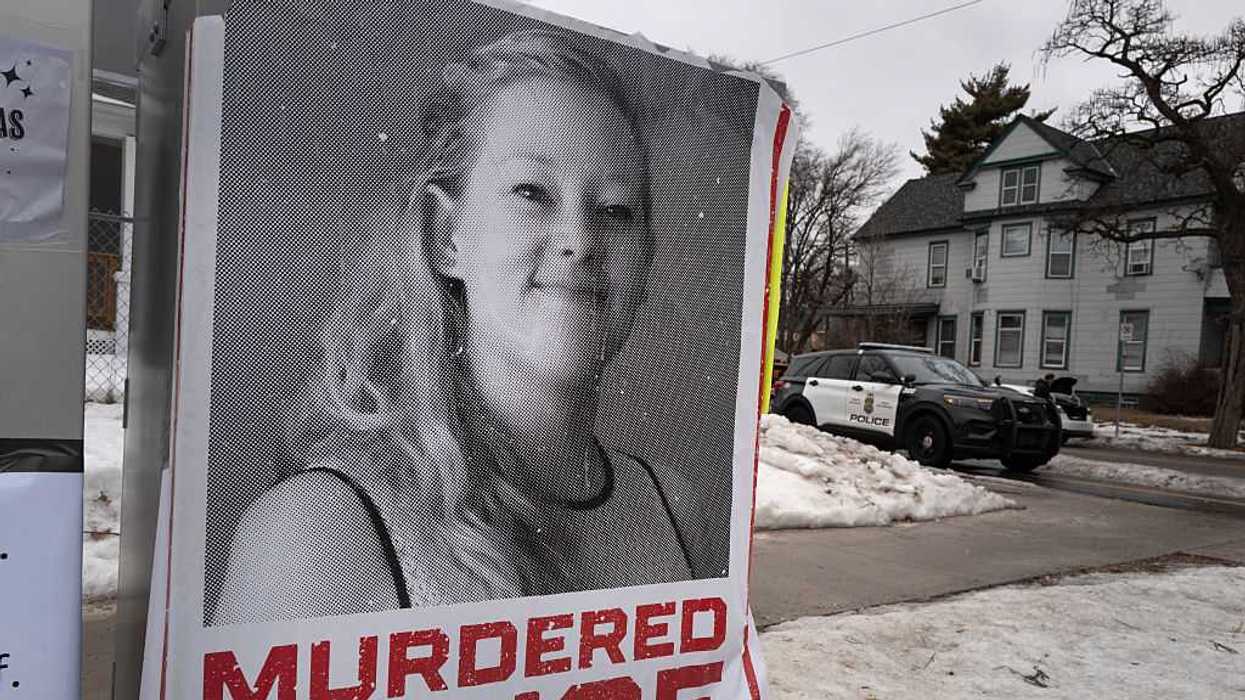
Across the United States and the world, millions are still processing the recent killing of Renee Nicole Good in Minneapolis by ICE agents. Reactions have intensified as more recently ICE agents shot a Venezuelan man in the same city, and additional National Guard troops have been deployed there.
Many were shocked learning of Good’s shooting, and the shock grew as more information and details about the events leading up to her death, as well as facts about Good herself.
Initially, so many assumed that the then-unnamed victim was suspected of being an illegal immigrant and was probably a person of color, traits that have defined so many victims of the excessive use of force by law enforcement in today’s America.
Then her name was released and, bit by bit, I learned that she was a lot like me: a white married mom with three kids and a big dog. And like me, she was once an aspiring poet.
To be clear, Good’s poetry was not a factor in her death, but she was doing what poets do. She was using her voice by registering her presence in support of her neighbors who might be under threat from ICE.
Watching the videos of the moments before her death, I try to summon my own voice to write a poem to mark those moments, but the words do not come. Politics can be murder on poetry. And lead to the murder of poets.
The Soviet Union infamously executed poets on August 12, 1952, an event remembered as “the night of the murdered poets.” This secret mass execution of 13 prominent Soviet Jewish intellectuals in Moscow's Lubyanka Prison included the deaths of renowned Yiddish writers, poets, actors, and scientists.
Among them were five celebrated poets and writers. Years before that, in 1936, in Spain, Federico Garcia Lorca was executed by right-wing military forces during the Spanish Civil War, persecuted for his liberal beliefs and homosexuality.
The persecution of poets is not just about long-ago dark historical times; today can also be considered a dark historical time. At least 375 writers were jailed around the world in 2024 in connection with their speech, according to PEN America’s latest Freedom to Write Index—67 of them were poets.
Tweetspeak, a website devoted to poetry and poetic things, includes an inventory of poets who have spoken out, an inventory that impresses and depresses.
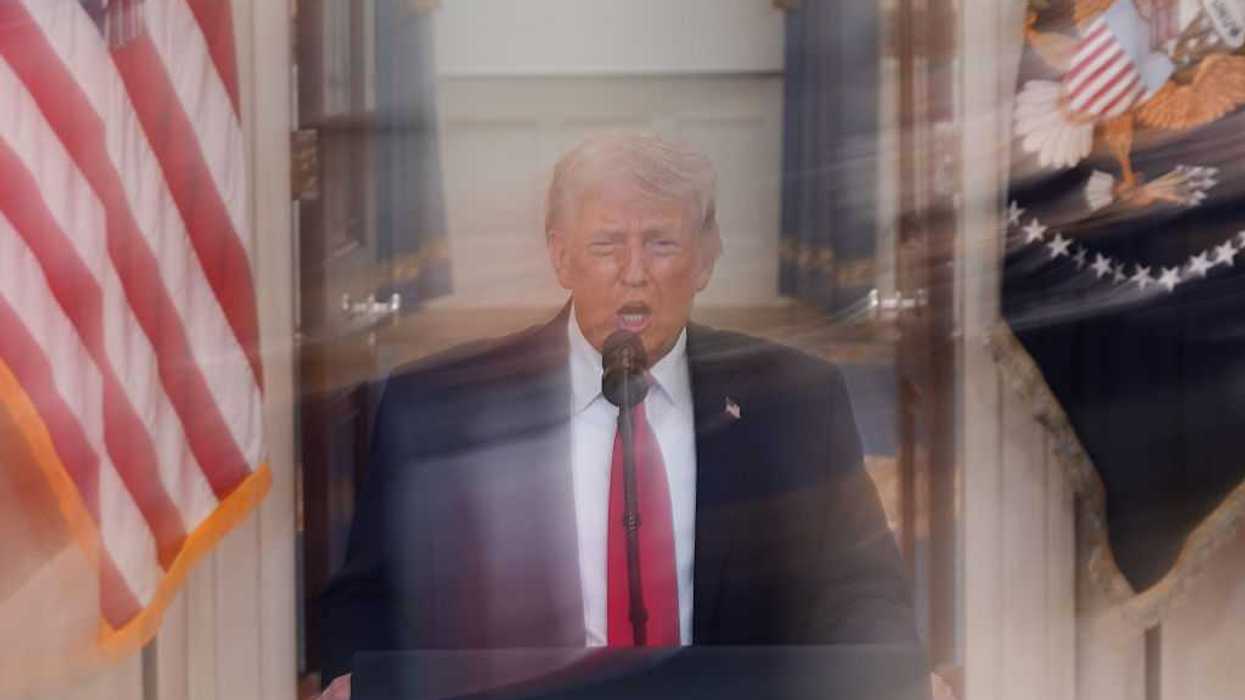
President Donald Trump recently offered as one justification for Renee Good’s death that she was being “disrespectful.”
While poets hold deep respect for truth and beauty, poets are not afraid to show disrespect for ugly lies. If standing up to falsehood is disrespectful and that disrespect is punishable by death, poets and protestors need to fear for their lives.
National Youth Poet Laureate Amanda Gorman wrote in response to the murder, the poem, ”For Renee Nicole Good Killed by I.C.E. on January 7, 2026. It begins: “They say she is no more,/ That there her absence roars,/Blood-blown like a rose./ Iced wheels flinched & froze.”
Good’s death and the federal government’s rush to try to rationalize that death mirror the recent silencing of a Texas A & M University philosophy professor who was told to remove a reading from Plato’s Symposium from his syllabus.
One section he was directed to remove concerns Diotima's Ladder of Love. The Ladder is a philosophical ascent from physical attraction to a beautiful body, ultimately progressing to the eternal and absolute Form of Beauty itself. It's a metaphorical path, with each rung representing a deeper understanding of beauty. It is a text that is poetic in its language and use of metaphor. If Texas A&M’s policies and actions are any indication, apparently even poets who are already dead should be silenced.
It’s been more than 30 years since I decided that poetry would not pay my bills, and I moved on to work as a publisher and librarian. For 13 years, I have been a faculty member at the University of Illinois Urbana-Champaign's School of Information Sciences. I direct the school’s Master of Science in Library and Information Science program, which is ranked the best in North America by U.S. News & World Report.
My youthful poetic aspirations and my mature professional ethics share a commitment to preserving the truth and making it visible, to clarity and to deeper understanding.
As a poet, educator, and librarian, I urge everyone to protect poets, protestors, and all who speak truth to power.
One of the dissident poets cataloged on Tweetspeak, the Syrian poet Adonis, who was imprisoned for his political activities, says, “As long as death is there — and death exists — there will be poetry. Poetry will never be silenced.”
Renee Nicole Good was silenced. Everyone must keep listening to the poetry of her resistance and of all those who universally value the beauty of truth.
Maria Bonn is an associate professor of Information Science at the University of Illinois Urbana-Champaign, where she directs the Master of Science in Library and Information Science degree program. She is a Public Voices Fellow of The OpEd Project