In peace, sons bury their fathers. In war, fathers bury their sons. (Unknown)
Isn't burying a child every parent’s nightmare? The ultimate devastation one can endure? A wrong which can never be righted?
Our earth is vast, the political conflicts many, and the dangers relentless. There are those who commit acts of war in order to provoke, there are perpetrators wanting more land, more power, more resources, or those who maintain that it is critical to go to war to circumvent a yet more disastrous future conflict.
But war is yet war, albeit often staged on the other side of our planet. Thus, it can take on an esoteric quality, demanding only our sporadic attention, not deeply affecting us. It is far too easy for us to lose our grasp of the inevitable atrocities of waging war.
That is, until it hits home—until we see children suffering, or until a soldier we know personally is killed, or a friend or relative suffers the secondary results of war, is starving, destitute from battle, homeless, and we are plunged into the realities of war.
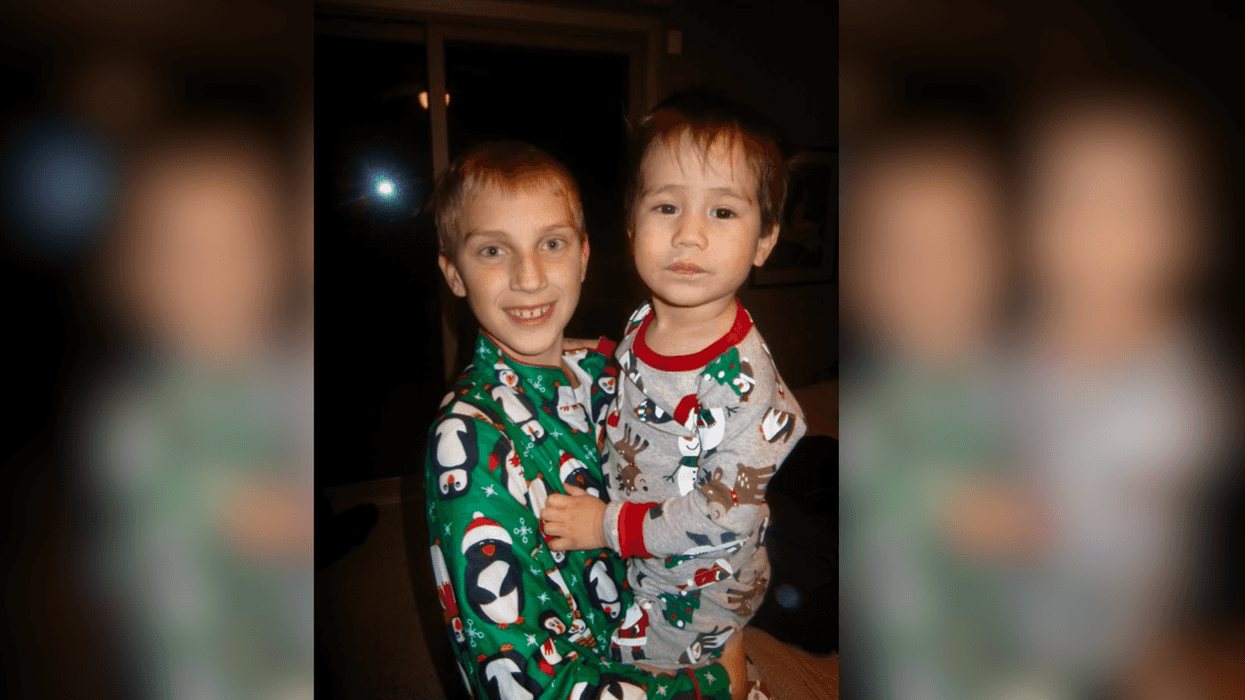
Our son, Michael, was adopted from Kharkiv, Ukraine, in 2004. Kharkiv is only twenty miles from the Russian border, and was one of the first cities the Russians attacked on Feb. 24, 2022, FOUR long years ago.
Eight years after adopting Michael from Ukraine, we adopted another son, from St. Petersburg, Russia, whom we named William.
Ukrainian and Russian connections run deep, and this terrible war is rendered even more heartbreaking by their common heritage. Until 1991, Ukraine was part of the Union of Soviet Socialist Republics, and almost 80% of the citizens of Kharkiv spoke Russian. Since the war began, there has been a major shift to using the Ukrainian language instead.
Michael is a blue-eyed blonde; his birth parents are from Russia, but were living in Kharkiv. William has dark hair and eyes, and his birth mother was likely from Kazakhstan, working in Russia when she gave birth. But these details do not matter.
One of the boys is tall, and the other is of average height. This does not matter, either.
One of them is quiet, the other not so much. Again, doesn’t matter.
What matters is that Michael and William are now brothers, in every sense of the word. They beat each other up, compete with each other, torment and tease each other, and, of course, adamantly defend the other.
Something else also matters. Despite being born in countries now at war, both boys are Americans. They have been U. S. citizens from the moment we returned with them and set foot on American soil.
Michael and William’s relationship has nothing to do with borders, country of origin, or birth history. It has everything to do with family.
As every other person does. We are all connected through our humanity. We love our children, we want the best for them, and we want them to live long, healthy, and productive lives. We might even all claim to be family, or in the broader sense, part of the “family of man.”
We’ve all got a union, beyond color and race, each of our journeys is unique.
But they lead to a common place… (Anita Baker).
Had they not been adopted, Michael would likely be fighting to defend Ukraine. William, who just turned sixteen, most likely would have been conscripted in the recent Russian push and sent almost immediately to the front lines.
Brother against brother, fighting to the death. We’ve done that in our country, with long-lasting and devastating consequences. We called it “The Civil War.”
Our country has been distracted from the Ukrainian battle and from other fights around the world by Operation Epic Fury, whose mission is to bomb and destroy Iran’s nuclear missile capabilities. Now war is spreading across the Mideast, with American bases being targeted, and other countries in the region entering the fray.
Let us not, in all our glorified fighting, forget there are unintended casualties of these battles, possibilities of great destruction to innocent people. In the sweep of our latest conflict, our ultimate mission must be to help END the fighting, to seek solutions, to stand up for the values we insist we stand for.
Every war involves a greater or lesser relapse into barbarism. War is the essence of inhumanity. It dehumanizes. It may save the state, but it can destroy the citizen. (Boree)
The world is watching.
On our watch, let us endeavor to work toward peace, to exhaust other possibilities before we employ violence. And if we must wage war, let us remember our common humanity. Let us strive always to fight the good fight.
Amy Lockard is an Iowa resident who regularly contributes to regional newspapers and periodicals. She is working on the second of a four-book fictional series based on Jane Austen’s “Pride and Prejudice."






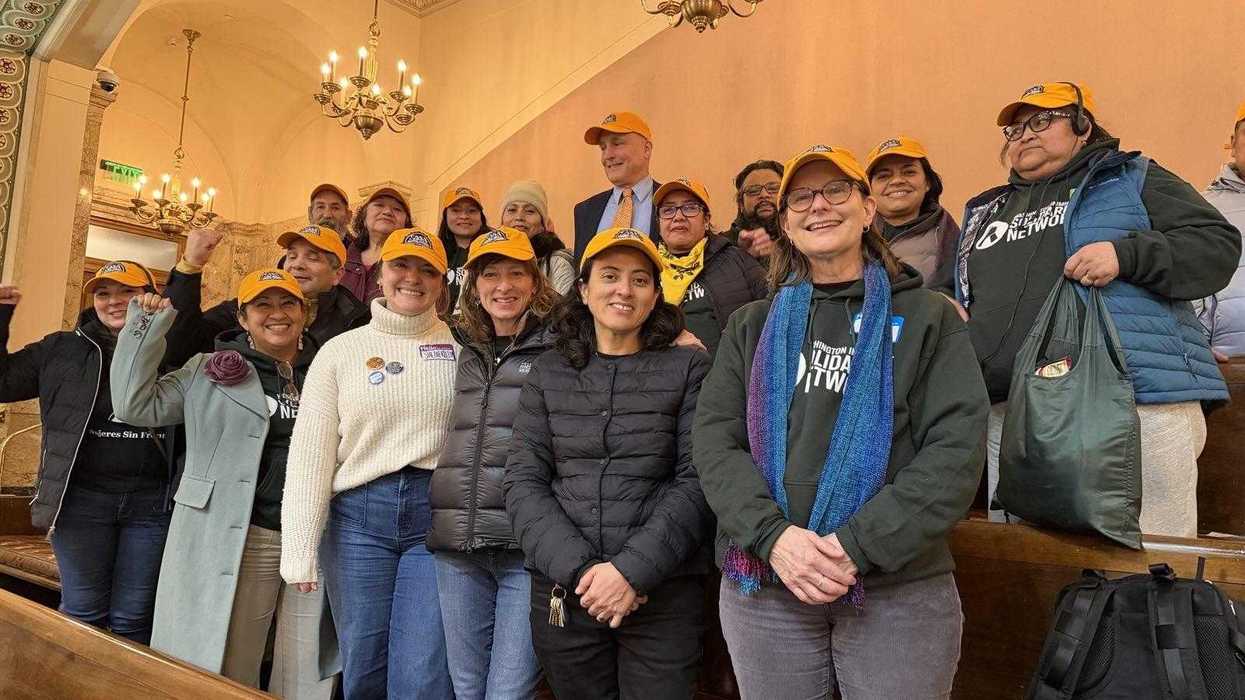
 State Sen. Rebecca Saldaña, center, stands with members of the Washington State Domestic Workers Coalition at the state Capitol on Feb. 28, 2026. The Domestic Workers Bill of Rights passed in the House that day, before being signed into law in March. (Photo courtesy of Casa Latina)