
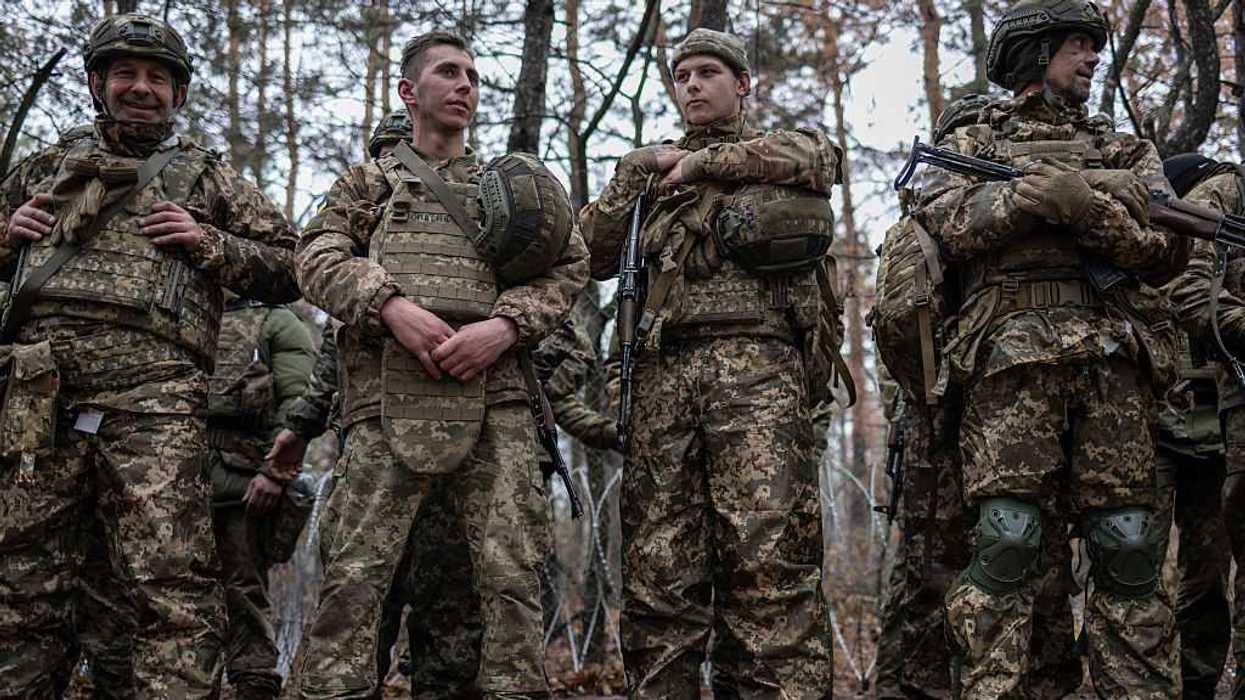

“I have very good news,” beamed former Ukrainian POW and human rights activist Maksym Butkevych, looking up from his phone. “150 Ukrainian prisoners of war have just been released. One is from my platoon.”
This is how I learned about last week’s prisoner exchange during a train ride from Champaign to Chicago. In addition to the 150 Ukrainian defenders, seven citizens were released on February 5 in an exchange with Russia.
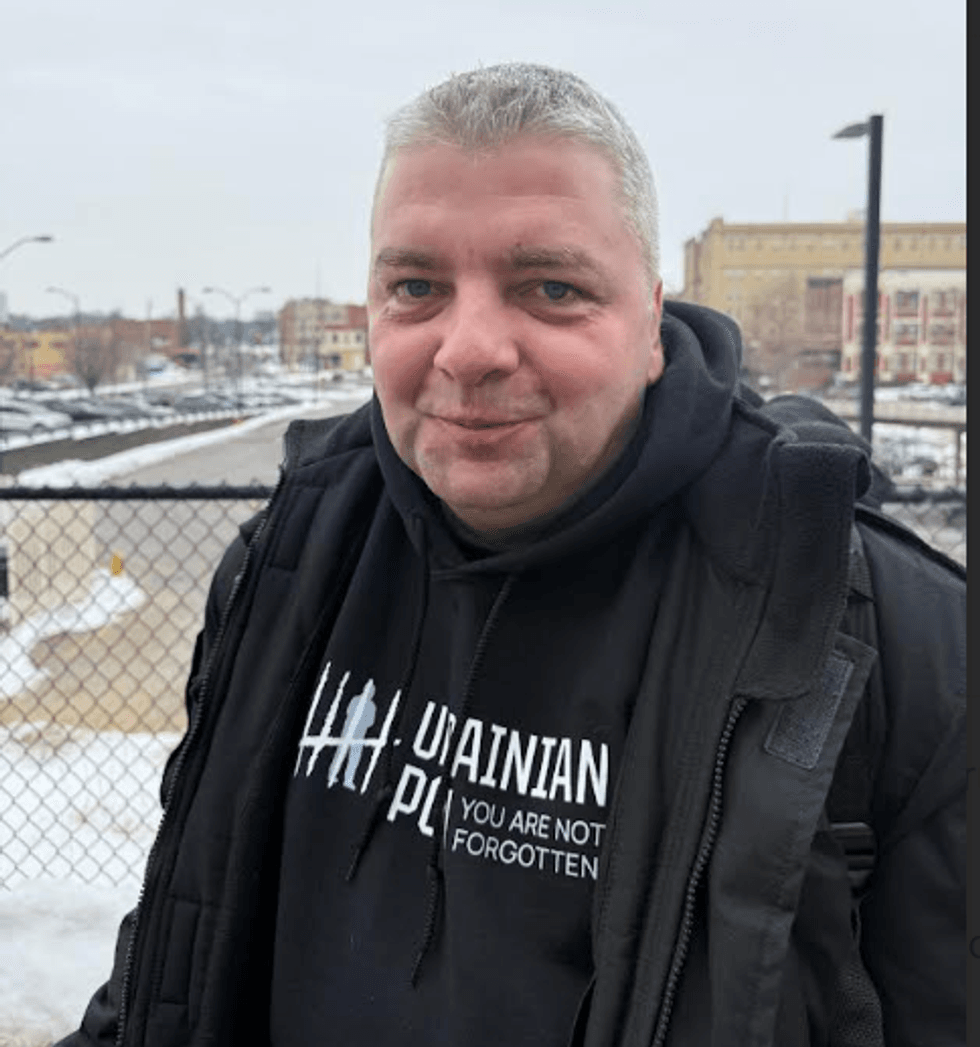 Maksym Butkevych
Butkevych, the 2025 Václav Havel Human Rights Prize recipient, was my seatmate on the train. He had been held in Russian captivity for two and a half brutal years. He was released in a prisoner exchange in October 2024.
He wore a black sweatshirt with white lettering: “Ukrainian POW You are not forgotten.”
Butkevych was on the Amtrak train between talks at the University of Illinois Urbana-Champaign and the University of Chicago when he heard the news of the latest swap.
Butkevych, 48, had become a volunteer platoon commander for the Ukrainian Armed Forces after the Russian invasion in Feb. 2022. He and eight members of his platoon were ambushed and taken into captivity in June of that year, during the battle of Sievierodonetsk in eastern Ukraine. The long-time human rights activist and journalist, who had worked with the BBC and Amnesty International, was later charged by the Russians as a British spy, propagandist, and war criminal. He was forced to make false video and written confessions. He was sentenced to 13-years imprisonment. All part of a well-tuned Russian propaganda show.
In an NPR interview following his release in 2024, he described beatings, torture, and forced re-education. In Russia, he said, “people are disposable material, are valued only when they serve the state.” Russian disregard for human rights along with contempt for international law is well documented. A December 2025 OSCE report noted “widespread and systematic use of torture against Ukrainian POWS,” denial of POW status, inhumane detention conditions, and arbitrary killings.
As we rode the train, his “first American train ride,” Maksym and I talked about the cities he’d visited in the US, the book his friend (another released Ukrainian POW) was writing, the weather (when unspeakable topics created pauses), and the theatre. The theatre in Mariupol. (Unspeakable pause.) The theatres in Kyiv, his hometown.
“It’s hard to get tickets, actually,” he said of performances in Kyiv, where he’d return in a few days. As a theatre scholar, I’ve been thinking about the role of theatre in such times.
I told Maksym about The Reckoning by Dash Arts in London, written by Anastasiia Kosodii and Josephine Burton, based on testimonials of war crimes documented by the journalists of The Reckoning Project. We talked about the importance of the court of public opinion and keeping the European and American public focused on supporting Ukrainians, devastated by years of Russian brutality and efforts at dehumanization. The theatre continues to play a role in the defense against this attack. Kyiv’s Theatre of Playwrights, for example, works with the Center for International Theatre Development to build solidarity and support for Ukraine across cultures, to document traumatic events, and to cultivate community and care.
Maksym, too, has been focused on cultivating community and care—for released Ukrainian POWs. As co-founder of the charitable organization Principle of Hope, he works to help those released from captivity and facilitate their reintegration. Part of his mission includes keeping the international community aware of these POWs and engaged in efforts for their release.
The most recent prisoner exchange of 314 prisoners between Russia and Ukraine on February 5 marked the most tangible result of diplomatic efforts between the US, Russia, and Ukraine in months. A cause for celebration, certainly, for those released and their families and friends. Nevertheless, more than 6,000 Ukrainian POWs are thought to be in captivity in likely inhumane conditions.
Of course, providing Ukraine with air-defense weapons and other supports that will pressure Russia to negotiate to end the war in earnest, is the best way to save lives from Russian aggression. But as The Atlantic writer Anne Applebaum pointed out this week on Substack, the war has grown more deadly since Trump returned to office. Russian attacks on civilians and infrastructure are wreaking devastation in a dangerously cold Ukrainian winter.
Maksym described the bitter cold. He spoke of the warming stations where families could go for a few hours of warmth in areas where electricity had been completely shut off for weeks. I thought about how I’d prepared for a major winter storm just a few weeks ago, relieved that the power hadn’t shut down. My cell phone had stayed charged. The water kept running.
Walking through Chicago’s Union Station with a former Ukrainian POW and waving goodbye as he finally got to have that cigarette on the street corner, I couldn’t help feeling awe and a sense of responsibility. A responsibility to remember.
Ukrainian POW, You are not forgotten.
Valleri Robinson is an Eastern European theatre scholar focusing on performance in precarious times. She is the Department Head for Theatre at the University of Illinois Urbana-Champaign and an affiliate faculty member of the Slavic Languages and Literatures. Department.








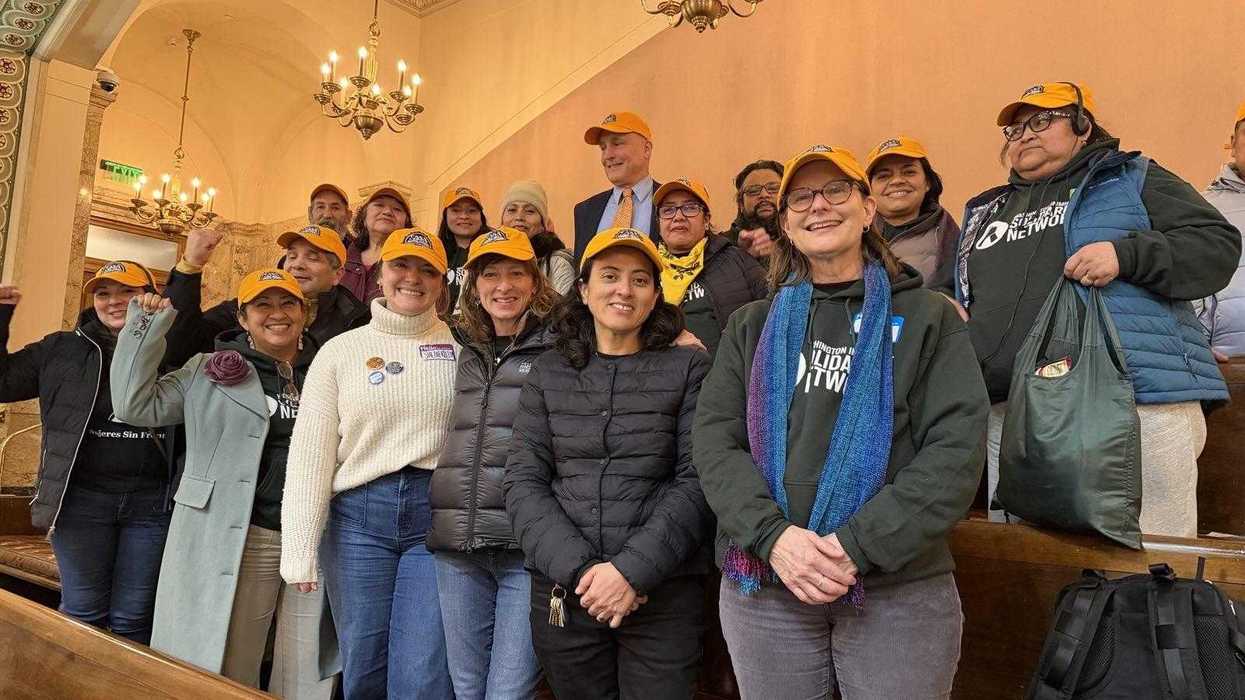
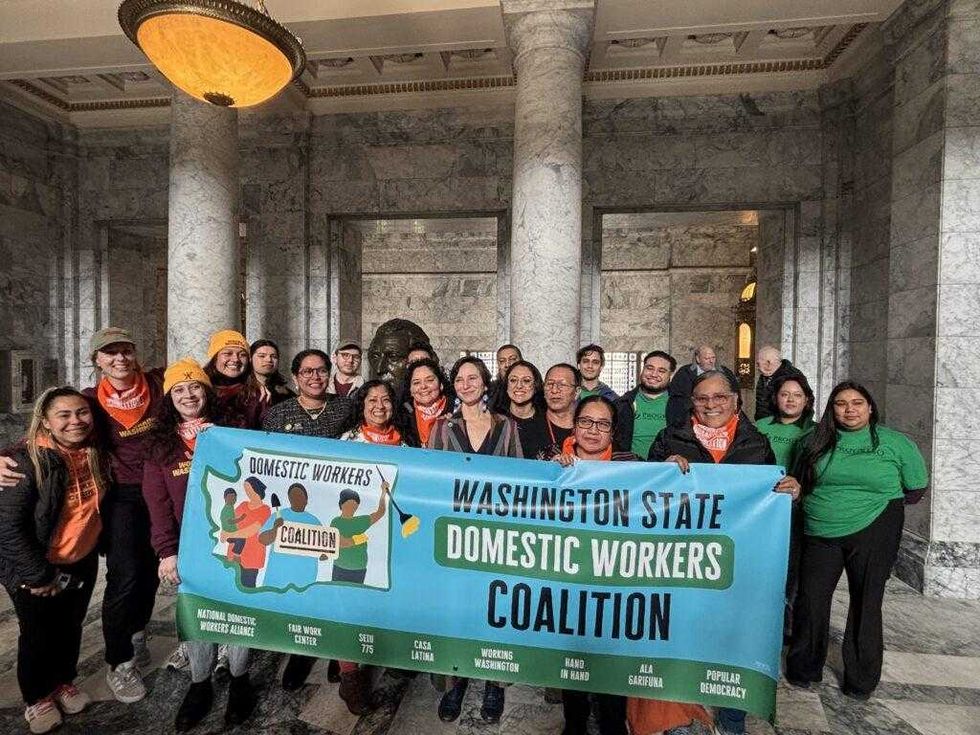 State Sen. Rebecca Saldaña, center, stands with members of the Washington State Domestic Workers Coalition at the state Capitol on Feb. 28, 2026. The Domestic Workers Bill of Rights passed in the House that day, before being signed into law in March. (Photo courtesy of Casa Latina)