


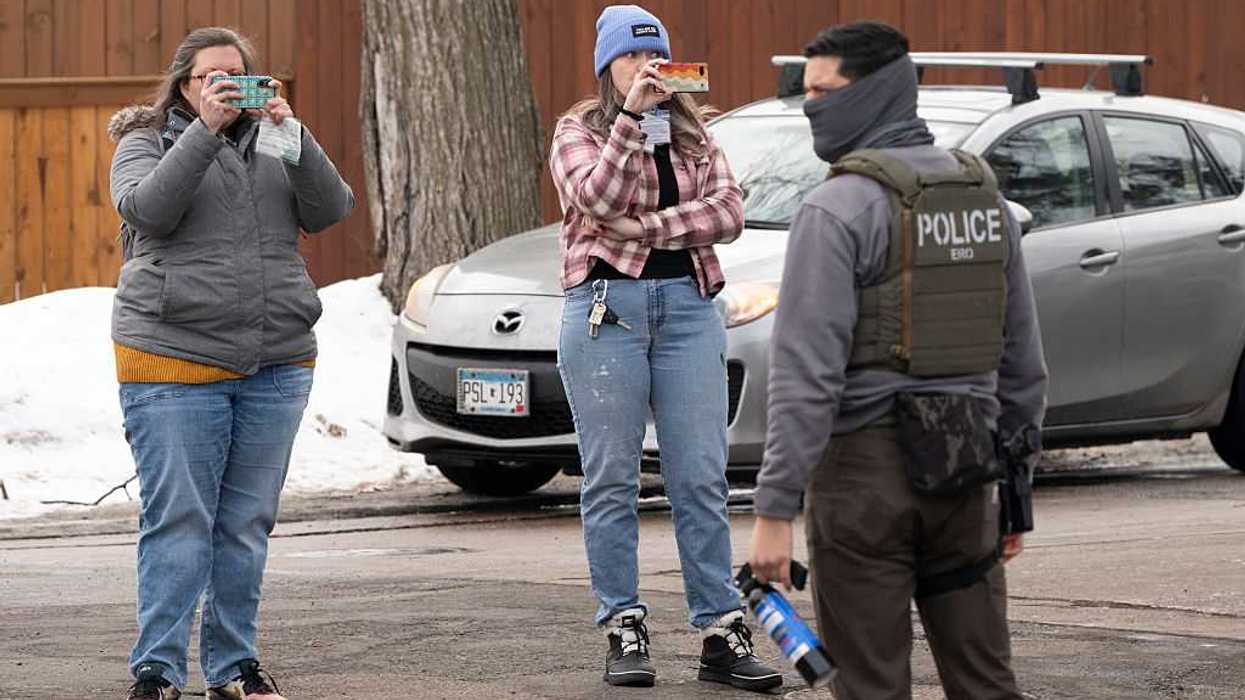
The resistance to the Administration’s mass deportation policy is growing, and there is no doubt about it. In Minnesota and across America, people from all walks of life are joining peaceful protests, following cars driven by Immigration and Customs Enforcement (ICE), taking pictures of their license plates, sharing information across encrypted chats, blowing whistles to alert neighbors about ICE raids, driving immigrant children to school, and delivering groceries and medicines to immigrant families under siege.
These are not spontaneous activities, but a coordinated grassroots response driven by outrage at the brutality and apparent disregard for the rule of law shown by federal agents who have de facto occupied entire cities. It is not just ordinary people, but also faith leaders, veterans, business owners, and retirees who feel called to protect their neighbors and take a stand for democracy in the country they love.
In today’s America, being present and bearing witness is an act of defiance. Both Renee Good and Alex Pretti, the two American citizens shot and killed by ICE agents in Minneapolis, were de facto witnesses to ICE raids. I have been thinking a lot lately about the concept of “bearing witness” in a world that is increasingly unstable and in a country that appears to be rapidly slipping towards authoritarianism.
The videos of the shootings of Good and Pretti, taken by bystanders, shed light on the value of being present and documenting events in real time. They dismantled the Department of Homeland Security’s official narrative and exposed falsehoods repeated by senior cabinet officials.
Gordon Davies*, a 78-year-old veteran and observer in Minneapolis, tells The Fulcrum that, “It all goes back to George Floyd. If that teenage girl hadn't been filming his murder, the cops would have gotten away with it. The video proved the narrative of the police was a lie. That's the principle we're building on. We record everything, so they can't lie. We have video proof and can hold them accountable.”
Videos are powerful tools for capturing the facts, especially in the era of fake news, but so is the simple act of showing up and being present to someone else’s suffering, in solidarity, and without judgment. It is about recognizing our shared humanity when entire communities are being othered and dehumanized.
“Bearing witness is a key element of both shifting the narrative and speaking truth to power,” said to The Fulcrum Reverend Adam Russell Taylor, President of Sojourner, a Christian nonprofit organization focused on the biblical call to social justice. “As Dr. King so often noted, ‘unearned suffering’ can be redemptive, and exhibiting courage by challenging the abuse and misuse of power can often lend courage to others to speak out and engage in noncompliance.”
Unfortunately, the very act of bearing witness can come at a cost. The word “martyr” derives from the Ancient Greek mártys, which literally means “witness.” The Merriam-Webster dictionary defines martyr as “a person who sacrifices something of great value and especially life itself for the sake of a principle.” Both Good and Pretti are, in a sense, modern-day martyrs.
In a video interview, Elie Wiesel, the Romanian-born American author and Holocaust survivor, who received a Nobel Peace Prize for his memoir Night, which documented his internment at the Auschwitz and Buchenwald death camps, says, "I firmly believe that anyone who listens to a witness becomes a witness. So, those who hear us, those who read us, those who learn something from us, they will continue to bear witness for us. They are doing it with us, but at a certain point in time, they will do it for us."
When ordinary people step out of their comfort zones to bear witness to others' suffering, they not only show empathy but also consciously choose to put themselves at risk. “I am a white woman, a widow, and I don’t have any children. I have so much privilege and using it as a shield is the only thing I can do right now,” said Lynn Williams* a 41-year-old woman in Minneapolis trained as a rapid responder and active in mutual aid networks. “I feel it is my duty to physically show up, be present, and witness the pain around those who are targeted. My sacrifice is to stand in discomfort while ICE agents yell vile things at me.
While the federal government is attempting to cast observing as interference with the enforcement of law and order, legal experts challenge that claim and say it is a right protected by the First Amendment.
In an episode of the 1A show dedicated to ICE and the ICE watchers aired on National Public Radio on February 3, Will Stancil, a civil rights attorney and policy researcher from Minneapolis, said the act of observing serves three purposes. First, it is about gathering information about the people who are being abducted. “If there was no observing, there would be no record of who is being snatched off the streets. Secondly, ICE is doing many things that are illegal. Having eyes on them can limit their reckless abuse of authority. Finally, you are creating a record also for the broader public, which is essential.”
The level of risk one is willing to take is subjective, but that is not the point. Observing and being there for those in distress is what matters. It lets people know they are not alone. “I see my role as providing emotional support because people are terrified,” said Elaine Nelson*, a 68-year-old retired teacher in Minneapolis who accompanies immigrants to court hearings, participates in faith vigils, and delivers groceries to families too afraid to step out of the house.
For journalists and first responders, bearing witness is at the core of their profession. Journalists have a duty to report the facts and record history, while first responders are tasked with saving lives. Julia Rendleman, a photojournalist and assistant professor of photojournalism at Southern Illinois University, said to The Fulcrum, “In its simplest form, photojournalism is bearing witness to what's happening. It is about recording the first draft of history. In today’s America, people are being told not to believe their own eyes. The official line is blatantly contradicting what we're seeing.”
Right now, journalists of color and those representing communities under attack are especially vulnerable to harassment. That was evident in the recent arrest of Don Lemon and independent journalist Georgia Fort, who were charged with conspiracy and violation of the First Amendment while covering a protest at the Cities church in Saint Paul, Minnesota.
In a column published in Palabra, journalist Nick Valencia, a third-generation Mexican American, reflects on his experience reporting on immigration, “When the systems you’re covering begin to blur the line between observer and participant, between reporter and target, you don’t get to choose neutrality in the way newsrooms once imagined it. You choose presence. And you keep going.”
Throughout history, bearing witness has been a way of speaking truth to power nonviolently. Despite the threats by those in charge, being present preserves memory and challenges authority. As Reverend Taylor said, “When oppressive regimes are confronted by citizens non-violently bearing witness to their cruelty and oppression, it often provokes an overreaction from those abusing their power because they believe their legitimacy is being challenged as human rights abuses are exposed.”
That backlash, while dangerous for those who bear witness, further reveals what Reverend Taylor calls the government’s “spiritual lies and moral bankruptcy” and underscores his point that, “while not sufficient on its own, bearing witness is an important part of larger, non-violent movements seeking to generate moral and political pressure against oppressive governments.”
* These names have been changed to protect the identity of the sources for fear of retaliation by ICE.
Beatrice Spadacini is a freelance journalist for the Fulcrum. Spadacini writes about social justice and public health.









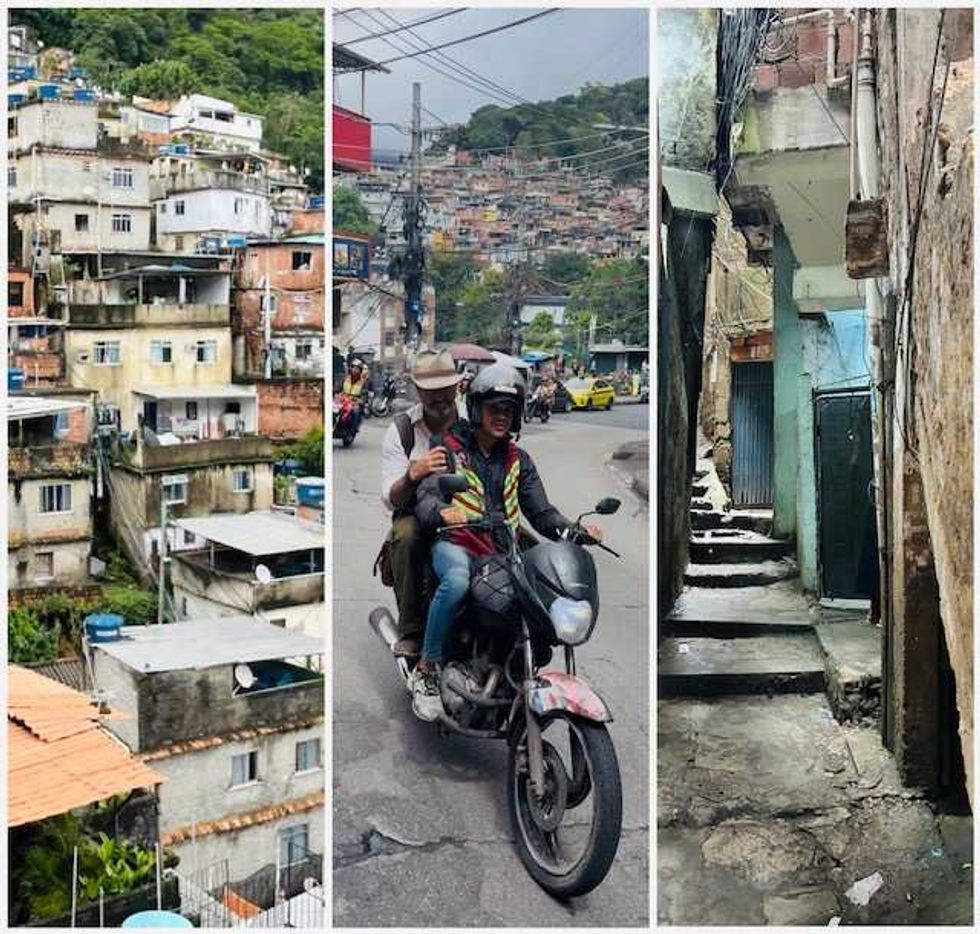 Scenes from Favela Rocinha, Brazil - (R-L) Rows of brick homes, Hugo Balta on a motorcycle taxi, and steep, winding roadsHugo Balta

 Following our HWF Civic Futures kickoff last week with Eric Liu, our design partners at Public/Official have created a unique visual to capture the “civic scaffolding” spirit of this conversation.
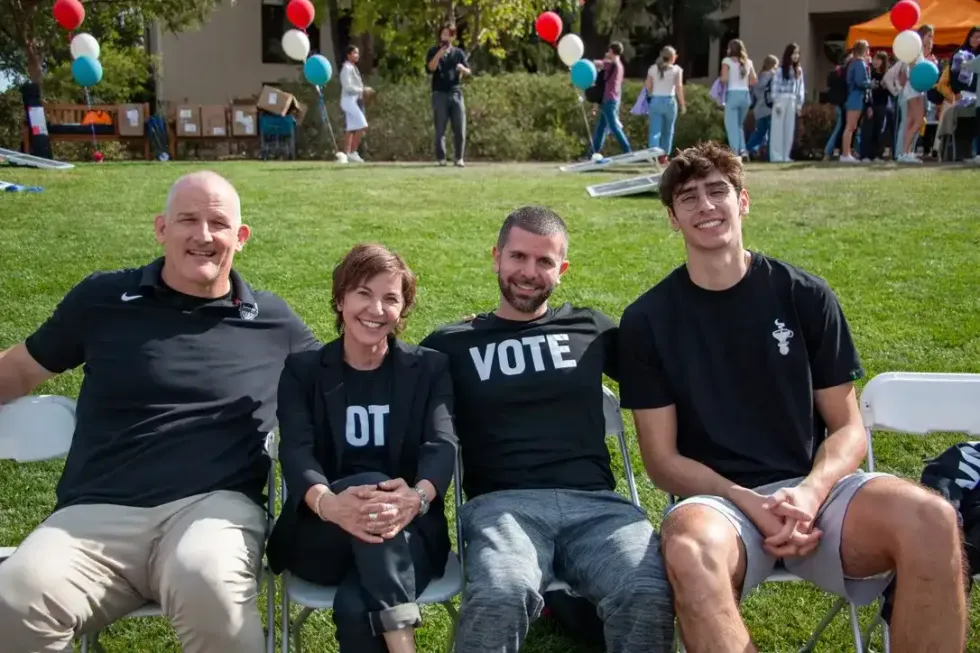 Lisa, Coaches Rev and Matt Elkin, and former Stanford Men’s Basketball star Maxime Raynaud at Stanford’s “All Vote No Play” Democracy Day, 2025