


Braving arctic temperatures and federal surveillance, thousands of Minnesotans gathered in downtown Minneapolis this past weekend. Tensions escalated on Saturday, when an ICE agent shot and killed Alex Jeffrey Pretti—the third person shot and second person killed by federal agents in the city this month.
Federal and state officials have released contrasting statements and demands regarding ICE’s presence across the state and the fatal shootings of Pretti, a 37-year-old intensive care nurse, and Renée Good, a 37-year-old poet and mother of three.
On Monday morning, U.S. District Judge Katherine Menendez heard arguments on whether the immigration crackdown in Minnesota should be temporarily suspended following the killings of the two individuals. Minnesota, Minneapolis, and St. Paul sued the Department of Homeland Security five days after Good’s death. The fatal shooting of Pretti has added urgency to the case.
Menendez issued no immediate ruling after the two-hour hearing, but said the case was a priority.
“The difficulty with the case law on this situation is that the situation is unprecedented in the 250-year history of our country,” Assistant Attorney General Brian Carter told CNN on Monday. “We have never had a federal government amass what is essentially an army of 3,000 to 4,000 masked, heavily armed federal agents and sent them into a state and basically stir the pot.”
A separate federal court hearing on Monday was set after a judge in Minnesota granted a temporary restraining order, preventing federal agencies from tampering with evidence related to Pretti’s death—evidence that has been kept from state and local police.
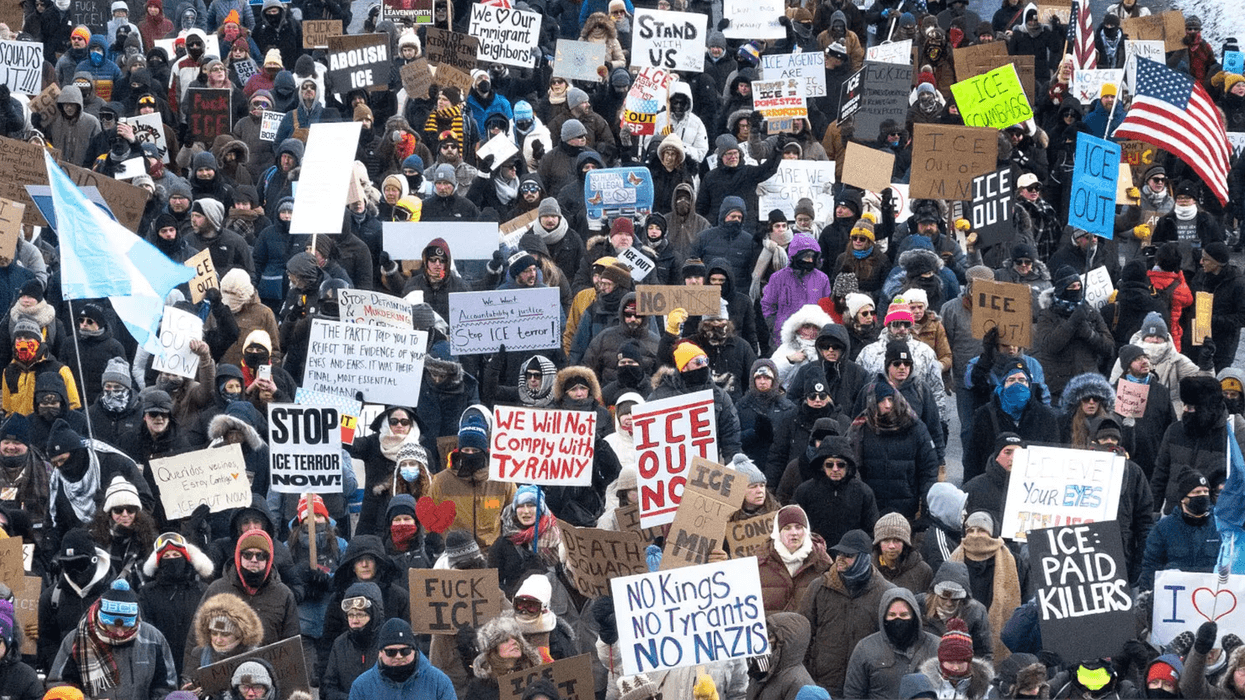
Amid headlines and discussions of political polarization, Minneapolis’ multi-day civic demonstration showed a coordinated, united collaboration among its residents to protest the surge of Immigration and Customs Enforcement across the state.
On Friday, Jan. 23, an estimated 300 businesses—from coffee shops to retail stores—went on strike in solidarity with those rallying against ICE. Cultural institutions across the state—such as the Walker Art Center, the Science Museum of Minnesota, the Minnesota Institute of Art, and the Minnesota Children’s Museum—were also closed for the day. The Minneapolis city council, Minnesota AFL-CIO, and dozens of local labor unions endorsed the day of action and the general strike.
“I think what generated the idea for this action comes out of the need to figure out what we can meaningfully do to stop it,” Kieran Knutson, president of Communications Workers for America (CWA) Local 7250, shared with the Guardian. “The government in the state of Minnesota has not offered any path towards stopping these attacks, this violence.”
The day of action began with a protest outside of the Minneapolis-St Paul international airport, where about 100 clergy members and 12 airport workers were arrested by police. Despite a peaceful protest, they were largely charged with misdemeanor citations of trespassing and failure to comply with a peace officer.
Deportation flights go in and out daily of the airport, with an estimated 2,000 people having been deported, according to CBS. Protestors called on airlines, specifically Delta and Signature Aviation, to “stand with Minnesotans in calling for ICE to immediately end its surge in the state." Metropolitan Airports Commission leaders counter that they cannot legally restrict airport access for private or public aircraft operations.
The day-long demonstration continued in downtown Minneapolis, calling for “ICE out of Minnesota.” Thousands of residents had abstained from shopping, working, and going to school for this “Day of Truth and Freedom.”
“We are a northern state, and we are built for the cold, and we are going to show up, but folks are going to need to pay attention to not just the march, but what people are doing, the individual stories of solidarity that people are going to be doing,” Chelsie Glaubitz Gabiou, president of the Minnesota Regional Labor Federation, AFL-CIO, told the Guardian.
On Saturday, the nation began to grapple with the death of Pretti. Authorities have still not identified the ICE officer(s) who fatally shot Pretti, who was disarmed and seemed to pose no threat, as shown in videos captured by local residents. Protests continued throughout the weekend, with hundreds gathering in Minneapolis on Sunday as well.
Minnesotans' demands include:
- ICE retreats from Minnesota
- The government holds the ICE officers who killed Renée Good and Alex Pretti legally accountable
- An end to additional federal funding for ICE
- The agency to be investigated for violating human and constitutional rights.
Belén Dumont is a freelance reporter and associate editor at The Fulcrum.











The President Invited Iran to Bomb My Home