
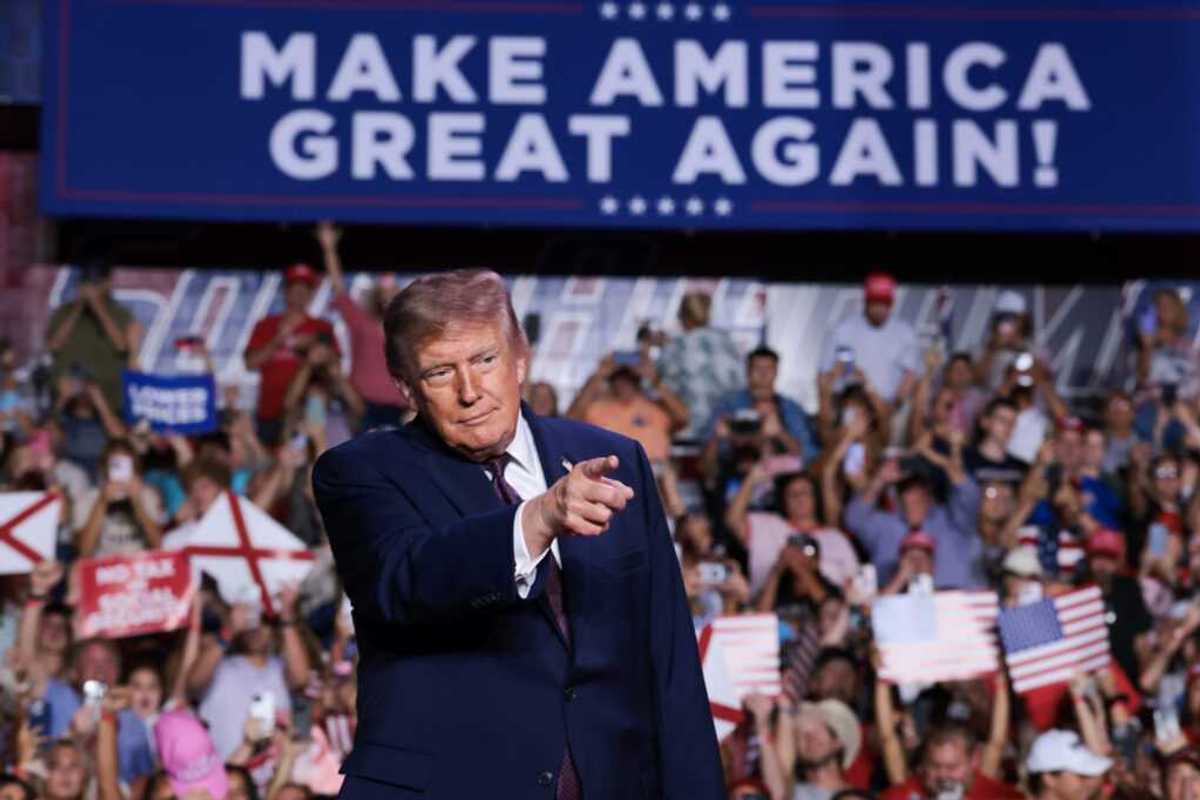


Last week, in his latest attempted liquidation of our shared heritage, President Trump signed two executive orders eviscerating protections for close to three million acres of our national monuments: Bears Ears and Grand Staircase-Escalante. From the Oval Office, a president who has never even seen these sacred sites reduced them by roughly 90%, dwarfing his 2017 attempt at a similar land grab by about a million acres, leaving only 300,000 acres of protected land. These cuts will directly threaten critical wildlife habitats, put nearly 100,000 irreplaceable archaeological sites at risk of destruction, and fracture an interconnected indigenous homeland that has been stewarded by Native tribes since time immemorial. To Trump, it’s just another real estate deal.
The Trump regime has tried to portray this set-up to sell off as an effort to restore public access. During the Oval Office photo op where the president signed the proclamations, he said of the monuments: “You can’t go hunting. You can’t go fishing. You can’t do anything. You can virtually not even walk on it.” That is, to put it mildly, a malicious lie. All your favorite forms of outdoor recreation—from hiking and camping to fishing and hunting—are allowed there, which Trump might know if he had ever visited the land he decided is not worth preserving. In fact, the Antiquities Act doesn’t limit ordinary public use but rather the extent to which an area can be subject to mining and drilling. So much for the land of the free. Trump wants to make it a whole lot easier for extractive industries and private development interests to privatize and pillage these sacred lands for financial gain. Home of the brave? Not an ounce of courage to refuse the fuel lobby when it comes to our public lands. At least the law is on our side. As the President of the National Parks Conservation Association put it, this is both “a betrayal to the American people and illegal.”
The Antiquities Act delegates to the president the power to create national monuments, but the power to diminish them belongs strictly to Congress. Trump’s attempt to slash these boundaries is an unlawful usurpation of legislative power that defies more than a century of legal precedent. But then, what else is new? Still, while Roosevelt explored the wild west and was inspired to designate lands worth protecting, Trump is stripping those protections, sight unseen, to harvest parts to sell to the highest bidder. He has already eliminated over 16 times more land than Teddy protected. It may be predictable, but it is despicable.
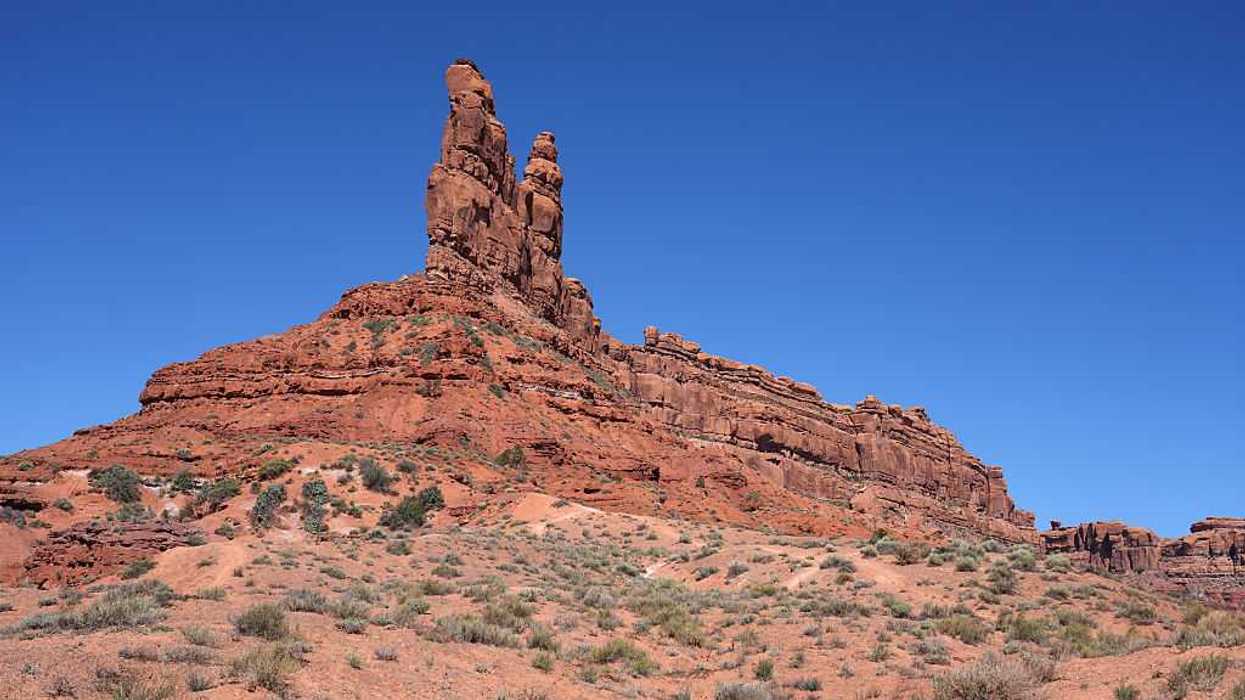
Perhaps Trump just has terrible taste when it comes to what is worth preserving for antiquity. His proclamations modifying the monuments, which condescendingly explain why 90% of the monuments were just not monument-worthy enough, are illuminating. He writes that the original designations as national monuments were “premised on the purported need to protect items that are not historic landmarks…or objects of historic or scientific interest.” He then mocks a list of what he calls “generic topographic and geologic features.” Of Grand Staircase-Escalante, they include: “‘vast and austere landscape[s],’ ‘sedimentary rock layers,’ and ‘bold plateaus and multihued cliffs.’” Of Bears Ears: “‘deep sandstone canyons, broad desert mesas, towering monoliths, forested mountaintops dotted with lush meadows’ and ‘low bluffs and high mesas.’” Trump concludes: “These generic features…do not become “landmarks,” “structures,” or “objects of historic or scientific interest” worthy of protection under the Antiquities Act simply because they are scenic.” It is the point of view one imagines ChatGPT, with its zero senses, might have.
To suggest that sedimentary rock layers are not objects of scientific interest is the mark of someone who has never cared for science. In reality, to quote the proclamation that Trump is reversing, the sedimentary rock layers are “unobscured by vegetation, offering a clear view to understanding the Earth’s geological development…[making it] one of the world’s great paleontological laboratories.” And to state there are no objects of historic interest is deeply dismissive, offensive, and inaccurate. These lands include a rich human history that begins with ancient indigenous people (documented even in petroglyphs and pictograph panels–another feature of these monuments). To imply otherwise is an erasure.
On that note, Trump’s desire to privatize these lands is merely the latest chapter in a legacy of American colonialism. Historically, treaties between the U.S. and sovereign Indian nations were routinely coercive, misleading, and signed under duress, and in several landmark cases, the Supreme Court invented loopholes in property law to diminish Native American land claims. Now, Trump tries once more to illegally claim land that is not his, turning to a tired trope. To add insult to injury, Bears Ears happens to be the very first national monument established at the request of a historic coalition of Tribal Nations. If we are not going to actively return this land through the “Land Back” movement, the absolute minimum we can do is treasure it and ensure it remains for future generations. Trump’s actions are unforgivable.
Fortunately, guess who supports protection for public lands: the public. Polling shows that 91% of Western voters support existing monument designations. Three in four Americans actively oppose expanded drilling and mining on our public lands (it’s bipartisan!). The fact is, nobody wants this except the beneficiaries of deals like these, who apparently can look upon “forested mountaintops dotted with lush meadows” and not see past the dollar signs. One of my favorite things about public lands is the spirit of equality in a place where everyone is sleeping in a tent and the campsites are first-come, first-served. Perhaps it is that exact spirit—or the distinct lack of thread count—which generates such contempt for the land among oligarchs.
It turns out, Trump may have only ever visited three national parks or monuments: Everglades, Mount Rushmore, and Gettysburg. He’s a billionaire and the leader of the free world, but with all that money and power, he’s never seen the sun rise at the Grand Canyon or a night sky peppered with stars in Joshua Tree. If he only looked into the bold plateaus and multihued cliffs of our planet, perhaps he would no longer find them generic and rather see the value in protecting them. Or not. In the meantime, he felt compelled to plaster his face on this year’s park passes, in violation of a federal requirement that the pass bear the winning wildlife scene from a national parks photo contest.
Still, this ongoing effort to loot the American commons begs the question: has anyone at the White House ever had a meaningful experience in nature? Been mesmerized watching a condor soar above a canyon? Or simply curious about the natural world? Pity for those people notwithstanding, given the evidence that they consider breathtaking natural wonders generic, at what point do they sell off the Grand Canyon, Yosemite, and Yellowstone for being mere scenery, too?
It should go without saying, but our grandest marvels are so much more than scenery. They are essential to our collective identity as a nation and to the health of our planet. They are also the backdrop for the history and culture of so many people in this country, from ancient tribes to college besties on a road trip. And they need our help. If we don’t want to see their destruction, we must sign petitions, support organizations like Veterans for Public Lands, and show up. It is exactly this kind of people-led advocacy that helped restore protections to these lands after 2017. We can do it again. We can also visit these vistas ourselves and share stories about the cactus wren and the Saguaro, or the wonder of watching a desert tortoise cross the road. We can spread the gospel: nature is worth protecting.
Julie Roland was a Naval Officer for ten years, deploying to both the South China Sea and the Persian Gulf as a helicopter pilot before separating in June 2025 as a Lieutenant Commander. She has a law degree from the University of San Diego, a Master of Laws from Columbia University, and is a member of the Truman National Security Project.









The President Invited Iran to Bomb My Home